


You’ve decided to give that missing tooth a rest. You’ve waited long enough to buy a new one. Perhaps you’ve been avoiding smiling on camera for months, and don’t want to miss eating the things you enjoy anymore, or to see it when you look in the mirror.
Then your dentist tells you something you weren’t expecting: your gums need attention before moving forward with the implant.
Before a dental implant can be placed, the gums and bone around the gap need to be healthy enough to hold it. If your dentist has said you need gum treatment first, that is part of the plan, because untreated gum disease raises the risk of implant complications.
This article explains what your dentist is checking, how dental implants and gum health are linked before and after surgery, and what to ask at your consultation.
Why Healthy Gums Matter Before Dental Implants
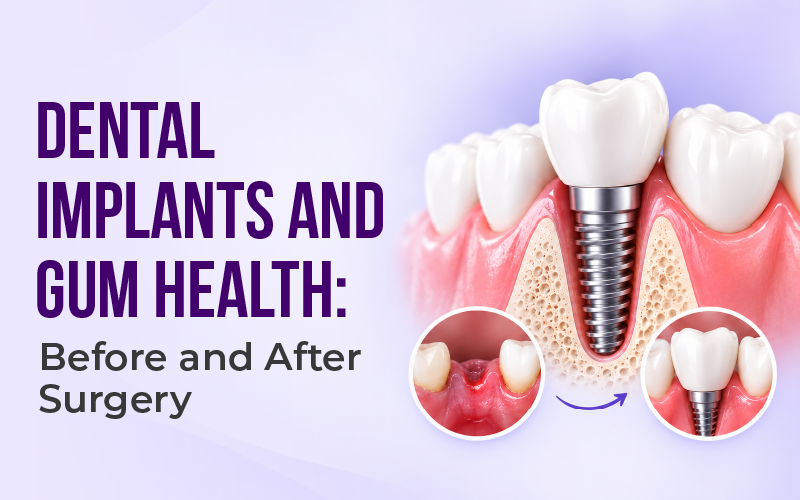
The implant post is placed into your jawbone and acts as an artificial tooth root, so your dentist needs to consider the condition of your gums, teeth, and supporting bone before recommending treatment. Your implant consultation may involve an examination, dental X-rays, or 3D imaging. Your dentist also checks for gum disease, infections, or other oral health concerns that could affect your treatment.
Bleeding, redness, swelling, persistent bad breath, tenderness, and loose teeth can all be signs of gum disease. It is true that an early stage of gum disease may cause little discomfort, so if bleeding persists interestingly at your appointment.
To gain control of the gum condition, this is where treatment of the gums might need to take priorityimplant can then be considered afterwards.
How Gum Disease Affects the Bone an Implant Relies On
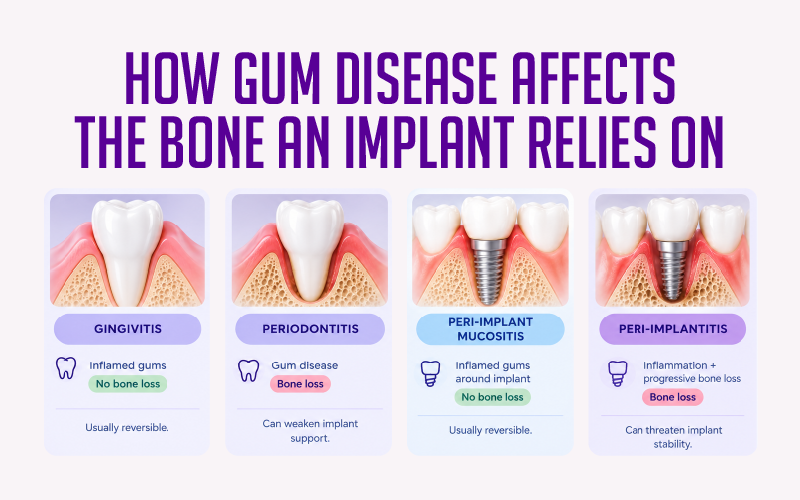
Gum disease begins in the gum tissue and, if not treated, will progress to the bone underneath. These are the terms you might hear at your appointment:
- Gingivitis: gum inflammation with no bone loss, usually reversible with better cleaning.
- Periodontitis: gum disease that has damaged the supporting bone. Treatment aims to control it, and lost bone does not usually regrow without a separate procedure.
- Peri-implant mucositis: inflammation of the gum around an implant with no bone loss, usually reversible.
- Peri-implantitis: inflammation around an implant with progressive bone loss, which can lead to implant failure.
A stable implant depends on sound bone. Your dentist will assess the bone and gum tissue supporting the missing tooth, and often gum treatment precedes the placement of the implant.
In some cases, if you have lost bone, treatment may involve other procedures (such as a bone graft) before or with the implantation. The x-rays or 3D images provide you with information on the amount of available bone and its thickness for planning a possible graft.
When? Timing is variable, based on where you began treatment. Following gum therapy, your dentist will usually re-examine your gums a number of weeks later before releasing for placement.
If a bone graft is needed, healing commonly takes several months before the implant is placed, and longer for some procedures.
After placement, the implant usually needs a few more months to integrate with the bone before the final crown, depending on bone quality and the treatment plan. Smoking, uncontrolled gum disease or slow healing can lengthen each stage.
You can read more about gum disease and deteriorating gum health in our blog:
Caring for the Gums Around an Implant
Long-term care begins at placement. An implant can’t get a cavity, but the gum and bone around it still become inflamed when plaque isn’t controlled. That is where peri-implant mucositis starts, and untreated, it can progress to peri-implantitis. Your dental team monitors these tissues at regular examinations by measuring gum depth around the implant and taking X-rays when needed, and recommends cleaning methods that suit your implant.
The gums around an implant deserve as much attention as your natural teeth.
How to Keep Gums Healthy Before and After an Implant
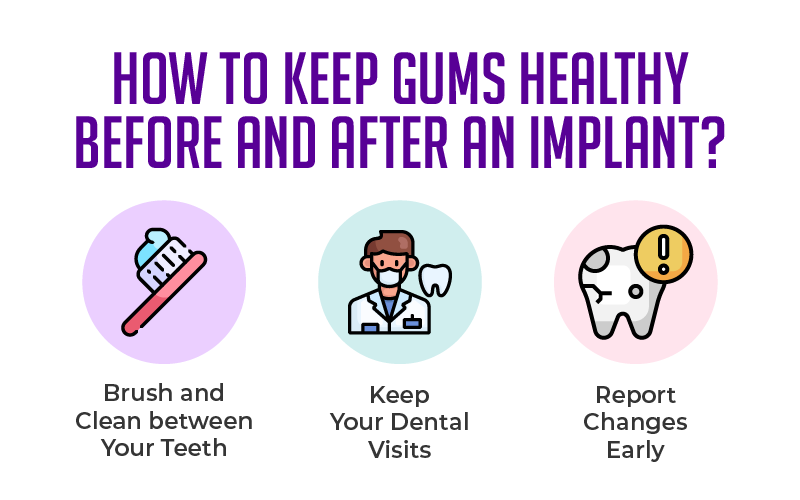
A basic routine done consistently does most of the work.
Brush and Clean between Your Teeth
Brush twice a day with fluoride toothpaste, paying attention to your gumline, and ask your dentist to recommend the right technique and toothbrush for your situation. A toothbrush can’t reach every surface, so floss or use another interdental cleaning method recommended by your dental team. If you’ve had an implant, ask how they want you to clean around it, since the right routine can differ between patients.
Keep Your Dental Visits
Regular visits let your dental team monitor your gums, teeth, implant and surrounding tissues even when nothing hurts. If you’re dealing with gum disease, your dentist may recommend more frequent visits.
Report Changes Early
The warning signs listed earlier, especially bleeding, swelling, tenderness, and bad breath that doesn’t clear up, are worth reporting once you have an implant too. Early assessment is easier than treating a problem that has had time to develop.
If You’ve Had Gum Disease Before
Whether you can receive an implant after gum disease depends on how well it is currently controlled, and your dental team needs to assess that before planning treatment. Factors that usually come into the assessment include:
- the amount of supporting bone you have
- your oral hygiene routine
- whether you smoke
- your blood sugar control, if you have diabetes
Smoking is associated with a higher risk of gum disease, peri-implantitis and implant failure, in part because it reduces blood flow to the gums and slows healing. Diabetes matters mainly when blood sugar is poorly controlled, which is linked to slower healing and a higher risk of infection, so your dentist may ask about your recent blood sugar readings. Well-controlled diabetes is usually a smaller concern, but your dentist and doctor should decide that together.
Kathy Jacobsen Contemporary Dentistry treats gum disease and provides implants at the same practice, so both are considered together in your treatment plan. Its gum care includes Perio Protect, a custom-tray treatment used for some patients with mild to moderate periodontal disease. Ask whether it suits your case.
You can find out if your gums are healthy or unhealthy on our blog:
Questions to Ask Before Choosing a Dentist for Your Implant
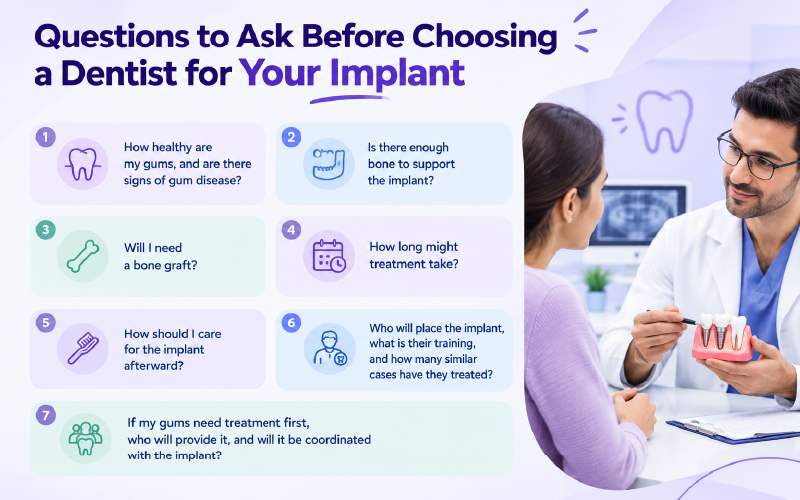
Photos, prices and reviews are hard to compare when you don’t yet know what your own mouth needs, so a short list of questions is more useful to bring to a consultation:
- How healthy are my gums right now, and are there signs of gum disease?
- Is there enough bone to support the implant?
- Will I need a bone graft?
- How long might treatment take?
- How should I care for the implant afterward?
- Who will place the implant, what is their training, and how many cases like mine have they treated?
- If my gums need treatment first, who will provide it, and will it be coordinated with the implant?
Implants are placed by general dentists, periodontists (gum and bone specialists) and oral surgeons, and a prosthodontist may design the crown in more complex cases. “Implant specialist” is not a recognized dental specialty, so ask about the individual’s training.
Healthy Gums and Your Implant
The link between dental implants and gum health runs both ways: healthy gums and bone support the implant at placement, and the implant needs the same care afterward. If you’re unsure where your gums stand, the practical next step is an examination, which shows whether there are signs of gum disease and how much bone is available.
At Kathy Jacobsen Contemporary Dentistry in Gilbert, a consultation covers your oral health, your implant options and how any gum treatment would be sequenced with the implant.
Frequently Asked Questions
Maybe. If you have active gum disease, your dentist would probably have you treat it first. It can be boring to wait, but having a healthier foundation can be an integral part of your implant treatment plan.
Not necessarily. Bleeding may be caused by something else, but there is no reason to keep it to yourself. Get your dentist to have a look at what’s going on before you continue. The earlier the problem is discovered, the more options you will have.
The implant itself won’t be affected by cavities but the gum and bone can become infected or inflamed. Daily cleaning that is maintained will allow your team to keep an eye on those tissues as well during your regular maintenance visits.
You might still be able to save the bone. If you haven’t lost too much and the amount you’ve lost is not in an unsuitable position then your dentist may mention grafting the bone or trying another method before placing the implant.
Don’t panic but don’t just ignore it either. Bleeding swelling tenderness or alterations to the area around an implant should be reported to your dentist. A simple examination will identify the reality of the situation.