


You’ve decided to correct your teeth with Invisalign. Invisalign clear aligners are unobtrusive; the process seems simple, and you can almost see the light at the end of the tunnel to your new smile. Wait, what? Attachments! Before you know it, your minimally visible dental treatment needs small bumps attached to your teeth.
It’s okay to have questions. Will they show when you smile? Will they feel odd? And why do you need them if your aligners are already moving your teeth?
Invisalign attachments are small, tooth-colored dental composite dots that your dentist glues onto particular teeth. They let your aligners “grab” a tooth, so a clear plastic tray can rotate it or adjust a canine’s position.
In this guide, we discuss what attachments are, how they’re placed and removed, whether they stain your enamel, and how to care for your teeth during Invisalign. We explain your attachment plan at your initial Invisalign consultation at Az Dentistry in Gilbert so you know what to expect.
What Are Invisalign Attachments?
Invisalign attachments are tiny, tooth-colored bumps made from dental composite, similar to the resin used for tooth-colored fillings. Your dentist places them on certain teeth mapped out in your digital treatment plan.
They are available in many sizes and shapes. Some are rectangular, while others have beveled or rounded edges. Your dentist will determine the size and placement of the braces given the amount of tooth movement.
Clear plastic aligners can slide on a smooth tooth surface and don’t provide any stopping point to prevent the aligner from moving instead of the tooth. Attachments provide a ledge for the aligner to press against, directing force as prescribed.
What Do They Look Like?
Attachments blend in with your tooth color. They are quite tiny. How noticeable they are depends on the attachment’s size, location, and your tooth shade.
You can notice them when you look closely in the mirror, mainly on your front teeth. Someone sitting across the table is unlikely to notice them, though visibility varies from person to person.
The attachments are most visible when your aligners are removed. This includes whilst you eat and brush your teeth.
Why Does Your Dentist Use Invisalign Attachments?
During orthodontic treatment, your teeth shift in many different directions. They might rotate, shift vertically, tilt, or translate into a new position. Clear aligners handle many of those movements, but some teeth need a little extra contact.
Attachments make that contact.
For instance, an aligner would struggle to grip and rotate a rounded canine. Attachments give the aligner a surface to push on.
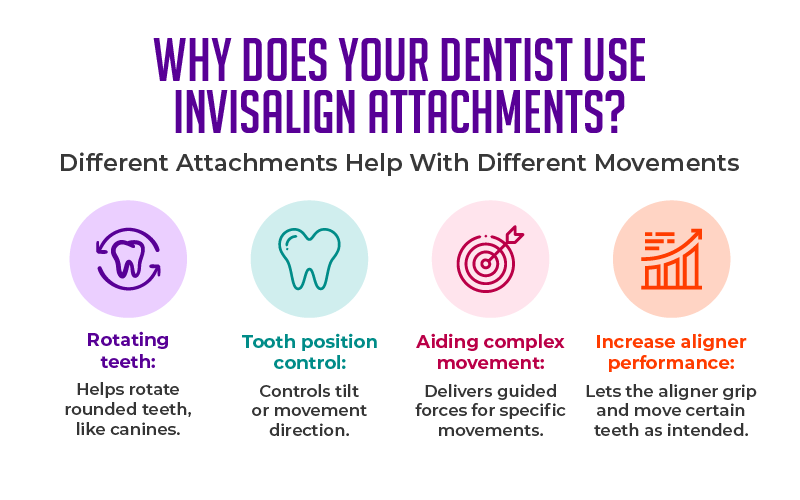
Different Attachments Help With Different Movements
Your dentist places attachments for several reasons:
- Rotating teeth: Rounded teeth, like canines, can be difficult to rotate without additional grip.
- Tooth position control: Attachments control a tooth’s tilt or movement direction during treatment.
- Aiding complex movement: Specific planned movements involve guided forces that attachments help deliver.
- Increase aligner performance: Attachments let the aligner grip and move certain teeth as intended.
Some patients receive multiple attachments, some a few, and some not at all. Only your treatment plan will determine this. Most patients get used to the attachments within the first couple of days of placing and removing their aligners.
How Invisalign Attachments Fit Into the Invisalign Treatment Process
Your dentist creates your orthodontic plan before treatment. They add attachments to that plan where they will help your teeth move where they need to go.
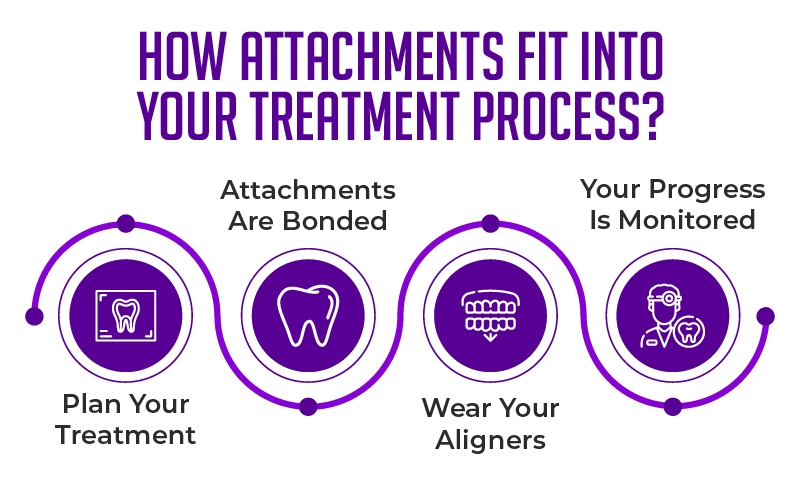
We incorporate add-ons into your treatment plan from the beginning. Here’s how it goes, from planning to tracking.
Your Dentist Plans Your Treatment
Your dentist will review your teeth, how they come together, and your overall oral health to determine whether Invisalign is right for you. We’ll take digital scans or impressions to build a 3D image of your teeth.
Treatment plan. This diagram shows the planned stages of tooth movement and the order in which you’ll wear the aligners. If attachments are required, the positions and shapes can be planned.
You can read more about weather Invisalign is right for you in our Blog:
Attachments Are Bonded to Your Teeth
At the attachment appointment, your dentist treats the chosen teeth, then uses a template to position the composite material in the intended spots. A special dental lamp then cures the material, adhering the attachments to your teeth.
The process is easy, and your dentist doesn’t drill through healthy teeth. Your dentist may slightly reshape the attachments for a proper fit.
Wear Your Aligners as Directed
Once your aligners are in place, wear them as your dentist advises. Wear your Invisalign aligners 20-22 hours each day. Adhere to the schedule your dentist recommends.
Take them out for all meals, drinks other than water, and when you brush your teeth. Wear them consistently: the aligners need to stay in contact with your teeth to work effectively.
Your Progress Is Monitored
Your dentist will monitor your teeth as they move to ensure they follow your treatment plan. If a tooth isn’t following the plan, your dentist will adjust it by refining the plan, adding more aligners, or making other adjustments.
Follow the aligner wear schedule and attend all visits. At dental visits, your dentist may detect a tooth that isn’t tracking.
Will Invisalign Attachments Hurt or Feel Uncomfortable?
The attachment itself is painless; the composite simply attaches to the tooth. Most patients do not require anesthetic. The first few days can feel a little weird, but you may notice some ragged edges when your lips and cheeks rub them, and your tongue will be back to exploring those attachments. That’s perfectly normal.
You will feel some pressure or tenderness with each new set of aligners. This is from the aligners, not the attachments.
Here are a few tips for helping the transition:
- Give yourself time to adjust to the new mouthfeel.
- Follow your dentist’s instructions for putting your aligners in and taking them out.
- Maintain good oral hygiene, paying attention to the areas around each attachment.
- Call your dentist if the attachment is sharp, becomes loose, or keeps irritating your mouth.
- Don’t attempt to sand a device yourself. Even minor changes could affect your aligner’s fit.
Can People See Invisalign Attachments When You Smile?
For adults, this is usually the top concern, as many people choose transparent aligners to keep their treatment low-key.
Attachments are tooth-colored, but they are not fully invisible. Their visibility depends on factors like size, placement, lighting conditions, and how closely someone examines your teeth. Attachments on front teeth tend to be more noticeable than those on back teeth.
Your aligners can also become more opaque as they stain or build up, so cleaning them helps keep them transparent.
If you’re mostly concerned about how your smile might look after treatment, ask your dentist about this before treatment gets underway. Find out which teeth will require attachments and if they will be visible when you smile or speak.
Be sure you include all of the tooth movements that you will need in your plan. Your dentist is a good source for your options and what to expect.
Do Invisalign Attachments Damage Teeth?
Correctly fitted attachments and proper removal do not harm healthy enamel. However, deposits can form on attachments, especially near the edges, if you’re less careful when brushing. This can irritate the gums and lead to decay or white-spot lesions on the tooth surface.
You may be wondering whether Invisalign attachments harm your teeth, especially if you hear they have to be bonded to a tooth and later removed.
It’s not the attachment itself that’s an issue. Oral hygiene matters because plaque can build up around the margins of attachments, especially if you don’t brush as thoroughly as you should. Inadequate cleaning can cause gum irritation, white-spot lesions from demineralization, or decay.
How to Protect Your Teeth During Treatment
Brush twice a day with fluoride toothpaste and clean between your teeth daily. Remove your aligners before eating and clean them as your dentist recommends.
Pay special attention to the edges where the attachments touch your teeth. Those tiny edges can trap plaque if you don’t clean them thoroughly.
Don’t bite your aligner in or pull it off; remove it gently. Use the method your dentist shows you to remove the aligners, and tell your dental team if an attachment comes off.
Book a dental appointment if your white spots are new, your gum is swollen, sensitivity persists, or your attachment doesn’t feel quite right. It’s better to treat a small problem early.
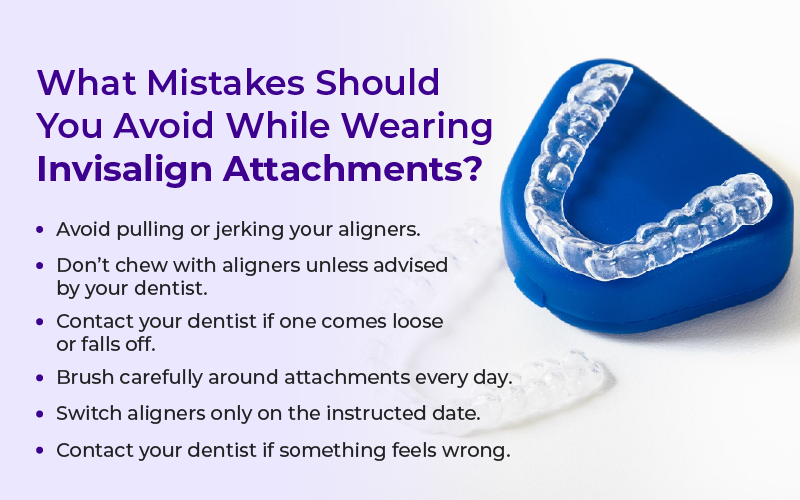
What Mistakes Should You Avoid While Wearing Invisalign Attachments?
One common mistake is assuming that because attachments are bonded to your teeth, they don’t need any special attention. In reality, they can change how you insert and remove your aligners, at least until you get the hang of it.
Another mistake is stopping aligner wear because your teeth hurt. Taking long breaks without your dentist’s advice can disrupt tracking and make it more difficult to switch to your next set of aligners as planned.
Keep these practical tips in mind:
- Avoid jerking or pulling on your aligners. Remove them the way your dentist explained to avoid putting extra pressure on your attachments.
- Don’t chew while wearing your aligners unless your dentist has specifically told you to. Take them out for meals and follow the wear schedule provided.
- Missed attachment? If an attachment is missing, check with your dentist; you may need a replacement.
- Do not rush cleaning your teeth. Take your time when brushing around attachments, and clean them every day.
- Proceed with the next aligners on the date instructed. Don’t rush to the next aligner just because you think your teeth are ready.
- Don’t try to repair it yourself if it doesn’t sound right. Call us first.
Final Words
Not every Invisalign plan includes attachments. Whether you need them depends on your bite, tooth positions, and how much your teeth need to move, and we map that out before treatment begins.
At your consultation at Az Dentistry in Gilbert, AZ, we’ll show you which teeth will get attachments, where they’ll sit, and how to care for them. If you’re considering Invisalign, schedule a consultation and bring your questions.