



You’ve definitely come across the almost invisible trays people constantly take in and out of their mouths and thought, “Can these straighten my teeth?”
If you’re looking for straighter, better teeth without traditional metal braces, or you’re wondering whether aligners can work with your schedule, you’re not the only one in doubt.
Trust us. Many people feel the same way. Honestly, while Invisalign clear aligners can be an easy and innovative way to fix certain orthodontic problems, that doesn’t mean they’re the best solution for everyone.
Your bite, teeth, oral health, and ability to follow the treatment should all be considered. So let us talk about what Invisalign is, how it works, and whether it’s right for you.
What Is Invisalign and How Does It Work?
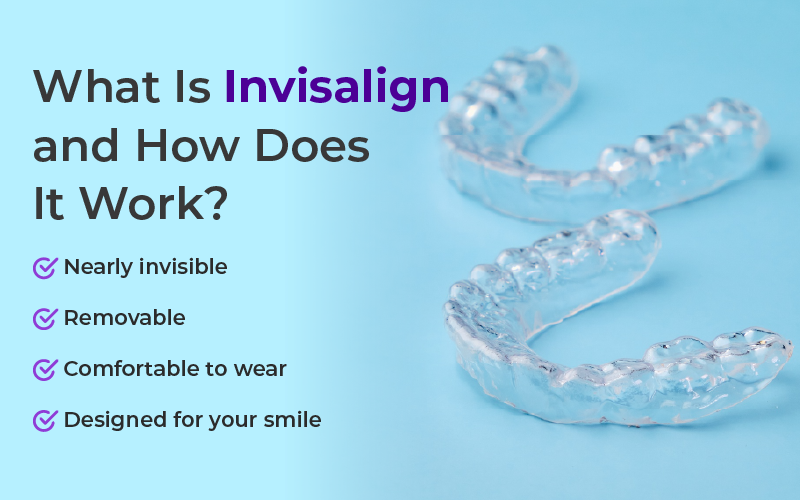
With Invisalign, you get a series of specially designed transparent aligners that work together to shift your teeth into a desired position. Unlike conventional braces, there are no metal brackets and wires fixed to your teeth. Rather, the aligners are removable and apply force in line with your treatment plan.
Typically, you should wear them for about 20-22 hours a day, taking them out only to eat and drink, brush, and floss. Your dentist or orthodontist will guide you through the details of your treatment plan.
What Does the Invisalign Treatment Process Look Like?
The first step in the Invisalign treatment process is to visit a dental healthcare professional to discuss your preferences and treatment options.
One method used to plan the series of tooth movements is 3D scanning, which can also be used to create a personalized treatment regimen with an appropriate sequence of moves.
Then you receive the aligners and wear them as your physician instructs.
Once active treatment is complete, you will receive retainers in accordance with the Invisalign process.
What Are the Biggest Invisalign Benefits?
To be frank, many individuals prefer Invisalign because of its visual appeal.
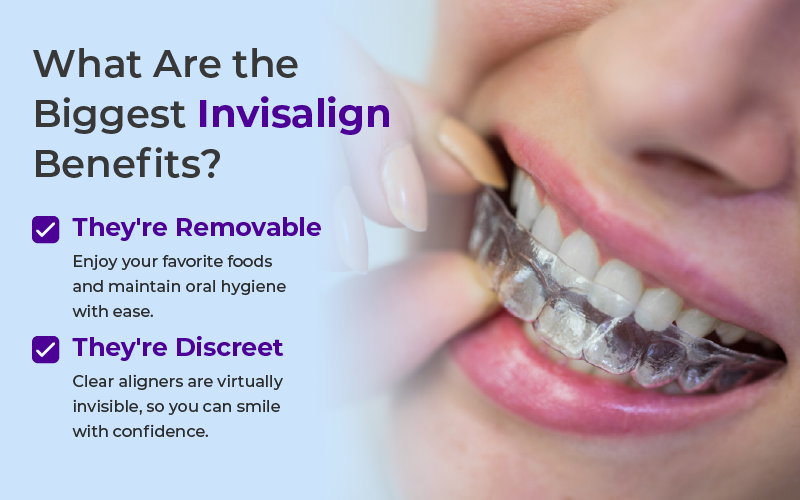
Unlike regular braces, Invisalign is transparent and therefore not visible. For adults who don’t want metal brackets protruding from their mouth, this is a huge benefit.
However, appearance is not the only reason people prefer this solution.
They’re Removable
The fact that you can take out your aligners when eating means you do not have to stick to the food restrictions associated with fixed braces. You can also take out your aligners while brushing your teeth, so maintaining your oral hygiene is simple.
Not everything is spring!
You do have to put your aligners back in immediately after eating.
While this may sound easy, removable appliances require you to be responsible enough to use them as instructed.
They’re Discreet
Now that solutions are available, there is no need to hide orthodontic treatment behind the discomfort of wires. People can now go to dinner, join conversations, and take pictures without worrying about wires that might interfere with their activities.
Is Invisalign a Good Option for Adults?
For many people, Invisalign treatment seems like a good fit.
As a rule, adults find it more attractive because they can get their teeth straightened without wearing crude metal braces. The aligners can be removed during meals and while brushing your teeth.
This is especially helpful when you are busy with work or traveling, have client meetings, or simply don’t want your orthodontic treatment to be the first thing everyone notices.
However, age is not enough for eligibility. A dentist or orthodontist still needs to check the patient’s teeth.
Is Invisalign Practical for Your Lifestyle?
Here is a question you need to consider…
Can you wear your aligners exactly as they are meant to be used?
Currently, while Invisalign offers a degree of freedom, that freedom also comes with the guilt of not using it correctly.
In case you think that leaving your aligners somewhere in the cafeteria or forgetting to wear them during long after-school meetings is a likely scenario, it might be time to take a look at conventional braces.
Can Teenagers Use Invisalign?
Indeed, teens can use Invisalign if they qualify. Several options are available as part of their treatment to meet one or more of teens’ unique needs.
But, for parents of teens, the main thing is not whether teens can use this treatment but rather whether they will be able to carry out the treatment by themselves.
What Should Parents Think About?
Your teenager needs to be reminded to use the aligners properly, remove them regularly, clean them, keep them safe, and follow the treatment plan.
Clear aligners may be worth discussing if your teen can manage their everyday responsibilities well.
If your teenage child usually misplaces things like their water bottle, sports gear, homework, or shoes, you may need to sit down and talk about it before making a decision.
Final decisions about clear aligners can only be made after consulting with a specialist.
What Can Invisalign Treat?
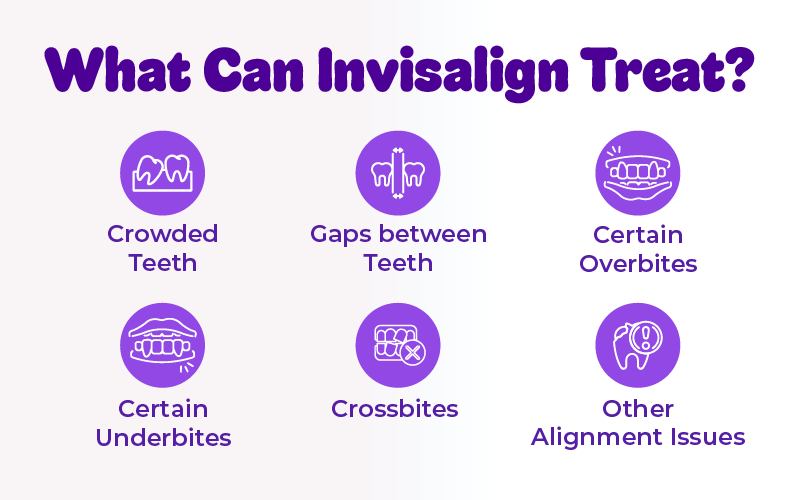
Invisalign clear aligners treat many kinds of orthodontic problems. Here are some problems tackled by the aligners:
- Teeth that overlap
- Presence of spaces between teeth
- Certain kinds of overbites
- Certain types of underbites
- Crossbites
- Other kinds of alignment issues
The most important point is that not all cases are the same. Your dentist will assess your teeth and bite to determine whether you should opt for Invisalign treatment.
What Happens During an Invisalign Consultation?
An Invisalign consultation is when you can finally stop speculating. You can clearly explain your concerns about your smile and the changes you want. After that, the dentist will examine your teeth and bite to see whether clear aligners suit your case.
Digital scans of your teeth may also be taken to create a 3D model of your mouth and help create the treatment plan.
Questions Worth Asking
Don’t exit your consultation with questions about the essentials.
Make sure to ask:
- Am I a suitable candidate for Invisalign?
- Which concerns does treatment address?
- How long will my treatment last?
- How long will I need to wear my aligners?
- Will I have to wear attachments?
- What if my aligner gets lost?
- How often will I need to visit the doctor?
- Will I need to use retainers after treatment?
- How much do I have to pay for the procedure?
It’s important to get the answers.
Invisalign vs. Traditional Braces: Which Is Better?
Honestly, there is no one-size-fits-all solution.
Metal braces can be most beneficial for anyone with orthodontic problems. Invisalign is not as effective as traditional braces, but it allows patients to eat and drink anything they want as long as they remove the aligners before eating or drinking. Patients need to assess their unique situation and determine which option is right for them based on their orthodontic issues and individual preferences.
| Feature | Invisalign | Traditional braces |
| Appearance | Clear and discreet | More noticeable |
| Removable | Yes | No |
| Eating | Remove aligners | Some food restrictions |
| Oral hygiene | Remove aligners to brush | Requires cleaning around brackets |
| Daily responsibility | High | Lower |
| Suitability | Depends on individual case | Suitable for many orthodontic concerns |
So don’t choose solely because one option looks better in a photograph.
Choose the treatment that makes sense for your teeth and the way you actually live.
Final Thoughts: Is Invisalign Right for You?
Invisalign might fit your needs better if you want a more discreet way to fix your teeth and can wear removable aligners consistently.
Invisalign benefits might appeal to people who value comfort, convenience in cleaning their teeth, and a less visible orthodontic treatment method.
However, the answer to the question about the appropriateness of using Invisalign cannot be provided by blog posts or your friend’s “before and after” pictures.
During an Invisalign consultation, you will be able to find out if clear aligners will work with your teeth and what the whole process looks like, as well as get recommendations for other orthodontic methods.
Sometimes the smartest first step is simply getting a professional opinion and finding out whether the smile you’ve been thinking about is actually within reach.
Frequently Asked Questions About Invisalign
Invisalign could be a great choice if you want to straighten your teeth without traditional braces. During your consultation, we will examine your teeth, bite, and overall dental health, as well as your dental goals, to let you know whether Invisalign could be right for you.
The length of time required to complete treatment depends on your specific alignment needs and your wearing schedule. During your consultation, we’ll review your case to determine how long treatment will take, since we don’t follow a cookie-cutter approach.
You can keep eating the same food as usual since you will remove the aligners at mealtimes. We will inform you of the procedure for keeping the appliance clean and maintaining your teeth after meals to ensure adequate dental hygiene throughout treatment.
Initially, you may experience pressure, tightness, and general discomfort during the initial fitting of the aligners. This is to be expected as the teeth begin to move during the adjustment process.
At an Invisalign consultation, we will determine your needs through discussion and assessment of your bite, and follow up with recommendations accordingly.

2 thoughts on “Get the Scoop on Invisalign: Is It Right for You?”