



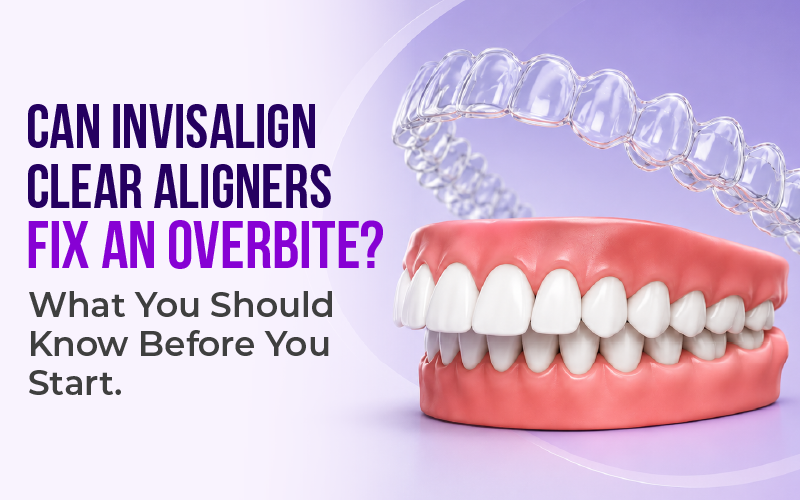
If your upper front teeth seem considerably above your lower teeth, you might wonder what many other patients wonder: does Invisalign treat an overbite or are clear aligners just good for making slightly crooked teeth straighter?
The answer is a bit more complicated than a simple yes-or-no answer might suggest.
The good news is that for many patients, Invisalign can treat an overbite, sometimes successfully. However, how well it works depends on what is causing the overbite, how serious it is, and whether the problem is primarily in the teeth or the jaw.
So before you start searching for “invisalign near me” and scheduling your first appointment, let’s first discuss what these clear aligners can really do.
1. What Exactly Is an Overbite?
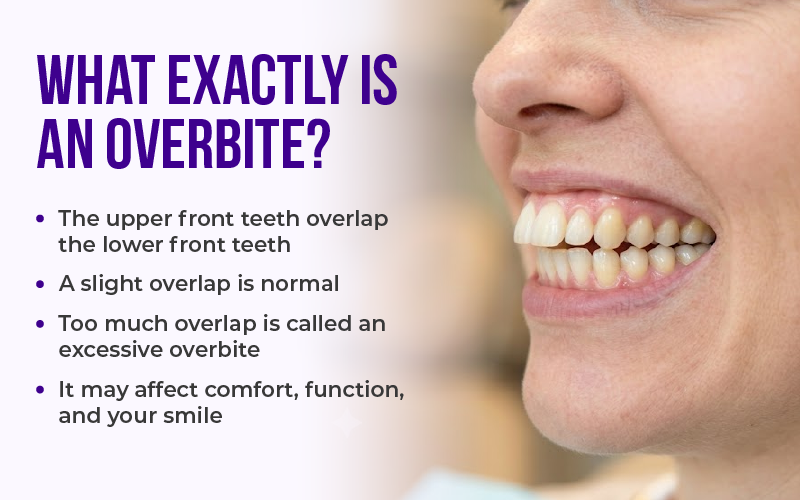
Having an overbite isn’t an issue in and of itself. Normally, the upper teeth should overlap the lower teeth to some extent. The problem occurs if there is too much overlap. In such cases, the upper teeth may overlap the lower teeth to such an extent that it becomes too uncomfortable to bite into food.
An excessive overbite might also cause teeth to wear down, irritate gums, create jaw problems, or make eating certain foods challenging.
Lastly, the position of the mouth may create a barrier in the way one feels about one’s smile.
Why Does an Overbite Happen?
Various causes can contribute to the emergence of overbites. While the front teeth might experience a tilt, there are times when the relationship between upper and lower jaws becomes much more important.
It is important to remember that clear aligners affect only teeth, while jaw shape transformation is not possible.
Clear aligners can be very effective for treating overbites when teeth are the main issue. When serious skeletal problems accompany the overbite, your orthodontist may recommend another approach or a combination of methods.
2. So, Can Invisalign Fix an Overbite?
In many cases, especially mild to moderate cases, Invisalign may be able to reverse an overbite.
Invisalign uses aligners that apply controlled force to move teeth into the desired position. Some removable appliances can further help your teeth and jaw come together.
This process is very different from traditional orthodontics, where teeth are simply lined up. With this advanced technology, movement must be taken into account.
For any treatment to be successful, the orthodontist must review records and develop a plan while keeping in mind the position of the teeth and other factors.
This is especially important when you see amazing before-and-after pictures of other people.
3. What Does Invisalign Overbite Treatment Usually Involve?
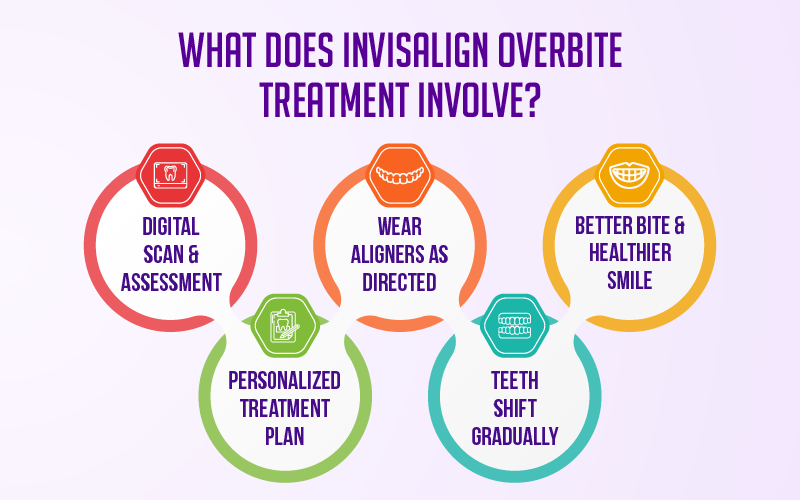
As a candidate, the first step is an assessment and a digital scan of your teeth. The orthodontist will then develop a tailor-made treatment plan showing how your teeth will shift during this process.
You will use a set of aligners which you will be instructed to wear at specific times. Each set of aligners will gradually help your teeth shift into their final positions.
What About Attachments and Elastics?
Patients are often astonished by this aspect. Your treatment may involve small, tooth-colored components glued to certain teeth. They are designed to help the aligners grip the teeth and straighten them. Other patients may need elastics to improve their bite.
None of the above options indicates that the treatment is “more serious.” They are just tools that your orthodontist may use to straighten your teeth when no other method is effective.
The length of time involved in treatment can vary widely. A simple case can take a short time, while a complicated overbite may take many months or longer.
4. What Can You Expect From Invisalign Before and After Overbite Treatment?
Looking at Invisalign before-and-after pictures of overbites can lead to unrealistic expectations. Some outcomes do seem remarkable. However, don’t let anyone else’s case influence your own.
It is quite possible for two people to have apparently similar overbites while having completely different positioning of their teeth and jaws and different treatment needs. Only after checking your mouth can your orthodontist provide precise expectations.
As far as results are concerned, it can take time for visible changes to occur because Invisalign works gradually. Its purpose isn’t to move your teeth into position, but to keep making minor movements.
And you’d better be patient because you’re unlikely to see your new smile on Tuesday.
5. Are Invisible Aligners Right for Every Overbite?
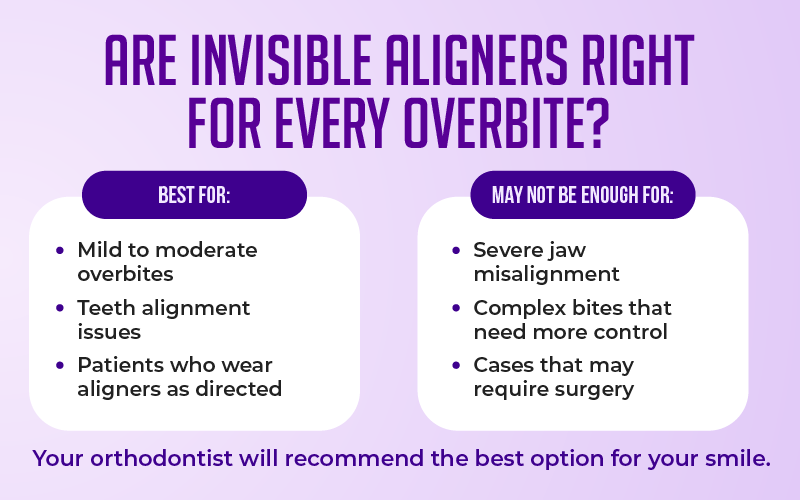
That’s not always the case.
Invisible braces work well for several orthodontic problems, including some overbites; however, they are not necessarily the best option for everyone.
A light overbite can be treated fairly well. But complex bites, with significant jaw problems, may need braces with an added appliance or, in more extreme situations, jaw surgery.
There are also practical issues. Invisible braces may work only if worn correctly. If you remove them while eating, it is ok; however, if you leave invisible braces in the case all day because you forgot about them, it will not help.
To achieve positive results, both sides need to cooperate: the orthodontist will create a plan, and you are expected to follow it.
6. What Should You Ask Before Choosing Invisalign?
When you’re considering dental treatment, feel free to ask the professionals questions, because this is about your mouth, your money, and your time.
You should be asking such questions during your consultation:
“Is the reason for the overbite the position of the teeth or the jaws?”
This will help you understand the justification for using Invisalign.
“What kind of improvement in my teeth am I likely to get?”
A high-class orthodontist must be able to provide you with information on the expected outcomes, rather than promising you just a perfect smile.
“Will I be required to wear attachments and/or elastics?”
Knowing this will help you avoid unpleasant surprises during treatment.
“How long is it going to take me to get the treatment?”
Ask the orthodontist for the maximum time needed to achieve the desired results.
“What to do if Invisalign is not a good option for me?”
You can read more in our Blog :
7. Finding the Right Invisalign Provider
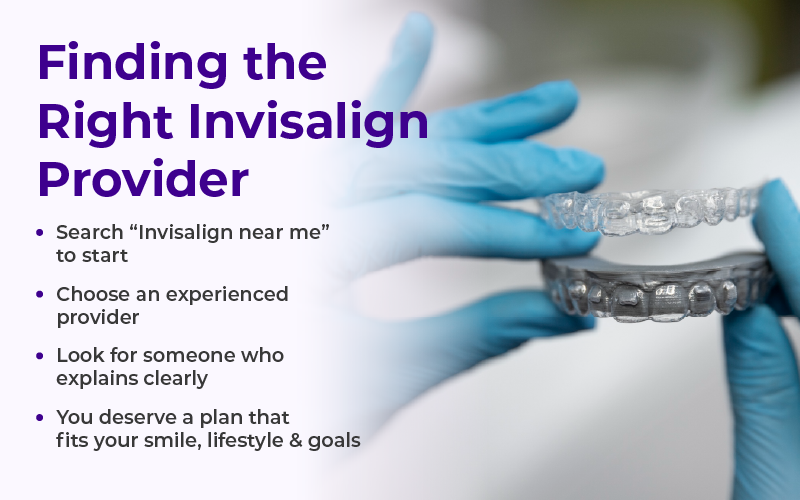
If you’re eager to start treatment, searching for “Invisalign near me” is a good first step. But that’s just the beginning.
Make sure to find an orthodontist or dentist who has experience in treating bite issues and can describe your situation to you in normal English.
When you meet with your doctor, ask questions like “Why do we need to move this tooth?” or “What will happen if I do not fix this issue?”
You are not looking for someone speaking to you in terms and expecting you to follow what he says.
You want someone who can examine your bite, explain the issues, discuss possible treatment options, and explain the limitless power of Invisalign.
The Bottom Line
So, can Invisalign fix overbite? In most cases, the answer is yes. This treatment has proven effective for certain types of overbites, especially when the problem is dental in nature and involves only the position of the teeth. However, if the overbite is too severe or involves the jaw, another treatment approach is needed.
So the best approach isn’t simply to order Invisalign aligners; first, an assessment of your bite must take place.
The key question isn’t simply, “Does Invisalign work with an overbite?” but rather, “Does it work with MY overbite and what result can I expect?”
Frequently Asked Question
1. Can Invisalign fix an overbite?
Yes, certain minor to moderate cases can benefit from the treatment provided by Invisalign braces, especially if the cause is simply the position of your teeth. Your orthodontic specialist will assess your bite and your jaw to find out if the clear braces treatment will work for your case.
2. How long does Invisalign take to fix an overbite?
The time required for the procedure greatly varies from person to person. A mild case usually takes several months, while more serious conditions may take longer. After assessing your teeth and bite, your orthodontist will create a customized plan and tell you how long treatment is expected to take.
3. Can Invisalign fix a severe overbite?
Invisalign can be a good option for some severe cases, but not all. If the sharpness of your problem comes from the jaw and not from the teeth, your orthodontic practitioner may advise you to opt for other ways of orthodontic treatment.
4. Will I need attachments for Invisalign overbite treatment?
Possibly. Small teeth-colored attachments provide additional grip for aligners to make precise movements on teeth. Some patients may also need elastics. The orthodontist will decide whether attachments are required depending on your individual bite and the treatment plan.
5. What happens after Invisalign overbite treatment?
Once the overbite has been treated or corrected, retainers will be needed to maintain the position of the teeth. Wear the retainers as prescribed by the orthodontist, as teeth continue to move over time.