



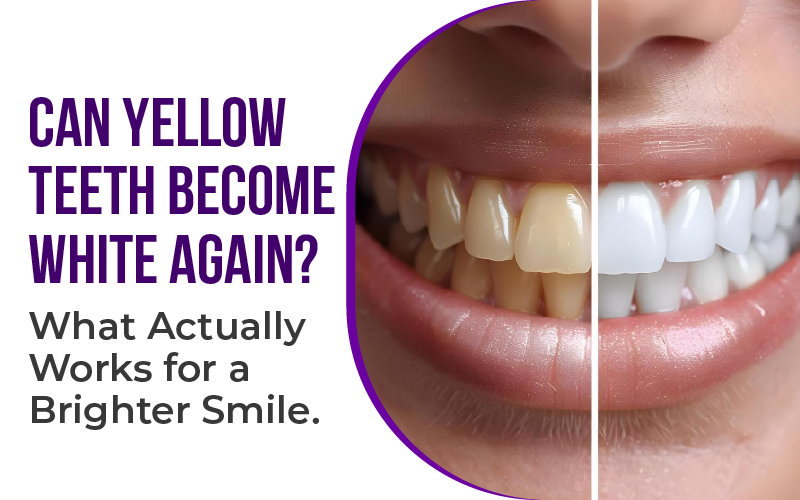
Have you ever noticed your teeth in a photo or under bright lighting looking more yellow than you hoped? You brush your teeth twice a day every day and still are not satisfied with the whiteness of your teeth! This can be quite disheartening knowing that every commercial from toothpaste claims to provide that radiant smile!
Fortunately, teeth tend to get whiter again depending on the cause of tooth discoloration. Professional cleaning usually takes away superficial stains, and if the discoloration is caused by something deeper, there are teeth whitening procedures available for treatment.
AZ Dentistry believes that every nice smile must begin with learning about your teeth the right way and finding the proper safe and effective way to treat them.
Why Do Teeth Turn Yellow in the First Place?
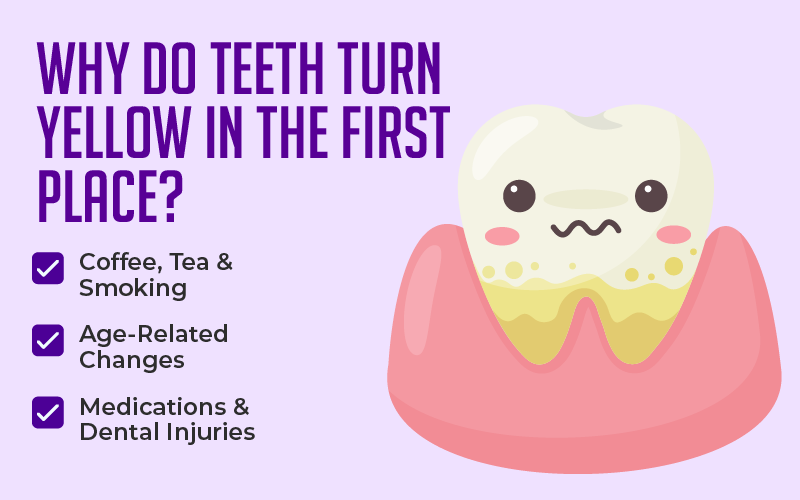
Having bright white teeth does not imply that they are healthy. The natural color of your teeth depends upon the thickness of enamel as well as the dentin, which is underneath and generally bears a tinge of yellow. Some daily activities may contribute to the formation of stains on your teeth as well: for example, consuming coffee and tea and smoking will lead to the accumulation of surface stains due to plaque and tartar.
You should also take into account your age. As the enamel wears out, more of the dentin can be seen. In addition, some medications, dental injuries, or developmental conditions may also lead to stains that can’t be rinsed.
Is Yellowing Always a Sign of Poor Oral Hygiene?
The color of one’s teeth is not strictly a matter of dental hygiene; one can practice good habits like regular flossing and brushing and still have teeth that are somewhat yellow. There are many factors affecting the color of someone’s teeth including their genetic makeup, thickness of their enamel, age, and existing shade of their teeth.
At the same time, yellow patches along the gum line or discoloration along with heavy deposits of material on the teeth may signal the presence of plaque or tartar. Tartar cannot be removed effectively through normal tooth brushing and a professional cleaning may be the first step to getting rid of it effectively.
Can Yellow Teeth Become White Again?
Yellow teeth can definitely be made brighter, however, the yellow teeth treatment that is required will depend on what caused the tooth discoloration. The stains on the surface from coffee or tea can be removed through professional cleaning, but stains that are deeper are not easy to remove.
The American Dental Association (ADA) claims that whitening treatments utilize hydrogen peroxide or carbamide peroxide in order to whiten teeth. The effectiveness of the whitening treatment will depend on the natural color of your teeth and the reason they were dirty. For instance, you may successfully whiten your teeth only if they are stained with coffee, but if a tooth has become dark in color due to a trauma, it will need to be looked at by a dentist first.
Learn more about tooth discoloration in our Blog :
5 Ways to Make Yellow Teeth Look Whiter
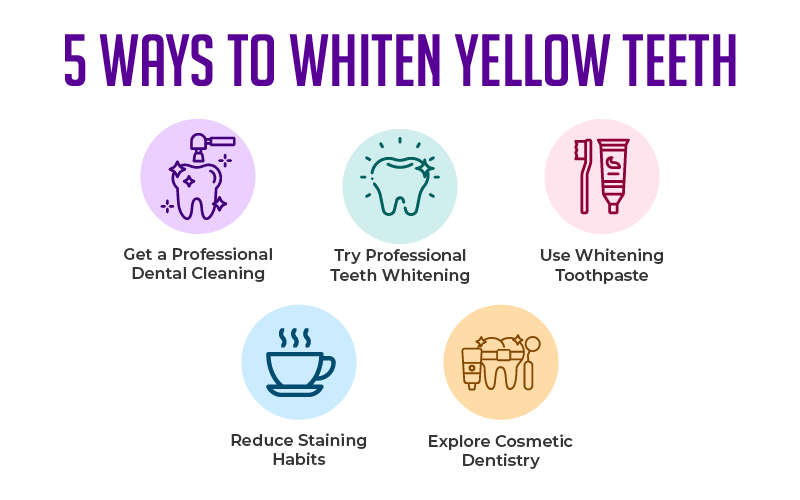
Start with a Professional Dental Cleaning
It is necessary to start at a professional dentist’s office if you have not been to one for some time. One of the main processes during the visit is a dental cleaning where plaque, tartar, and a range of extrinsic stains will be removed.
You may see that your teeth look whiter and shinier right after the cleaning process. However, do not forget that professional cleaning does not change the natural color of your teeth. If your enamel is translucent, or your dentin is strong yellow, then the internal shade will remain the same no matter how much your teeth are cleaned.
Professional cleaning is most effective if the stains are present on the gums and in between the teeth. During this appointment, a dentist will also check the presence of cavities or inflammation in the gums.
Consider Professional Teeth Whitening
Professional teeth whitening can be a good choice for adults who want to see an improvement.
You may choose from in-office whitening, at-home whitening trays, or a combination of both. In-office procedures tend to use whitening agents that are specifically chosen by dentists. At-home trays are custom molded to fit your teeth. Your individual dental situation, as well as the amount of whitening you wish to undergo, will determine your best choice. Depending on what results you desire, you may only need one whitening treatment or several yellow teeth treatments.
If you are concerned about sensitivity, be sure to talk about it first, as teeth whitening may cause temporary sensitivity and mild gum irritation. Your dentist can help you understand whether you are a candidate for whitening and offer you options to alleviate any discomfort.
Choose Whitening Toothpaste for Surface Stains
Whitening toothpaste can remove certain external stains, especially those caused by coffee, tea, and food. Most whitening toothpastes work primarily through polishing agents that eliminate surface discoloration. However, some may include certain other compounds that help with the staining process.
Whitening toothpaste will not change the natural shade of your dentin or have the same effect as peroxide bleaching. Whitening toothpaste can help to keep teeth looking whiter in the longer term, but it is unlikely to give dramatic results.
Use fluoride toothpaste and brush carefully with a soft toothbrush. You do not have to scrub hard; this will not make your teeth whiter any quicker, as you can irritate your gums and wear down the enamel or dentin surface depending on how you brush your teeth and your dental health.
Cut Back on Habits That Cause Staining
To attain a brighter smile, it is not necessary to eliminate coffee consumption from your mornings, which is not a feasible requirement for many. A few wise changes are sufficient to minimize potential staining.
After drinking tea or coffee, rinse your mouth with water to avoid letting the staining drink stay on your teeth. Make sure to brush twice a day using fluoride toothpaste, clean in between your teeth every day, and not skip dentist visits.
If you smoke or chew tobacco, quitting may help you achieve better oral wellness and resolve one of the main stains’ sources. Also, quitting is a good way to lower the risk of developing gum disease and cancer of the mouth.
One little but very useful practice is to be attentive to any changes in your teeth’ color. If you see discoloration appearing quickly and affecting only one tooth or if you feel pain, don’t just think it is a stain … get a dental check-up instead!
Ask About Cosmetic Dentistry for Stubborn Discoloration
Whitening procedures are not always successful. This holds true especially for teeth that are stained because of internal tooth problems, underlying diseases, drugs, or enamel flaws.
Based on the cause of discoloration, the dentist would probably want to consider processes such as bonding or veneers. These solutions can improve the color of the teeth, still requiring health professionals to undertake more efforts than it would be necessary for whitening.
One of the differences between these approaches is that veneers are thin layers attached on the fronts of teeth. In some cases, putting the veneers may involve removal of the enamel making it necessary to consider all pros and cons of such a decision. Bonding, on the other hand, involves a somewhat different process of using the resin to change the appearance of a tooth.
Your dentist should explain all the alternatives which are available in relation to the procedure before suggesting that a patient undergoes the cosmetic treatment.
Learn about teeth whitening in our Blog:
What About Home Remedies for Yellow Teeth?
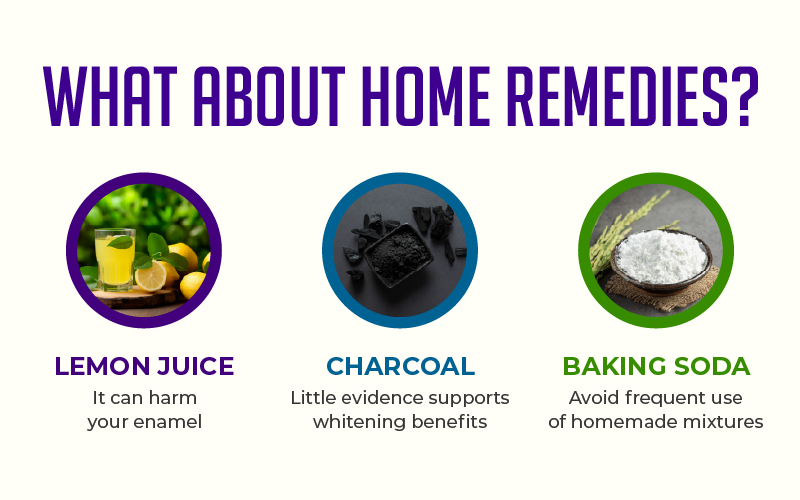
Home remedies for teeth whitening can seem attractive, but some may create more problems than they solve. Citric acid is an ingredient in lemon juice, which can harm the teeth’ enamel, while products that use charcoal have little evidence to support their whitening properties. Damaged enamel does not replenish itself, and excessive wear will result in dentin that can be seen through the enamel.
Baking soda is one of the ingredients present in some commercial whitening toothpastes, but home-made variations should not be used regularly. Avoid bleach and any chemical that is not meant for mouth use. If a treatment claims you will see results overnight, it processes that are not safe.
How Long Does It Take to Whiten Yellow Teeth?
Whitening is highly individual and requires different periods based on the original teeth color, the stain’s origin, the way whitening is done, and the regularity of applications. If the discoloration is due to extrinsic stains and tartar accumulation, then professional cleaning can be important during one appointment. Whitening may be achieved in as little as one visit or may take more than one session. Non-professional products prescribed by dentists for use at home may require prolonged treatment. After whitening, care at home is also needed.
Teeth may start to pick up stains from foods, beverages, smoking, and aging. The whitening effect wears off with time and attempts to repeat the procedure frequently may end up with hypersensitivity and gum problems.
Final Thoughts: Your Brighter Smile Starts With the Right Advice
Yellow teeth can often be whitened again, and you might have more choices than you think. Professional cleaning may help in refreshing your smile, while the whitening procedure may only be effective for deeper staining, and other types of discoloration may require different types of cosmetic or restorative treatment.
You don’t have to be ashamed of your teeth’ natural color, and neither do you have to try out each and every whitening product on the market. Start with finding out the cause of discoloration.
If you are unhappy with your teeth’ shade, visit AZ Dentistry for a consultation. A dental professional will be able to examine your teeth, recommend the type of whitening suitable for you, and set realistic expectations regarding it before you spend any money on the treatment.
Your next step to having a whiter smile should make you feel informed and confident in your choices.
Frequently Asked Questions
1. Can my yellow teeth become white again even if I’ve had them for years?
Yes, quite a bit! It all depends on the source of the discoloration. On the surface, yellow teeth may improve with a scrub or a whitening, whereas true yellow teeth or brown depths to them may require a different solution.
2. Will teeth whitening make my teeth sensitive? I’m worried it’ll hurt.
Temporary sensitivity or irritation of the gums. This can be unpleasant, but your dentist can advise you of the best options and how to minimise any discomfort before treatment.
3. Why is the tooth color still yellow even when I brush my teeth twice a day?
You could simply be at the mercy of what Mother Nature has given you. Your genetics, the level of the thickness of your tooth enamel, your consumption of coffee and tea, and accumulation of tartar can all affect whitening.
4. Are home remedies like lemon juice or charcoal actually safe for whitening teeth?
Some of these really could end up doing more damage. Lemon juice can damage enamel, and there’s little evidence to support the whitening powers of charcoal. Stick to dental products your dentist recommends.