


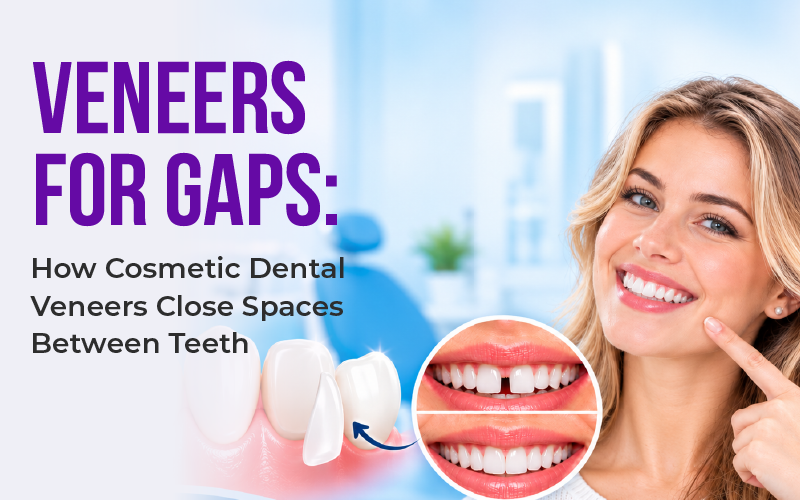
Go on, be honest: have you ever found yourself hiding your smile by covering your mouth because of a gap between your front teeth? Whether you’ve gotten used to the gap in your smile, or you’ve noticed it in pictures over the years but never really discussed it, it can make you feel self-conscious.
The silver lining is that you do have choices. If you want a more uniform smile, dental veneers can alter your teeth’s contours to look more regular, even if they don’t physically move them; that may be all you need.
Cosmetic dental treatments like veneers are worth considering, but choose them carefully. Remember, you want your teeth to appear natural, fit comfortably, and remain healthy long after your appointment. Veneers may be the perfect fix for some spaces, but not all.
The first step to making the right decision is knowing your options, and AZ Dentistry is here to help. Here is what you need to know about how cosmetic dental veneers close spaces, and whether they are worth it.
What Are Dental Veneers, and How Do They Close Gaps?
What are veneers? Veneers are thin, custom-made shells bonded to the front of the teeth. Most veneer shells are made from porcelain or tooth-colored composite resin and can modify a tooth’s size, shape, and color.
When the dentist uses veneers to close gaps between teeth, they will try to broaden the teeth in well-balanced proportions. Veneers extend over the visible surfaces and toward neighboring teeth, making the gap less visible.
For example, if you have small gaps between your two upper front teeth, veneers can be fabricated to make your teeth look larger, helping conceal or even close the gap, as long as the teeth are otherwise in good condition and not too crooked.
You can learn more about “Can veneers fix crooked teeth?” in our blog:
The key is proportion. If you widen your teeth without compensating for the rest of your smile, they may look bulky or over-square. Your dentist will need to consider your tooth shape, facial structure, gum position, and the gap’s width.
Can veneers correct other issues? Yes. If you’re also experiencing other cosmetic issues, like unevenly shaped teeth or teeth that won’t whiten, your dental professional can include them in the plan to close the gap.
Which Types of Gaps Can Veneers Help With?
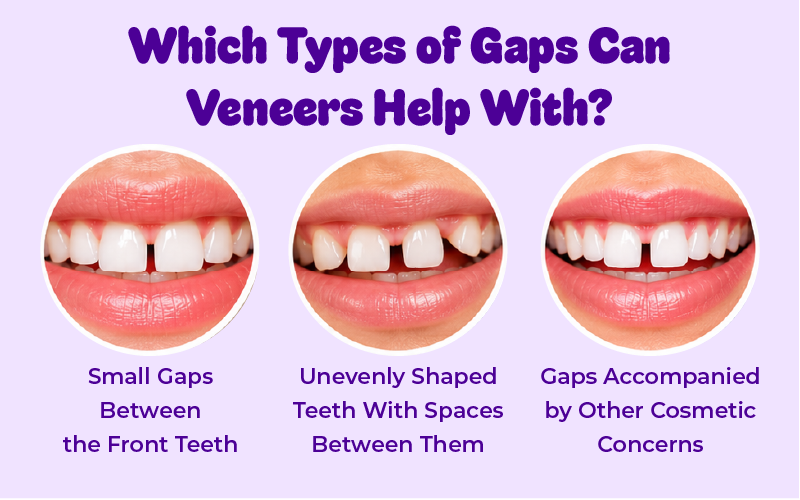
For small or moderate gaps, often right in front between teeth, veneers might be an option if the teeth are healthy and fairly straight. But it’s about more than just the gap.
Small Gaps Between the Front Teeth
Veneers aren’t only for large gaps. They can close small or moderate spaces between the teeth if they’re otherwise healthy and reasonably straight. But that’s not the only factor.
A small gap between the two upper front teeth is often called a diastema. For some people, it’s natural, and for others, it creeps up on them.
Porcelain veneers can close the visible gap between your front teeth and help your smile look more symmetrical. This may be an ideal treatment option if you are also unhappy with the shape or color of your front teeth.
Unevenly Shaped Teeth With Spaces Between Them
Sometimes the problem isn’t the gap. One tooth is narrower than its neighbor, or the teeth are slightly different in shape.
These veneers can help produce a uniform smile line in these situations. The dentist designs each veneer in concert with its neighbors, so the result isn’t a studded wall of individual coverings.
Gaps Accompanied by Other Cosmetic Concerns
You may have gaps between your teeth, chips, worn edges, or stains that are hard to remove. Veneers can sometimes address multiple issues in one treatment plan.
But the cause of the gap is important. If it’s a wide-open space, significant tooth movement, or a freshening of an existing space, other options may be better. Your dentist can help you decide whether to proceed with cosmetic treatment or start with preliminary treatment for your teeth and gums.
Porcelain vs. Composite Veneers: Which Is Better for Closing Gaps?
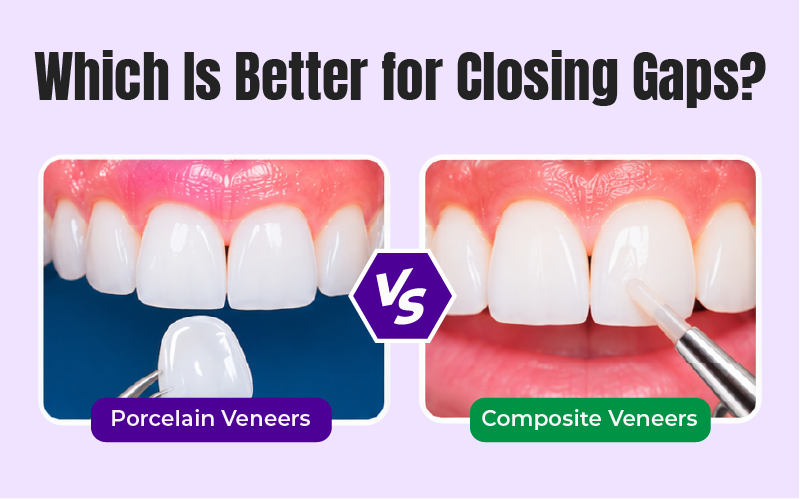
The two most common veneer materials are porcelain and composite resin. Both veneers can improve the look of gaps between your teeth, but they are made, cared for, and repaired differently.
Porcelain Veneers
Porcelain dental veneers are thin, custom-made shells of dental porcelain attached to the front of your teeth. They look natural and resist stains more than composite resin veneers. Your dentist tailors each porcelain veneer’s shape to minimize the appearance of gaps while maintaining natural tooth proportions.
Porcelain veneers generally require slight to moderate enamel preparation, plus visits for scanning and bonding.
Composite Veneers
Composite veneers involve placing tooth-colored resin directly onto your teeth, then shaping and contouring it, bonding it, and curing it with a curing light. Composite veneers for spaces are a good option for smaller gaps and minimal reshaping, and you can usually complete treatment in one appointment with less prep. Composites can be repaired and are easier to contour and polish, but they stain more easily and can chip and wear over time. Your dentist will help you choose the best material for your needs.
How Does the Veneer Procedure Work?
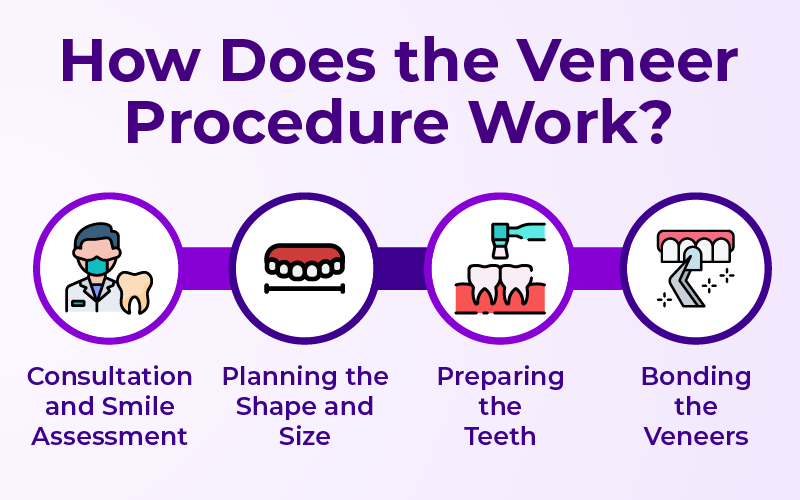
One of the most helpful things you can do before cosmetic treatment is understand what will happen at each stage. Knowing the process makes it easier to ask useful questions and decide whether you’re comfortable proceeding.
Step 1: Consultation and Smile Assessment
Your dentist will evaluate your teeth, gums, and bite, discuss your smile goals, and determine whether you are a candidate for veneers. They will also check for any newly widened gaps that may indicate an underlying dental problem.
Step 2: Planning the Shape and Size
For each veneer, your dentist will carefully plan the width, shape, and form to minimize the distance between the teeth while maintaining balance in your smile. This means the preparation will be well positioned and won’t make the teeth look too wide.
Step 3: Preparing the Teeth
Porcelain veneers require your dentist to thin out a small amount of surface enamel before taking impressions or scans. Preparation is less for composite veneers. Your dentist will discuss the procedure and any irreversible changes during the consultation.
Step 4: Bonding the Veneers
The dentist will then check the fit, shape, and shade of the veneers before bonding them to your teeth. The dentist then moulds the composite resin onto the tooth and hardens it with a curing light. The dentist will then adjust your bite.
Are Veneers the Best Way to Close a Gap?
Here’s something to consider: sometimes the best treatment changes your natural teeth the least.
Veneers are an option if you have healthy, fairly straight teeth and want a cosmetic shape change. But if your teeth are very widely spaced or need to be shifted, braces could be a better option.
Dental Bonding for Smaller Gaps
Dental bonding uses composite resin to build up the sides of teeth and reduce small spaces. It’s often a more conservative option for minor cosmetic changes and can often be completed in one visit.
Bonding can also be attractive if you’re happy with your teeth’s overall shape and natural color. Your dentist can weigh the pros and cons of bonding versus veneers, considering the filling material you’d need and the look you want.
Braces or Clear Aligners
Orthodontic treatment moves teeth into different positions. Braces or clear aligners may be recommended when gaps are larger, several teeth are spaced apart, or the bite needs correction.
Unlike veneers, orthodontics addresses tooth position. Treatment typically takes longer, and the exact duration depends on your case’s complexity. Retainers are generally needed afterward to help maintain the result.
Which Option Should You Choose?
This depends on the cause of the space and what you’d like to change in your smile besides closing it. If you have just a few gaps between otherwise perfectly aligned teeth, bonding or veneers can help. Larger spaces may require orthodontics.
“How can I decide which option is best?”
Your dentist can discuss the advantages, disadvantages, costs, and long-term effects of each option so you can make an informed decision.
What Are the Risks and Limitations of Veneers for Gaps?
Veneers can give you a beautiful smile, but they have drawbacks. Traditional porcelain veneers are usually considered permanent because the process involves slightly grinding and removing the tooth’s surface. Teeth can also chip, crack, or loosen, and composite veneers can stain.
Teeth grinding can accelerate wear and damage, and veneers don’t address cavities, gum disease, or shifting teeth. Your dentist will evaluate these issues and discuss risks.
How to Care for Veneers After Closing a Gap
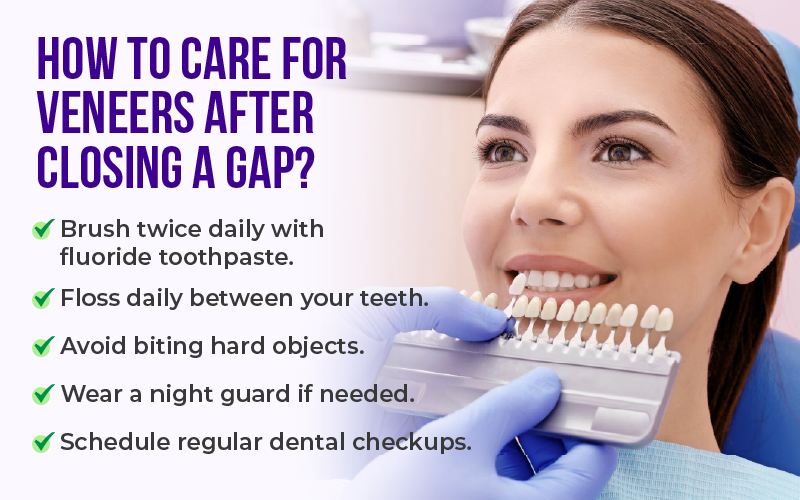
Just like your natural teeth, you’ll need to care for veneers once they’re in. The underlying teeth are just as susceptible to cavities and gum disease as before, so clean them every day!
- Use fluoride toothpaste and a soft-bristled brush. Brush twice a day.
- Floss daily, or use another effective interdental cleaner, to clean between your teeth.
- Don’t bite down on hard things, like ice, or open packages with your teeth.
- If you clench your teeth, ask your dentist whether you need a night guard to help protect your veneers.
- Schedule regular dental visits so your dentist can examine your gums, bite, and restorations.
Porcelain stains much less than composite resin, but no matter what kind of veneer you have, you should still follow good habits to keep your smile healthy. Have your dentist check loose, chipped, or bite-changing veneers instead of using peroxides or abrasives to polish them.
Ready to Explore Veneers for Gaps at AZ Dentistry?
Whether your tooth gap has always been there or has changed recently, understanding your options helps you decide with confidence. Veneers for gaps can improve tooth shape and create a balanced smile, while bonding or orthodontics may suit other cases. At AZ Dentistry, book a consultation to discuss your smile goals, explore suitable treatments, and choose an approach that supports both your appearance and dental health.
Frequently Asked Questions
Usually yes. They can be shaped and sized to match your teeth’s width and shape. Your dentist will evaluate the opening and judge whether the result will look natural.
That’s a fair worry. Rest assured that your dentist evaluates each veneer’s shape and size to maintain proper proportions. The goal is a natural-looking smile that complements your overall face.
Most patients tolerate the procedure well. You may experience some sensitivity or mild discomfort if your teeth need preparation. Your dentist can explain what to expect and how to stay comfortable.
It really depends on the teeth. Veneers can improve your teeth’s appearance, while braces are best for moving your teeth. If you have larger gaps or more significant alignment issues, orthodontics may be a better option.
Don’t panic and call your dentist. If enough of the veneer is intact, your dentist can re-bond or repair it. Try to avoid eating on that tooth until your dentist has a chance to look at it.