


Reliable history of success Dental implants have been used for a long time. A systematic review and meta-analysis of prospective studies published in 2026 in the International Journal of Oral and Maxillofacial Surgery found these: during at least 20 years, they estimate a 93% implant survival rate. Though, results varied between patients and studies.
That figure is encouraging, but it is good to keep in mind, if you are thinking about an implant to replace a missing tooth. Long-term success will depend on certain factors such as the condition of your bone and gums, oral hygiene, and the function of the restoration. Some issues can be seen immediately, while others might not show up until many years later.
You may also want to understand the meaning of ‘implant failure’ and ‘dental implant complications’ from a dentist. For example, sometimes the implant doesn’t attach to the jawbone. In some cases, the implant is firmly attached but there’s a complication with either the gum, the bone beneath the gums or the attached crown.
7 Warning Signs That Your Dental Implant May Be Failing
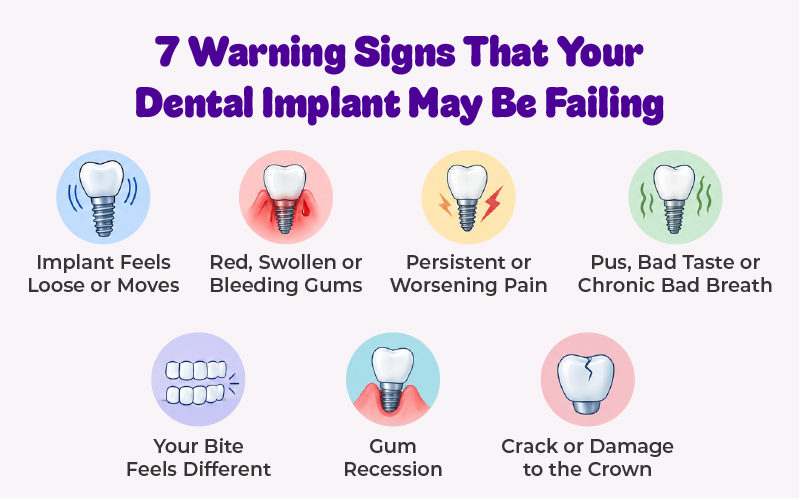
Your Implant Feels Loose or Moves
A dental implant should remain stable once it has properly fused with the jawbone. If you observe that the implant moves when you chew or touch it, contact your dentist as soon as possible.
A loose implant might suggest that the bone failed to properly fuse to the implant or that the bone around the implant has worn away over time. Though, it’s also possible that the crown or attaching screw has come loose and the implant remains firmly in place.
Your dentist will be able to identify the moving part and advise on the right course of action. Try not to repeatedly feel the implant with your finger or tongue, and avoid chewing on that side of your mouth.
Your Gums Are Red, Swollen, or Bleeding
Some tenderness right after the implant is placed is normal healing. If redness, swelling, tenderness, or bleeding around an implant do not resolve, it may indicate a problem. These symptoms may indicate inflammation around the implant. One early condition, called peri-implant mucositis, affects the soft tissues around the implant. With appropriate treatment, it can often be reversed before supporting bone is damaged.
What Happens if it spreads to the bone if it spreads and reaches the bone surrounding the implant, it is called peri-implantitis. This disorder can cause destruction of the tissue and bone that hold an implant in place.
Don’t wait for the bleeding to get worse before you book an appointment. You will give the dentist a better chance to treat the dental implant problem the sooner you come in.
You Notice Pain That Persists or Gets Worse
It is normal to have soreness and discomfort after the implant is placed, mainly in the first few days. The discomfort should go away as healing continues.
Persistent pain, pain that persists, or pain that increases should be evaluated by a professional. Causes may be an infection, or an inflamed area, pressure on the implant, or an issue with the bone or restoration.
Note the duration of your pain. Do you have pain while biting down? Do you have a constant dull pain in your tooth even when you’re not chewing? Is the tooth getting more tender?
This information can assist your dentist in figuring the dental implant problems. If you have intense or worsening pain, mostly with swelling and fever, you need to see a dentist immediately.
Pus, an Unpleasant Taste, or Persistent Bad Breath Develops
Recurrent bad taste you might have an unpleasant taste that keeps coming back no matter how often you brush or floss. If you observe any discharge around the implant, more sore gums and mouth odor; there might be an infection/inflammation.
You shouldn’t just keep an eye on pus around an implant at home forever. You need to see your dentist right away for an exam.
Don’t attempt to squeeze the gum or drain the area on your own. Brush softly around the area as directed unless your dentist provided other post-op care instructions, and adhere to any prescribed cleaning or medication advice.
Your Bite Feels Different
Your dental implant crown should feel natural and comfortable with your other teeth. If it feels suddenly higher, strikes your other teeth, or causes you any discomfort when chewing, please call for an appointment.
And also, biting too hard on a crown can stress the implant areas. Also, a loose crown or a change in your bite could be the reason why your bite feels off when chewing.
The problem is sometimes easy to fix. Your dentist might simply have to take a bit more off the bite or fix the restoration. But find out what’s causing the problem, don’t just ignore it by not chewing on it, and hope it goes away.
Your Gums Appear to Be Receding
Are you noticing more of the implant crown or adjacent metal parts becoming more visible to you along your gumline? An alteration in how the tissue surrounding your crown looks may mean there’s a gum recession happening, or it may be changing shape.
Recession does not necessarily mean your implant is failing. The makeup of the gum tissue may change for many reasons, such as tissue thickness, healing pattern and local irritation. Your dentist will determine if it is mainly a cosmetic issue or if there’s an underlying problem. Dental X-rays and an examination may be taken if the suspicion of bone loss or peri-implantitis.
You Notice a Crack or Damage to the Crown
The actual implant may be fine but the crown on top is chipped, cracked, or broken. You might feel a jagged edge against your tongue or find you can’t close your teeth together anymore. Many dental restorations are subject to wear and mechanical failures when subjected to higher biting forces or grinding of teeth.
Don’t chew hard foods on a fractured crown and have it examined by a dentist. The dentist will determine if your crown takes treatment or needs to be replaced and will also inspect the implant beneath the crown.
You can learn about Dental Implant Procedures in our Blog:
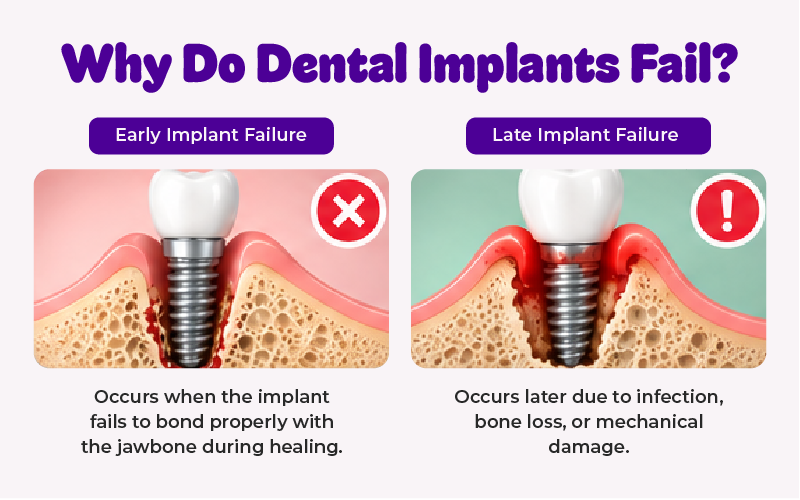
Why Do Dental Implants Fail?
It’s not often that one problem causes every implant problem. Your dentist has to look at when the problems are occurring, your oral and medical history, the health of your gums, and how well your implant is working.
Early Implant Failure
Early failure occurs when the implant does not develop a healthy, stable bond with the surrounding bone as it heals. This process is known as osseointegration, and it’s what secures the implant in your jaw.
Many complications can delay healing such as infection, poor support for the bone, the presence of medical conditions or external movement of the implant during the healing process.
Other factors such as smoking can affect healing, and poorly managed diabetes can increase the risk of problems. Your dentist will take all these factors into account when planning treatment and your follow-up.
Late Implant Failure
Late failure may happen many years or months after restoration. One cause of late failure is peri-implantitis, a disease that causes inflammation and destruction of tissues and supporting bone around the implant.
Factors linked to greater risk include plaque deposits, past gum disease, smoking, and diabetes. Mechanical failures can also occur, including a loose screw or damaged crown.
That’s why you should continue to have regular visits to your dentist even if your implant feels perfectly normal. Your dentist will keep an eye on the gum tissue, check your bite, and identify any differences you may not notice.
What to Do If You Suspect Implant Failure?
If you experience an issue with your implant, don’t panic. Most complications of breast implants can be fixed, mainly if caught early. The key is to have an examination rather than trying to work out what is wrong yourself.
The dentist might also test the implant to see if it’s stable, look at the surrounding gums, test your bite, and take X-rays to look at the bone around the implant. Based on these results, they can proceed with treating the problem which may include cleaning, controlling inflammation, adjusting the crown, fixing the component, or treating an infection.
If the implant has been loose or lost a lot of bone, it may need to be taken out. In some cases, it may be possible to have an implant replaced after some healing and the cause of failure has been treated.
Get immediate medical attention if you have rapidly expanding facial swelling, fever, and intensifying dental symptoms, or trouble swallowing or breathing. Trouble swallowing or breathing is a medical emergency.
Can You Reduce Your Risk of Dental Implant Failure?
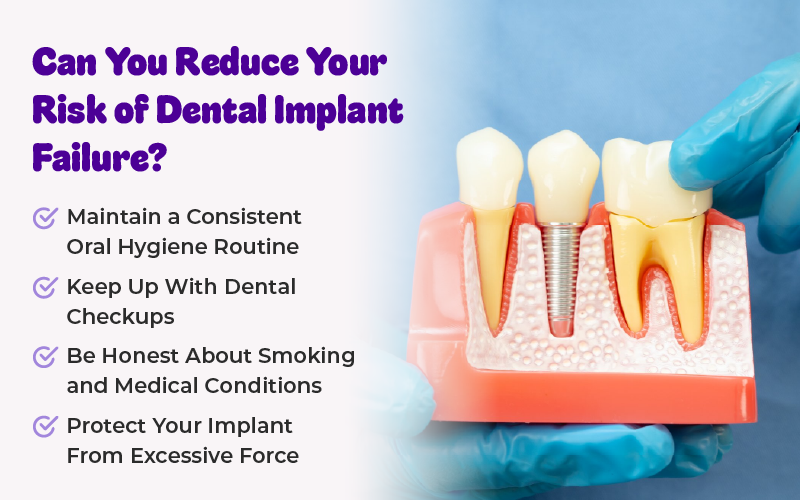
You have limited control over these things, but there are some everyday things you can do to help your implant’s long-term survival.
Maintain a Consistent Oral Hygiene Routine
Use a fluoride toothpaste twice a day and clean between your teeth daily. Focus on the gumline where your implant meets your natural teeth.
Your dentist may also tell you whether you need to use a particular interdental brush or other types of cleaning device, according to the type of restoration you have.
Keep Up With Dental Checkups
Recall visits to monitor the implant, check surrounding tissues, and detect early warning signs of any potential problems. The recall schedule should be established as your medical and oral health history, as well as your individual risk factors.
Be Honest About Smoking and Medical Conditions
Inform your dentist if you smoke or have diabetes. Smoking or diabetes can influence the approach your dental team takes to protect you from, or manage, dental issues. If you have diabetes, managing your blood sugar levels will also benefit your mouth’s health.
Protect Your Implant From Excessive Force
Talk to your dentist if you tend to grind or clench your teeth to see if a night guard can protect the restoration. Do not bite down on hard objects, open packages, or use your implant crown to do anything your teeth aren’t meant for.
Small preventive habits can dramatically simplify routine implant care during time.
Key Takeaway!
Worried About Your Dental Implant? Az Dentistry Can Help.
You should be able to eat, speak, and smile with ease from your implant. If your gums are bleeding, you’re experiencing pain, your bite is changing or your implant is moving, you should get the area checked.
The dental implants specialist at Az Dentistry can examine your implant and talk through your symptoms to try and identify the cause. The correct course of action after this depends on what the doctor finds from the examination, which is why an accurate diagnosis needs to be made first.
Don’t Delay until a loose implant or sore gum becomes too painful to bear. If your implant just doesn’t feel right, set up a dental implant consultation at Az Dentistry in Gilbert and let’s go over your options.
FAQs About Dental Implant Failure
So if your implant feels, your gums bleed or your pain persists again and again, it’s really worth checking out. These signs may not necessarily mean failure but can often be avoided if treated early on.
Yes. You can experience chewing discomfort even after years of comfortable chewing. It might be due to inflamed gum tissue, loss of bone, or a cracked crown. Routine visits to the dentist can identify these changes early.
Not usually. The discomfort could be related to the gum tissue, a loose crown, or biting pressure. Your dentist can determine the source and provide you with options before addressing the implant itself.