


You’ve purchased whitening toothpaste, used the strips, and possibly even bought a whitening kit that promised you would have that bright smile in a matter of days. Still, your teeth seem to be just as dull. Frustrating, right?
You might think you chose the wrong product or didn’t use it long enough. But what most people don’t realize is that teeth whitening can fail when different factors cause tooth staining.
Some stains are on the outside of your enamel and are easy to whiten. However, some stains appear within the tooth and may yield limited results, even with the best whitening treatment. Existing crowns, fillings, dental conditions, and tooth sensitivity may influence treatment choices.
If you’ve been asking yourself why your whitening treatment didn’t live up to the hype, this is the article for you. Find out what is really going on, what treatments might work, and when you should have a chat with your dentist about options.
Why Doesn’t Teeth Whitening Work for Everyone?
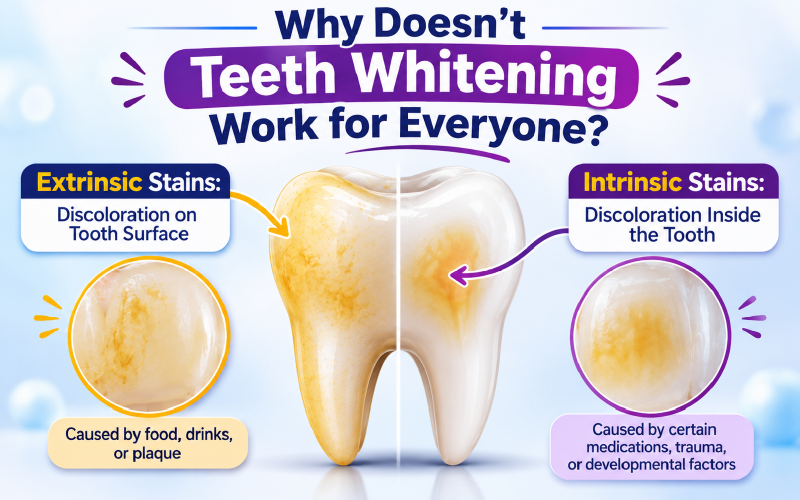
Here’s how the American Dental Association (ADA) describes tooth discoloration: it could be extrinsic (something that occurs outside the tooth), intrinsic (something that takes place within the tooth), or a mixture of both.
Here’s where the plot thickens.
Extrinsic Stains: Discoloration on Tooth Surface
Extrinsic stains occur on the enamel surface. These stains are typically related to normal lifestyle habits and some foods and beverages.
Some common tooth discoloration causes are:
- Consuming coffee, tea, and red wine daily
- Any use of tobacco products or smoking
- Eating highly pigmented foods, such as berries or condiments
- Poor brushing and flossing
- Poor oral hygiene
These stains can typically be treated effectively with professional cleaning and the right whitening agents, since they are inside or close to the tooth’s surface.
Read more about the Causes of Tooth Discoloration in our blog
Intrinsic Stains: Discoloration Inside the Tooth
Intrinsic stains develop within the enamel or dentin, the layer underneath it. They can be more difficult to address with conventional whitening.
Common causes include:
- Natural aging and thinning enamel.
- Other causes include exposure to tetracycline while the teeth are developing.
- Tooth damage or injury.
- Excessive fluoride exposure while teeth are developing.
- Specific dental anomalies and developmental defects.
For instance, someone with yellowish surface stains from drinking coffee every day could see great results with whitening. The patient who has deep grey staining from trauma to the tooth will have a totally different approach to treatment.
The types of dental stains will help you determine what treatment makes sense.
Your Natural Tooth Color Matters More Than You Think
Your teeth, compared to someone else’s whitening outcomes, can create high expectations. Because of natural variations in shade due to enamel thickness, dentine color, genetics, and age, your teeth can range from light to dark. As enamel becomes thinner with age, dentine color becomes more apparent and can make your teeth appear more yellow.
Stains can bleach at different rates depending on their shade: yellowish shades tend to bleach more effectively than some brown and grey shades, and sometimes fluorosis or other enamel changes may become more visible after bleaching.
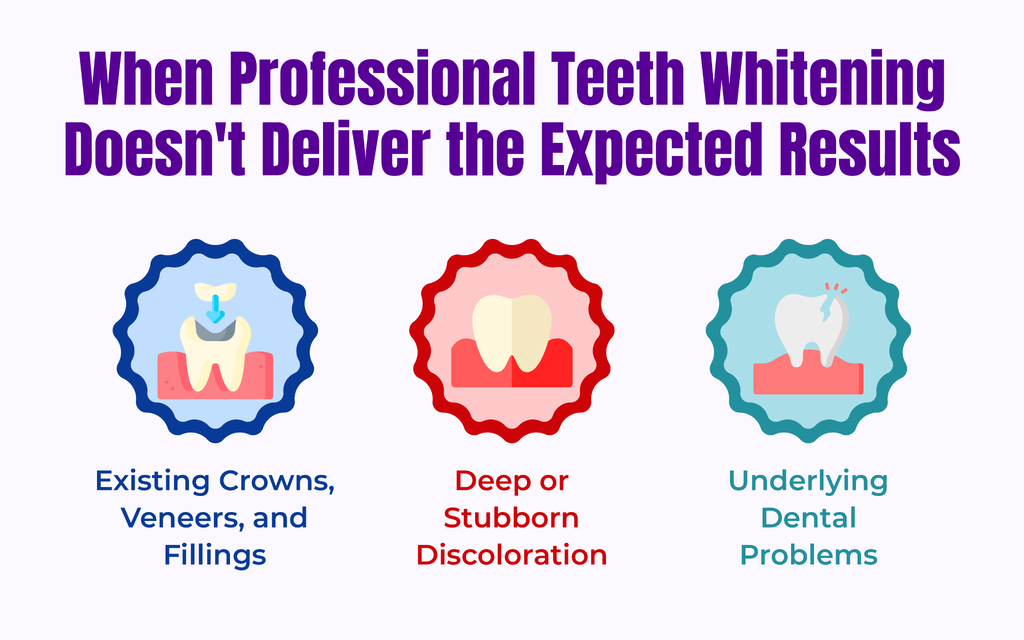
When Professional Teeth Whitening Doesn’t Deliver the Expected Results
If you are considering professional whitening, it may work for you, but it has some limitations.
What whitening agents does the ADA recommend? Hydrogen peroxide and carbamide peroxide are whitening agents the ADA approves; they work by reducing pigmented molecules in natural teeth.
Still, your results may vary due to these:
Existing Crowns, Veneers, and Fillings
This is mostly important if you’ve previously had cosmetic and restorative dental work.
The effects of the teeth whitening treatment. The process does not alter the color of crowns, veneers, dental implants, and tooth-coloured fillings.
Let’s say you received a crown on one of your front teeth. After you whiten your natural teeth, your crown may still look dark because the color hasn’t changed.
Your dentist will need to factor in any restorations when planning your treatment if you’re aiming for a balanced smile.
Deep or Stubborn Discoloration
Some intrinsic discoloration may take longer to treat or may not bleach as predictably as most others.
For example, tetracycline-associated staining can be more difficult to treat. The ADA writes that the final result may involve a few months of in-home bleaching with professional monitoring.
Underlying Dental Problems
Tooth decay, cracks, or damage to the teeth, gum disease, and open dentin may mean that whitening isn’t suitable.
Any tooth that turns suddenly grey or black after an injury should be checked by a dentist. The color change may signal internal injury.
Your dentist should go over any related oral health issues before proceeding with cosmetic treatment.
What Are Your Teeth Whitening Options?
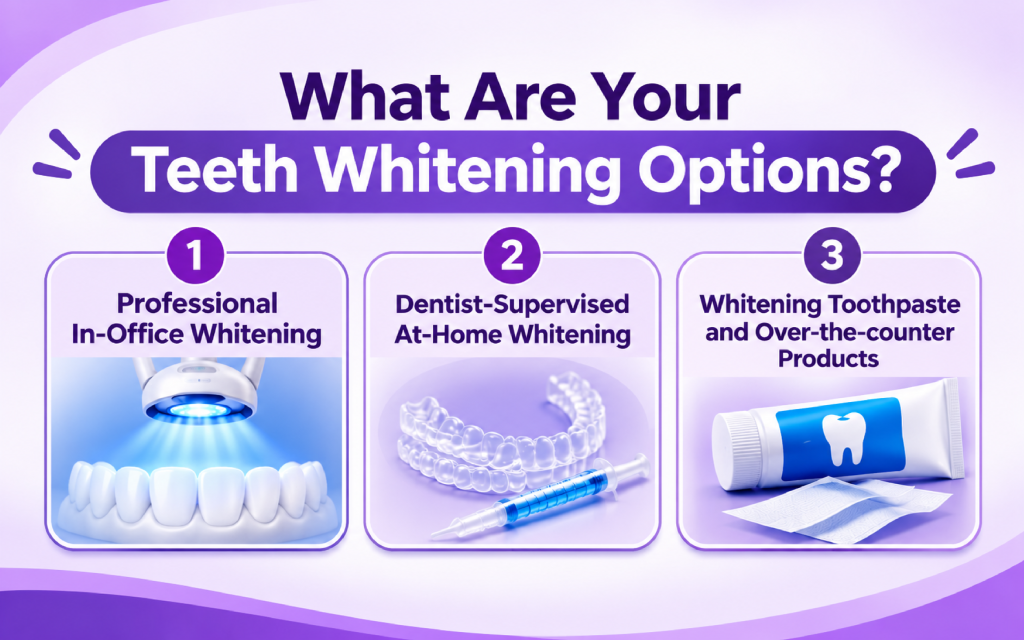
If your first whitening attempt didn’t produce the desired results, avoid quickly buying another product. Multiple teeth whitening options are available, and the best option depends on your dental health and the specific type of discoloration.
Professional In-office Whitening
A professional whitening dentist can examine your teeth and recommend an appropriate bleaching procedure.
In-office whitening involves a gel that is professionally applied. The dentist applies the solution to your teeth, first covering the gums and other oral tissues to protect them.
This can be the best option for those seeking a more therapeutic approach, with visible results in a shorter time.
You can read more in our blog:
Dentist-supervised At-home Whitening
Your dentist may also order trays with whitening gel.
These trays fit your teeth more closely than off-the-shelf products and help control where the gel contacts your teeth and gums.
Treatment can last several days to weeks, depending on the product used and your dentist’s directions.
Whitening Toothpaste and Over-the-counter Products
Whitening toothpastes lift surface stains using gentle abrasives. A few contain a small amount of peroxide.
How do bleaching gel and strips work? What are home bleaching gel strips? Home bleaching gel strips are.
These products may help with specific types of discoloration, though effectiveness varies based on the stain and the product formulation. Follow the product instructions closely, and don’t use multiple whitening products together without consulting a professional.
What If You Have Sensitive Teeth?
Some of the most common side effects of peroxide-based whiteners are temporary tooth sensitivity and gum irritation. The ADA states that sensitive teeth may occur during bleaching because peroxide can penetrate tooth tissues.
Not all cases are equally intense; it may also depend on the peroxide dose, duration, and existing conditions.
Is Teeth Whitening for Sensitive Teeth Possible?
Sometimes, yes. Your dentist might recommend changes, like:
- Applying a whitening treatment with a lesser potency.
- Decreasing the number of applications or frequency of treatment.
- Selecting a dentist-supervised whitening procedure.
- Treating current cavities, gum disease, or open dentin.
- Applying desensitizing products as advised by the dentist.
If you have teeth whitening for sensitive teeth and sharp sensations, continual discomfort, or painful gum irritation, discontinue use of the product and consult your dentist.
What If Whitening Isn’t the Right Solution?
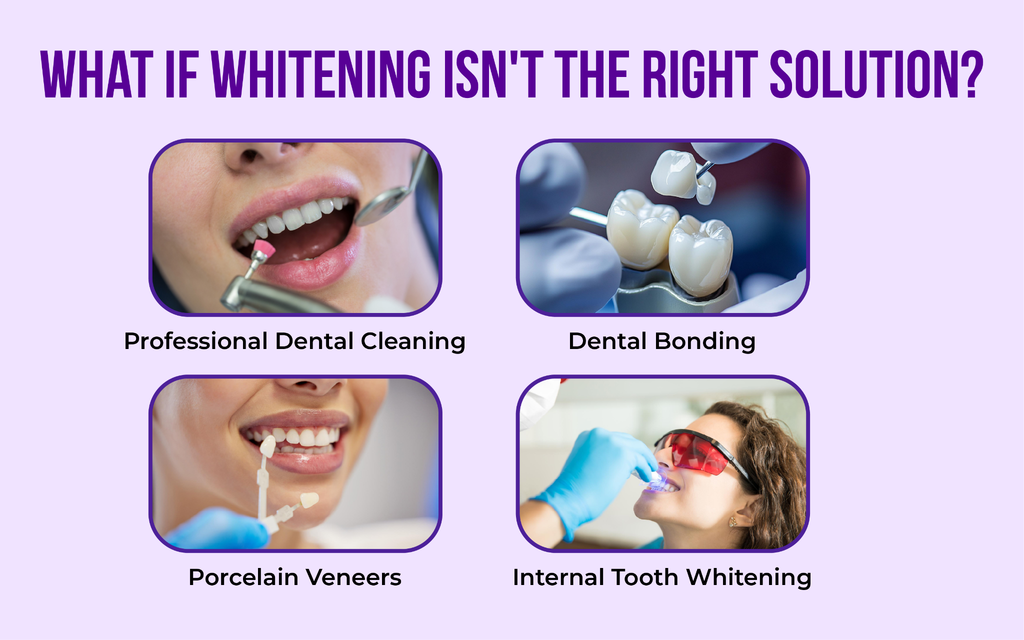
Here’s a tip: some kinds of discoloration are more successfully corrected with cosmetic procedures other than bleaching.
If regular whitening isn’t working the way you hoped, your dentist might provide information about alternative teeth-whitening procedures.
Professional Dental Cleaning
If the discoloration is mainly due to surface stains and tartar, a professional cleaning may help. Your dentist or dental hygienist can remove deposits and surface stains.
Dental Bonding
Bonding: This procedure involves applying a tooth-colored composite resin to the surface of a tooth. It helps conceal stains and improve the look of a decayed or misshapen tooth.
A good choice for localized marks that will not bleach.
Porcelain Veneers
Veneers are ultra-thin shells that fit over the front of the teeth. They can improve aesthetics, address discoloration and shape issues, and correct other cosmetic problems.
If you are considering veneers, there are additional planning considerations, and you may need to remove a natural part of your tooth. You should understand the advantages and disadvantages, maintenance, and long-term consequences of veneers before choosing them.
Internal Tooth Whitening
If one tooth has become discolored following root canal treatment, internal bleaching may be an option in selected cases.
In contrast, internal whitening involves applying the whitening product beneath the tooth’s surface while the tooth is under a dentist’s care.
Your dentist must examine the tooth and determine if it is suitable for internal bleaching.
How to Choose the Right Whitening Treatment for Your Smile
Make an appointment with the dentist before spending your money on whitening treatment. A proper examination may determine the cause of the discoloration and whether bleaching is the right course of action.
Some topics for discussion:
- What is causing my teeth to look discolored?
- Are my stains on the outside or the inside of the tooth?
- Is there a current filling or Crown?
- Which whitening procedure is right for my teeth?
- Could whitening make my sensitivity worse?
- Are there alternatives if bleaching doesn’t work?
Stay away from do-it-yourself bleaching fads. Activated charcoal, lemon juice, and other harsh homemade applications can easily tarnish pearly whites and cause discoloration. There is actually little medical documentation on the effectiveness of most all-natural whitening products.
Your dentist can guide you on what products are suitable and which ones to avoid.
Brighter Smile Starts With the Right Treatment
Don’t be discouraged if your whitening product isn’t giving you the smile you had in mind. You’ve applied your product, you’ve been patient, and you’ve perhaps even used more than one.
Knowing why your teeth are discolored is more important than choosing any treatment.
Professionals can bleach some stains, and others require cleaning, bonding, veneers, or a more specific dental treatment. The natural color of your teeth and your overall oral health may dictate what is possible.
Contact a qualified dentist if you would like to discuss the cosmetic dental options available for you.
Schedule a dental consultation before purchasing a new whitening kit. Your dentist can recommend a method that works for your teeth, protects your dental health, and helps you get a smile you’re proud to show off.
Frequently Asked Questions
Bleaching may improve your teeth’s color, but it depends on your starting tooth color and the type of staining; some stains respond better to bleaching than others. We can advise you at AZ Dentistry.
If properly supervised by your dentist, whitening is usually safe. You may experience transient sensitivity or gum irritation. Your dentist will evaluate your overall dental health and suggest a treatment that’s appropriate for your smile.
Brushing can remove gunk from the surface of your teeth, but it can’t change the natural hue of the dentin layer (what’s under your tooth enamel). Factors such as age, genetics, and enamel thickness can make your teeth look yellow.
Not always. Whitening can actually highlight white spots by whitening the rest of your teeth. We can look into the cause of the spots and see if another cosmetic procedure might help smooth out the surface.
You could still have choices. We can explore more conservative products, modified treatment times, or alternatives to bleaching, depending on the cause of your sensitivity. You shouldn’t have to suffer for a beautiful smile.