


Patients generally do not express their concern for enamel demineralization when entering the office. Patients frequently ask questions like, “What is causing my yellow teeth to be worse than before?” or “What is this brown blotch on my tooth?”
By understanding the primary reasons for tooth discolouration, you can more effectively communicate with patients. The simpler and better you can articulate the “what”, “why,” and “how” of stains, the more the patient will trust your ability to provide a treatment plan and follow through with it.
The difficult aspect to understand about tooth discolouration is that it often involves many variables, such as lifestyle, age, medication doses, and, in some cases, the patient’s genetics over an extended period of time.
In this article, we will discuss the five primary reasons for stained teeth that you will most likely encounter and will also discuss the potential reasons for their appearance in clinical practice.
Everyday Foods & Drinks
If you ask patients what they think stains their teeth, many will immediately say coffee.
And, in fact, they would not be incorrect.
Foods & drinks that are darkly pigmented contribute most to tooth staining. The pigments have an affinity for bonding to your enamel.
The Most Common Dietary Causes of Brown Stains on Your Teeth
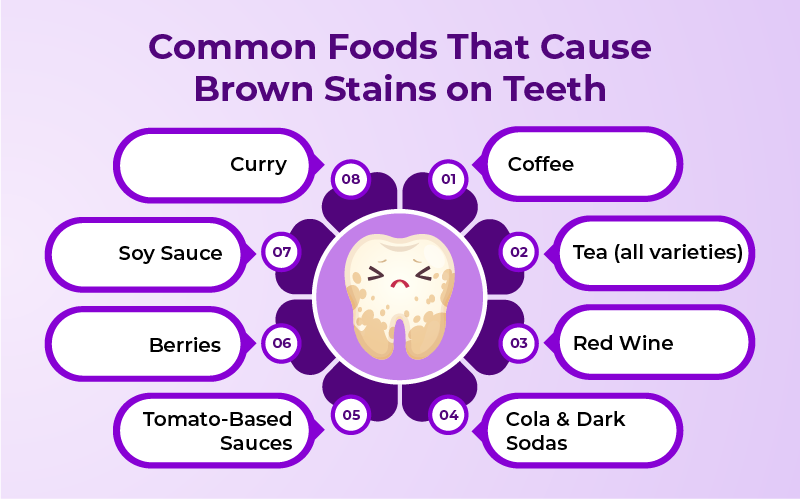
The food & drink items listed below are usually suspect for the creation of stains:
- Coffee
- Tea (all varieties)
- Red Wine
- Cola (all varieties) & Dark Sodas
- Berries (Blueberries/Blackberries)
- Tomato-Based Sauces
- Soy Sauce
- Curry
The pigments in these examples generally bind to your enamel over time, gradually embedding themselves into the microscopic grooves of your enamel.
This is when most patients will first notice signs that they have developed tooth stains, such as:
- Yellowing of teeth
- Faintly Brown Staining
- Uneven Color Between Teeth
Interestingly, though, patients who consume coffee but maintain good oral hygiene usually do not have stains. However, they will have developed a stain due to the nature of enamel, which is slightly porous, allowing the pigments to build up over time.
Professional polishing can easily remove many extrinsic stains; however, if food/drink consumption continues and, based on your oral hygiene habits, these stains redevelop, they will frequently redevelop, and quite quickly!
Poor Oral Health Can Lead To Stains From Medical Reasons
This is not one of the fun ones, but it is definitely the norm.
When plaque accumulates on your teeth for extended periods, it creates a perfect breeding ground for discolored teeth. Additionally, although plaque is white, it can take on color from food pigments and bacteria.
Does Plaque Really Affect the Color of Your Teeth?
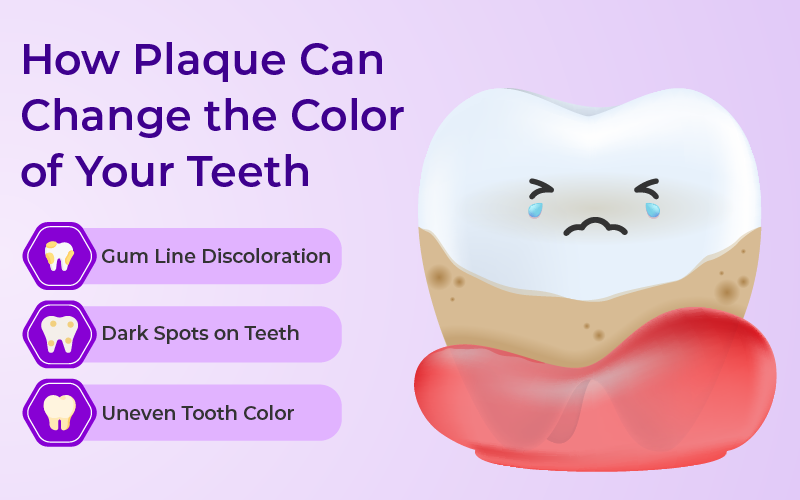
Plaque will build up along the gumline and between your teeth, allowing food pigments and drinks to stick to it. Once the tartar has hardened, it becomes very dark, causing visible stains.
Happy Face: Some of the signs that could indicate a darkening of your teeth include:
- Discoloration along the gum line on teeth
- Localized spots on certain teeth
- Differences in color throughout the entire mouth.
Patients often believe the discoloration of their teeth is due to permanent damage; however, in reality, it is due to both calculus buildup and staining.
This type of appearance can be easily addressed by having a professional clean and polish, and it is always rewarding for your dental provider as well as for you.
Aging and Natural Tooth Color Changes
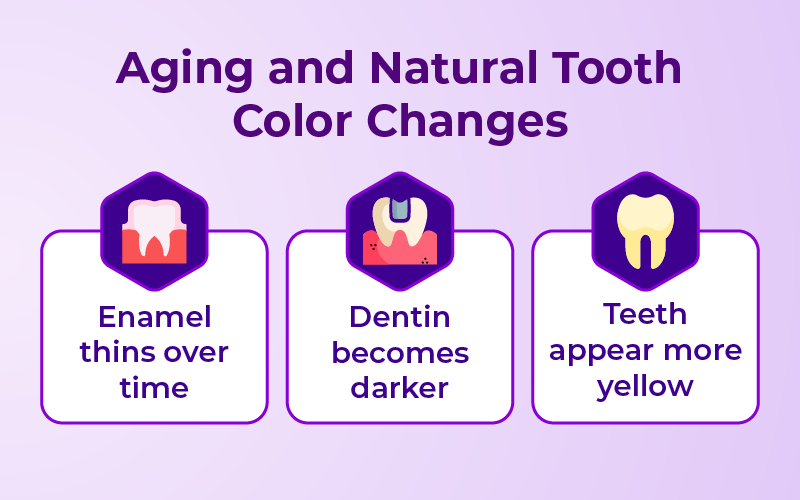
As people age, the color of their teeth changes from what it used to be.
Typically, the color of the teeth is not pure white, but more of a pale yellow or beige because the dentin underneath the transparent enamel influences the overall color of the enamel.
When you age, the two things that occur are:
- The enamel is breaking down (decreasing in thickness)
- The dentin is becoming darker (increasing in darkness)
- This change gives the teeth a more yellow appearance
Three Reasons Aging Causes Yellowing of the Teeth
The first reason is the reduction of enamel and an increase in dentin visibility. Dentin being yellow makes the teeth look yellow.
Patients often say, “My teeth used to be white,” and “Why are my teeth still yellow, if I brush them every day?”
They are technically correct in their claims.
Medications/Medical Treatments
Some of the most severe cases of tooth discoloration have nothing to do with lifestyle choices.
They often come from medications.
Some medicines and medical treatments can change the color of dental enamel while teeth are developing or after the teeth have fully formed.
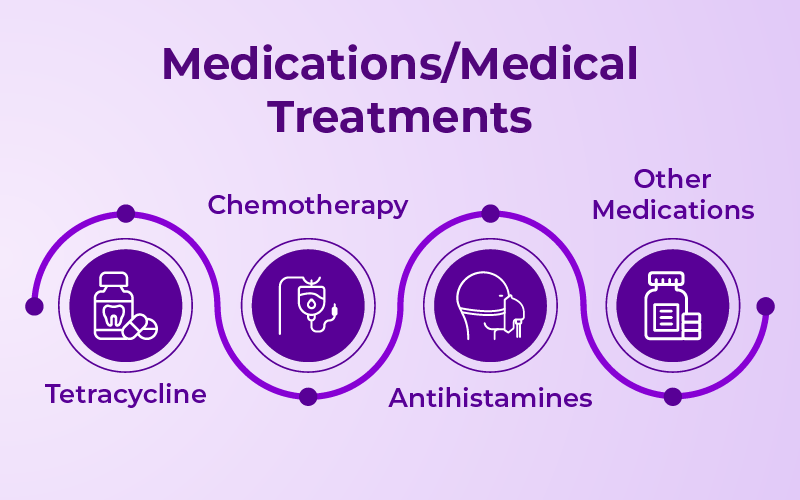
Four examples of medications that cause gray spots on teeth or dark staining on teeth are:
Tetracycline
Tetracycline binds with the calcium ions contained in the dentin and enamel during the time that teeth are developing. When teeth are exposed to light, tetracycline oxidizes, resulting in significant color changes. The color can change to gray, appearing as gray spots on teeth, gray-blue rings on the outside of the teeth, dark staining on many teeth, or a combination of these.
Chemotherapy
Chemotherapy can have a known negative effect on a person’s tooth color. In addition, the person can experience other forms of dental stains, such as an increased rate of cavities.
Antihistamines
Antihistamines have been shown to negatively affect the color of a person’s teeth as well as to create other types of stains, including a faster rate of dental decay.
Other Medications
The medications listed above will cause non-surface changes in tooth color. They will cause intrinsic changes in the color of your teeth. Therefore, they will typically require more advanced cosmetic dental techniques than simple stain removal.
This is one of the most common reasons patients do not realize their teeth are discolored: it doesn’t occur overnight, and they do not pay attention to it over the years until they view older pictures of themselves or see ads for whitening their teeth.
There are whitening products to help with teeth, but remember that the yellow denitrification will still affect the color of your teeth after they are whitened.
A Quick Word About Genetics
Not all teeth change color for an external reason.
For some people, they were born with thicker dentin and translucent enamel that makes their teeth turn a certain color.
Some people are missing parts of their enamel, like those with fluorosis or amelogenesis imperfecta.
Because of these hundreds of genetic defects, there are many ways teeth can look different (e.g., brown spots, white patches, and overall colour).
It is common for people with these types of discoloration to have a difficult time getting their teeth whitened; hence the need for Dental Restorations.
Conclusion
Here’s what makes tooth discoloration unique.
To dentists: a diagnostic point.
To patients: a source of personal identity.
While brown spots may be a sign of calculus and the beginning stages of decay, gray spots may indicate trauma from years past, while persistent yellowing of teeth is simply due to age and wear of the outer layer of enamel.
With a complete understanding of the various causes of stained teeth, dental professionals can better explain to patients what is happening and develop more realistic treatment plans.
More often than not, patients aren’t simply asking about the stain; they’re asking whether their smile can ever look or feel normal again.
More often than not, this is how the conversation begins: “Why do teeth discolor?”
Frequently Asked Questions
Excessive stains and discolorations from items such as coffee, tea, red wine, smoking, poor oral hygiene, aging, and certain drugs have the greatest impact on enamel appearance. The combination of these will cause tooth discoloration in two ways: through surface staining and through internal color changes over time.
Brown spots found on a tooth can be attributed to excessive plaque/tartar formation, or early signs of decay, as well as from food and beverage elements that have stained the surface of the tooth. In many instances, discolored enamel can also result from loss of minerals through demineralization of the enamel surface. It is important to consult a dentist regarding the spot to determine whether it is purely cosmetic or requires some form of intervention.
Even with good oral hygiene, yellow teeth can still develop for several reasons, including age-related enamel wear, hereditary factors, and increased visibility of dentin through the translucent nature of enamel. Additionally, a range of beverages, foods, and medications can gradually change the natural color of your teeth, leading to long-term discoloration of your teeth.