


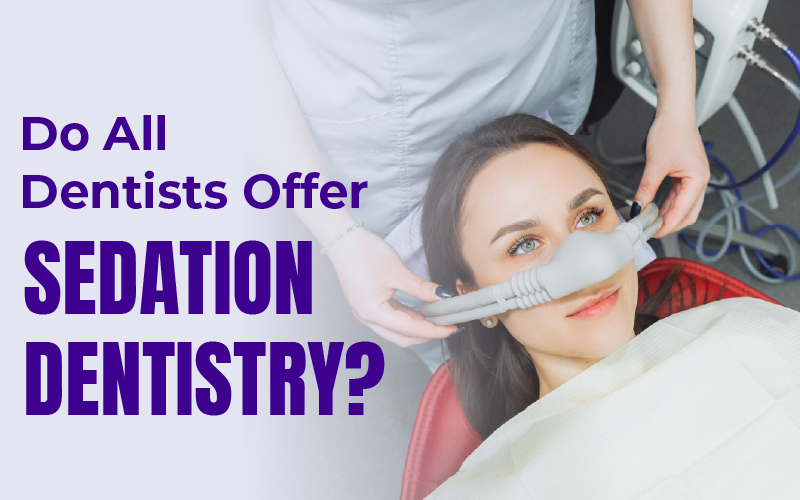
Typing “dentist sedation near me” into Google at 11:47 pm usually means you’re not casually looking at what’s around you, but rather stressed. You could have a toothache or a high-pitched drill leading to sweaty palms.
If you are a dentist, you’ve observed how many people cancel twice before coming in for treatment because of anxiety, or how long it’s been since the person last visited the dentist.
The big question is: “Do all dentists provide sedation?”
Short answer, no.
Long answer: yes, for more than one reason.
Let’s discuss why!
Not Every Dentist Is Trained in Sedation
The common misconception is that every dentist offers sedation. Some dentists do indeed offer this type of treatment; however, many aren’t trained in this area and may not have the equipment and systems needed to perform IV sedation or run a full sedation center. Each state has rules and regulations related to sedation.
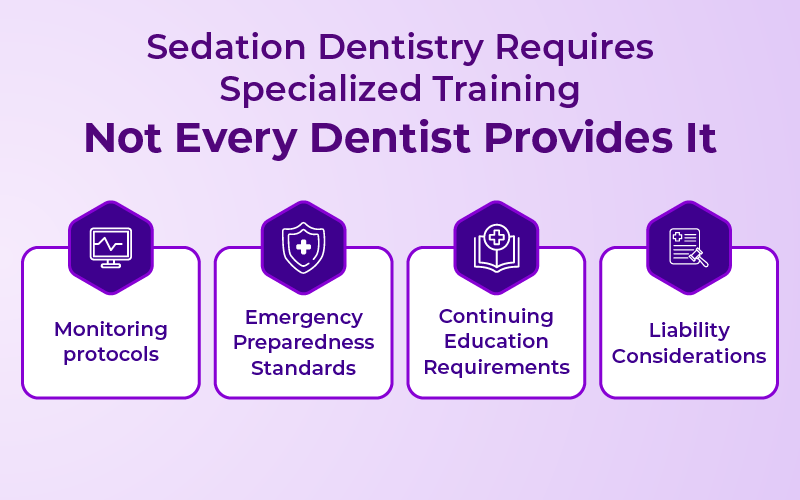
To put it simply, it takes way more than just giving someone some calming medication to help them relax.”
There are:
- Monitoring protocols
- Emergency preparedness standards
- Continuing education requirements
- Liability considerations
As an example, IV Sedation is a form of Medical Sedation that must be administered safely and requires an understanding of airway management techniques and drugs. A dentist who advertises “Dentist IV Sedation Near Me” has probably invested substantial effort and resources in becoming qualified to deliver this service safely.
What Types of Sedation Are Actually Available?
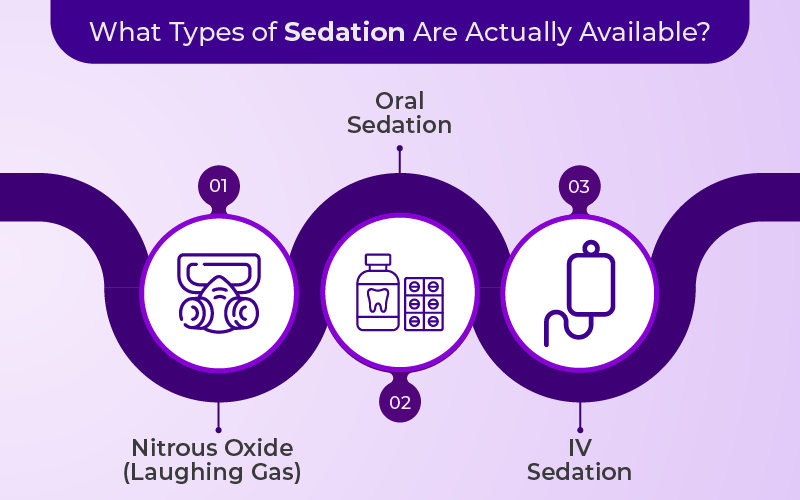
Many people searching for “dentists that offer sedation” often do not recognize that there are different degrees of sedation.
Nitrous Oxide (Laughing Gas)
A great place to start is with nitrous oxide, also referred to as “laughing gas.” Many people think of this as the lightest form of sedation. When you receive nitrous oxide, you remain awake and can respond, but you feel more “floaty” and relaxed, as if you’d had a few glasses of wine (minus the alcohol).
Uses: Mild anxiety; routine procedures; dental cleanings; severe anxiety/sensory over-sensitivity.
You can request to receive sedation for a cleaning procedure as long as your dentist offers it, and it can make a world of difference for patients who suffer from anxiety or sensitivity.
Oral Sedation
The next degree of sedation is oral sedation. Generally, patients take a pill an hour or so before their appointment. Patients who receive oral sedation will feel sleepy but remain awake.
When searching for a sedation dentist, you will find that most dentists who claim they offer sedation are actually offering only oral sedation.
IV Sedation
Lastly, IV sedation is considered deep sedation. Patients are usually considered to be in a twilight state and may not remember their procedure afterwards.
A sedation dentist might use IV sedation for complex procedures, extracted teeth, multiple extractions, and implant surgery. This is what most people refer to when searching for a dentist who uses IV sedation in their community.
Why Some Practices Don’t Offer Sedation Dentistry
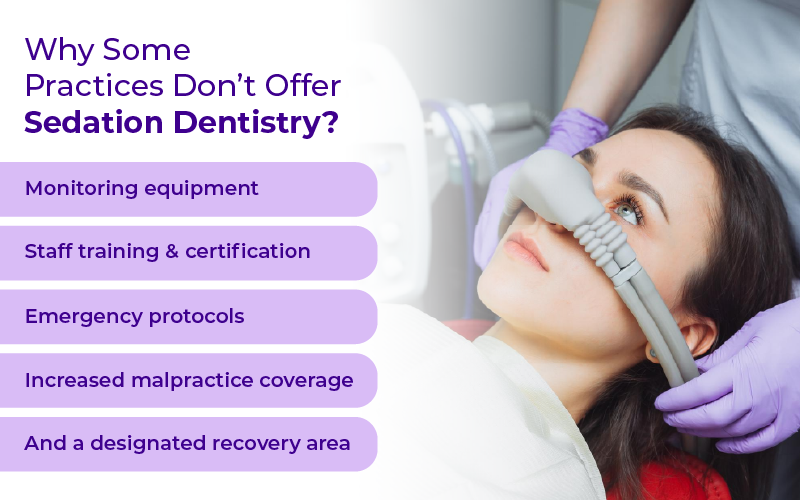
Empathy goes a long way in this case; for dental providers, adding sedation involves investing in:
- Monitoring equipment (e.g., pulse oximetry, blood pressure monitors, and capnography)
- Staff training & certification
- Emergency protocols
- Increased malpractice coverage
- And a designated recovery area
Therefore, when deciding to offer this type of service, it is an incredibly serious operational decision. For patients whose current dentist does not provide sedation, this does not mean the dentist does not care; it may simply reflect the dentist’s practice limitations.
In some communities, dentists may refer patients who need IV sedation to a specific sedation center or an oral surgeon.
The fact that you will be referred does not mean that you will fall through the cracks; referrals often mean that you are being sent to a dentist who provides this service daily.
When Is Sedation Dentistry Actually Necessary?
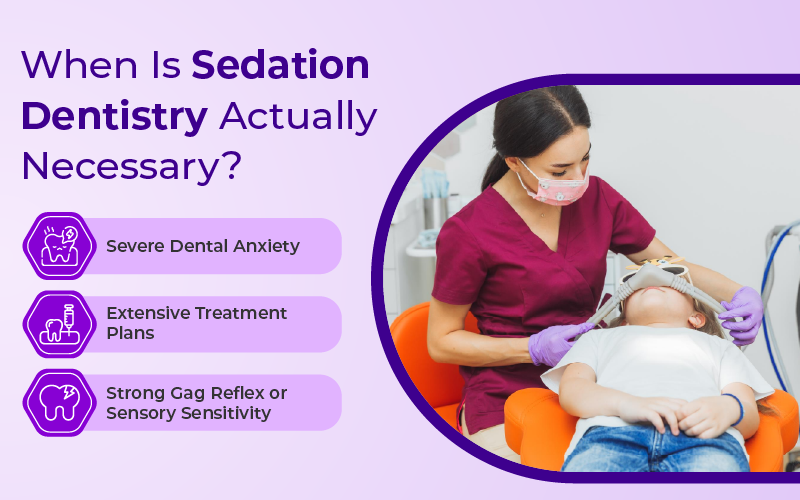
It’s honest: not every dental procedure requires sedation, but some are better with sedation.
1. Severe Dental Anxiety
Dental phobia is very real. Studies show that up to 36% of people have some fear of the dentist, and around 12% of people struggle with severe anxiety related to the dental environment.
This is not “crazy”; this is a very real fear for many people, making them unable even to consider going to the dentist (to receive treatment).
The only way for these patients to walk through the doors of a dental office and receive the necessary treatment is to find a sedation dentist nearby.
2. Extensive Treatment Plans
Multiple fillings, root canals, tooth extractions, tooth extraction with bone grafting; can you imagine having to sit through hours of treatment while being fully awake and aware? It would be exhausting.
Using sedation makes lengthy appointments and complex treatments much easier to manage.
3. Strong Gag Reflex or Sensory Sensitivity
Some patients physically cannot withstand having dental instruments in their mouths without being sedated. Other patients (especially neurodivergent ones) become much more comfortable receiving even the simplest dental cleaning with sedation.
It has nothing to do with a person’s weakness, but everything to do with giving patients safe, comfortable access to dental treatment.
What Patients Should Look for When Searching
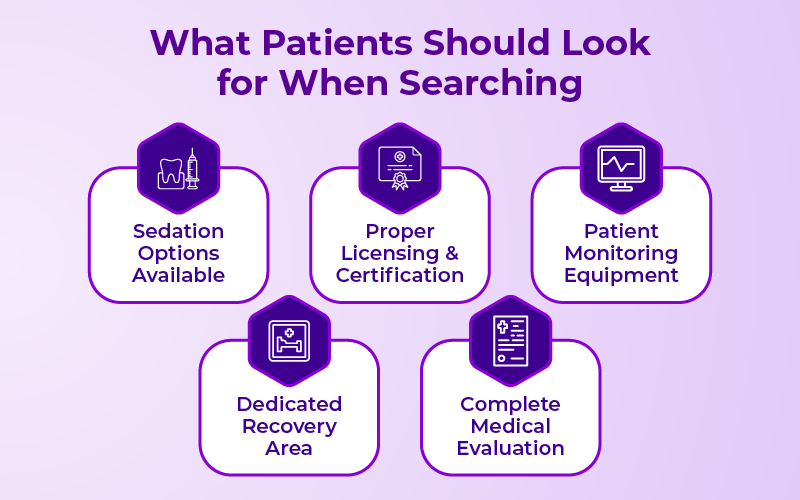
When searching the Internet for sedation dentists, consider these items in addition to the title of the dentist:
1) What method of sedation is available? (Nitrous oxide only, oral, IV, or other?)
2) Is the dentist properly licensed and certified to provide the level of sedation they are providing?
3) Do they have the necessary equipment to monitor the patient during sedation?
4) Is there a recovery area for when you wake up?
5) Does the dentist perform a thorough medical history?
An experienced sedation dentist will take the time to ask you extensive health questions regarding medications, explain the risks associated with sedation, and will not rush through this process. If anyone rushes or provides vague answers, this should raise a red flag for you.
Additionally, you should not be afraid to ask the dentist: “How often does this dentist provide this type of sedation?” You must have complete trust in your dentist before going through this procedure.
For Dental Practices: Should You Offer Sedation?
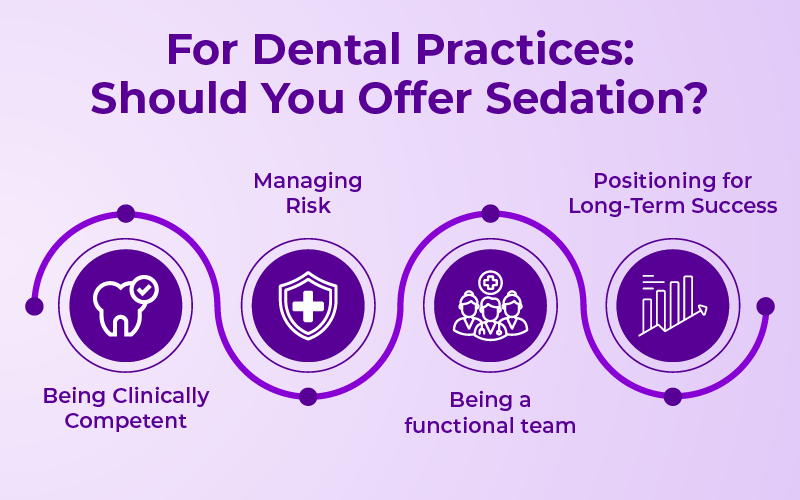
You must have noticed how demand for “sedation dentists near me” has continued to grow over the last 10 years.
Patients want to be comfortable, and they have a clear expectation of comfort. Offering sedation dentistry is not only about marketing; it is about:
- Being clinically competent.
- Managing risk.
- Being a functional team.
- Positioning your business for long-term success.
For some markets, being considered a trusted sedation center will create distinct differentiation from your competition and provide you the ability to treat patients with high anxiety who will typically avoid treatment altogether. If you aren’t committed to developing training and infrastructure around these practices, it may be better to develop a strong referral network instead.
There is nothing wrong with that.
Final Thoughts
Patients should consider not only whether a particular dentist offers sedation but also whether the dentist offers the type of sedation the patient needs. Providers should consider the questions from the provider’s perspective. For instance, providers might want to ask whether they are providing sufficient emotional support to patients who are afraid even to pick up the phone to schedule an appointment.
Some patients prefer to live in pain rather than undergo dental care, which may create greater opportunities for providers and patients to offer safe dental experiences, allowing sedation as an option rather than a last resort.
Therefore, if you have delayed making an appointment or expanding your practice, this may be your motivation to begin a discussion about it. Ask the question. Conduct an online search for “sedation dentist in my area.” Or ask your office staff what it would take for your office to be the one that a patient has been looking for at 2:00 a.m.
Frequently Asked Questions
Yes, when performed by a properly trained and licensed provider, sedation dentistry is very safe. Dentists closely monitor vital signs and thoroughly review medical history before recommending any sedation option.
Nitrous oxide and oral sedation keep you relaxed but awake. IV sedation creates a deeper, twilight-like state. Your dentist will explain exactly what level of awareness to expect.
Absolutely. Many patients choose sedation for dental cleaning due to anxiety or sensitivity. If your dentist offers it, even light sedation can make routine visits feel manageable and stress-free.
Ask about their certifications, state permits, and how often they perform IV sedation. A qualified provider will openly discuss training, monitoring equipment, and safety protocols without hesitation.
Some insurance plans cover sedation for complex or surgical procedures, while others consider it optional. It’s best to contact your provider and dental office to review benefits beforehand.