



Changing an aspect of your smile can be a very exciting thing, especially if you have chipped teeth, discolored teeth, or just lack confidence when you smile.
It can be difficult to make the decision of whether or not to pursue a dental improvement, and dental veneers have been widely discussed as one of the options. Before making your decision, you may have many questions about dental veneers.
What are dental veneers? Are dental veneers natural-looking? How durable are dental veneers?
The best part about reading this guide is that you will get all of the answers to these important questions with easy-to-understand explanations, no dental lingo, just straightforward answers to help you figure out if dental veneers are the right choice for you.
Ever Wish You Could Change Something About Your Smile?
Changing an aspect of your smile can be a very exciting thing, especially if you have chipped teeth, discolored teeth, or just lack confidence when you smile.
It can be difficult to make the decision of whether or not to pursue a dental improvement, and dental veneers have been widely discussed as one of the options. Before making your decision, you may have many questions about dental veneers.
What are dental veneers? Are dental veneers natural-looking? How durable are dental veneers?
The best part about reading this guide is that you will get all of the answers to these important questions with easy-to-understand explanations, no dental lingo, just straightforward answers to help you figure out if dental veneers are the right choice for you.
What Are Dental Veneers?
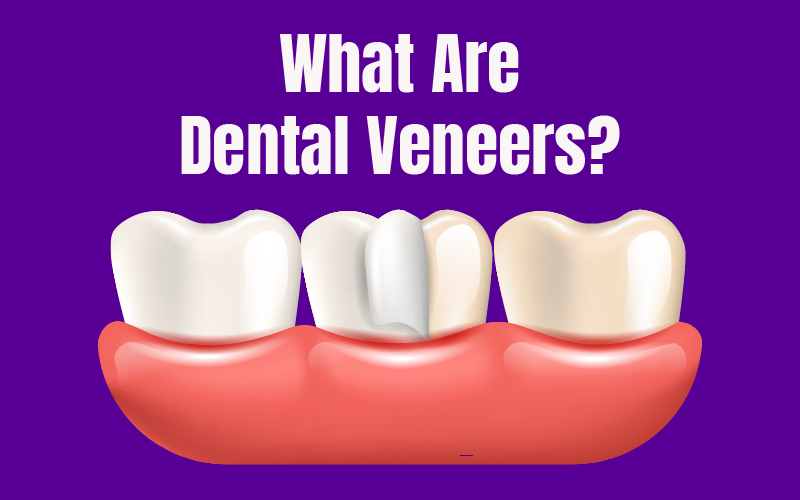
Dental Veneers, also called porcelain veneers, are thinly placed on the front surface of your teeth to change the look of your smile by disguising the unsightly appearance of discolored, chipped, gapped, or irregularly shaped teeth.
Veneers can be made from either porcelain or composite resin; however, most people prefer porcelain as it looks the most similar to a natural tooth. Porcelain also tends to last longer than composite resin.
A lot of people get dental veneers to create a more beautiful and even smile with little to no additional restorative dentistry.
What Does Veneer in Dentistry Mean?
In general, veneers, which are made out of thin shells of porcelain, are cosmetic coatings or coverings that help enhance the appearance of one or more teeth. On the other hand, crowns cover entire teeth and require more removal of the patient’s natural tooth structure than a veneer because they must fit over the top of the tooth instead of just covering the front of it.
This is one reason why so many men and women choose to have their teeth improved by the use of veneers.
How Common Are Veneers?
Cosmetic dentistry is growing quickly; therefore, more patients will want to look at using veneers to fix common smile problems.
One of the most asked questions people ask about veneers is how common they are. The answer to this question is simple, extremely common.
Veneers have become among the most popular types of cosmetic dentistry in the past several years and no longer do they only belong to celebrities.
People from every type of lifestyle use veneers to enhance their smile and gain confidence in themselves.
Common Reasons People Get Veneers
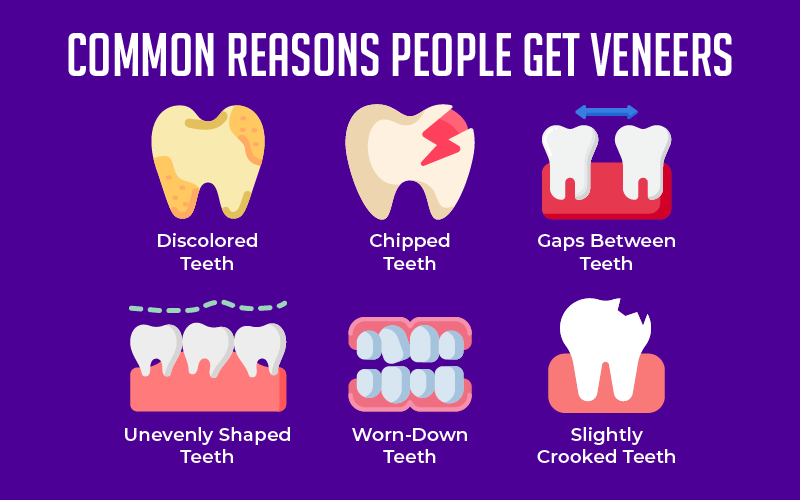
Dental veneers benefit multiple cosmetic dentistry issues like the following:
- Discolored teeth
- Chipped teeth
- Gaps Between teeth
- Unevenly shaped teeth
- Worn-down teeth
- Slightly crooked teeth
Many people will be able to easily create a more attractive and balanced smile using dental veneers.
Benefits of Front Teeth Veneers
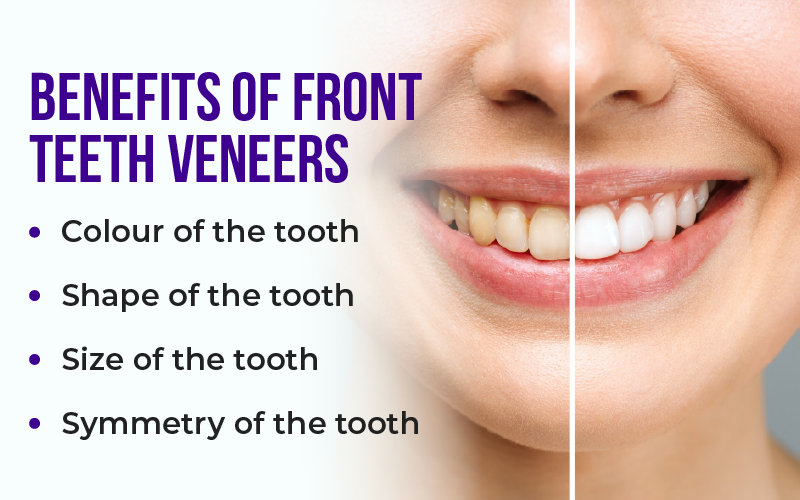
The majority of individuals receiving veneers tend to have them applied to their most visible teeth.
Thus front tooth veneers are among the most commonly placed veneers.
It is common for individuals to look at your front teeth when you smile, and if you have a minor imperfection on one of these teeth, it may cause you to feel less confident about yourself.
By applying front tooth veneers, you can correct:
- Colour of the tooth
- Shape of the tooth
- Size of the tooth
- Symmetry of the tooth
Overall, this will result in a brighter, more aligned smile.
Why People Choose Veneers for Front Teeth
Patients often select veneers for their front teeth as they provide a significant aesthetic change with minimal time spent in treatment.
Chips, discoloration, or unevenly placed teeth warrant different types of veneers and usually can easily give a good cosmetic result.
What Is the Veneer Process Like?
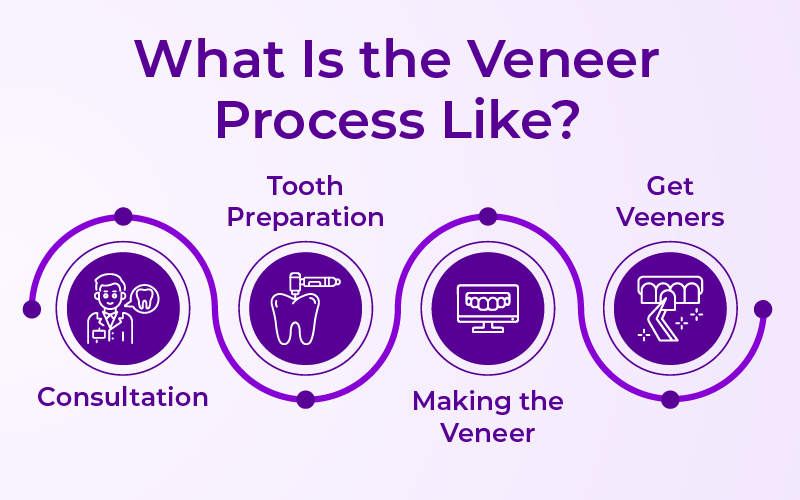
Step 1: Consultation
Your dentist will evaluate your teeth and talk with you about what you want or need. This is the first step to determine whether or not veneers are a suitable choice for you.
Step 2: Tooth Preparation
A small amount of enamel is removed from the front of the tooth to allow for space for the veneer.
Step 3: Making the Veneer
Impressions or digital scans of your teeth will be taken by your dentist to use in creating your customized veneers to match your smile.
Step 4: Get Veeners
Get your veneers bonded to your teeth and adjusted for comfort and appearance.
Understanding the Possible Risks
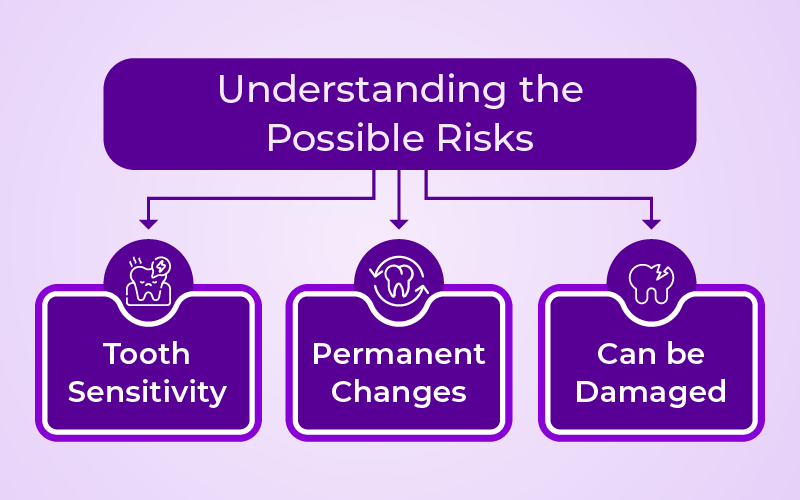
Just like any other dental procedure, there are problems with veneers. Some of the most common problems that may occur after getting veneers include:
Tooth Sensitivity
Some people may experience temporary tooth sensitivity to hot/cold foods following treatment.
Permanent Changes
Since a small amount of enamel has been removed from the tooth, it is generally considered to be a permanent procedure.
Damage
While veneers are strong, they can chip/crack if subjected to excessive force.
Before you decide to get veneers, you should be aware of these common problems.
What Are the Most Common Dental Veneers Problems?
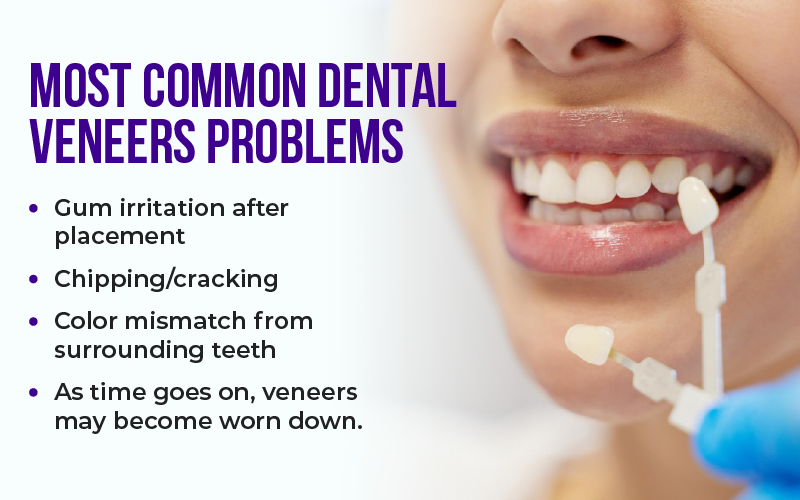
Some problems that may be related to dental veneers include:
- Gum irritation after placement
- Chipping/cracking
- Color mismatch from surrounding teeth
- As time goes on, veneers may become worn down.
Fortunately, most problems that occur with dental veneers can be avoided if you select an experienced dentist and follow the recommended care guidelines.
How to Avoid Dental Veneers Problems
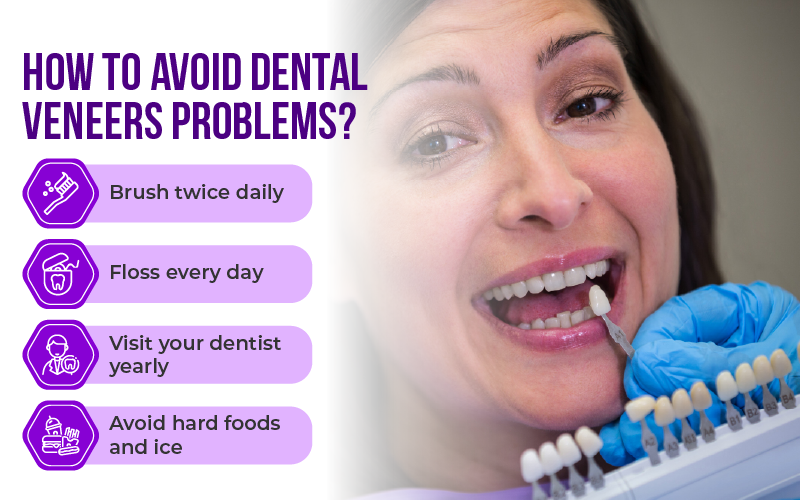
You can take steps to keep your veneers looking great, including:
- Brushing at least 2x per day.
- Flossing regularly.
- Make dental appointments at least once a year.
- Avoid chewing hard foods or ice, as this will crack your veneers.
If you tend to grind your teeth, consider wearing a night guard.
How Long Do Dental Veneers Last?
The duration of dental veneers will hinge upon both the type of material used and how well they’re cared for.
But in general:
- Porcelain Veneers: Last approximately ten to fifteen years or longer
- Composite Veneers: Have a lifespan of around five to seven years
With proper oral hygiene practices, you may extend the life of your dental veneers.
You can read out our blog for more information:
Are Dental Veneers Worth It?
As far as veneers are concerned, many individuals use them for more than just aesthetic value.
Having a better smile may lead to confidence and comfort in social situations.
Unfortunately, not everyone will benefit from obtaining a veneer; therefore, it is beneficial to consult with the appropriate dentist regarding your options before making a decision regarding a veneer.
Final Thoughts
If you’re curious about dental veneers, looking into veneers for your front teeth, or considering potential issues with dental veneers, then you have already begun your journey to a better, more attractive smile.
A good way to find out if they are appropriate for you would be to meet with a qualified dental professional who will be able to assess your smile and provide you with answers to any questions you might have regarding the use of dental veneers. Obtaining a small amount of information today may assist you in making informed choices regarding your dental treatment prior to making any final decisions.
Frequently Asked Questions
Veneers are thin shells that fit over the front of teeth to enhance their appearance. These shallows can help mask discoloration of teeth, chipped teeth, small spaces between teeth, and form an overall balanced appearance of your smile by providing a more natural-looking appearance.
The longevity of veneers is dependent upon the type of material used, as well as personal care habits. As an example, porcelain veneers commonly last between 10 and 15+ years, while composite veneers generally last between 5 and 7 years. By being proactive with regular dental check-ups and proper home care, the longevity of your veneers can be extended.
As with any procedure, some complications can arise from veneers, such as temporary sensitivity of the teeth, possible chipped veneers, and the need for replacement over time. Being treated by a dentist who has experience in completing veneers and following their aftercare instructions can minimize the possibility of complications occurring.
Generally speaking most patients will prefer to get veneers placed on their front teeth because the front teeth are the most visible when someone smiles. Front teeth can use veneers to enhance colour, shape, and overall appearance as well as create a uniformity to the smile.
Veneers are just one of many popular forms of cosmetic dentistry that are available today. With the number of people who have decided to use veneers; there are a lot of people who have chosen to use cosmetic dentistry to help improve their overall smiles and improve their self-image. Many people choose to use veneers to help with colour, chips, and unevenness of the teeth.
One thought on “Have Questions About Dental Veneers? We Have Answers!”