



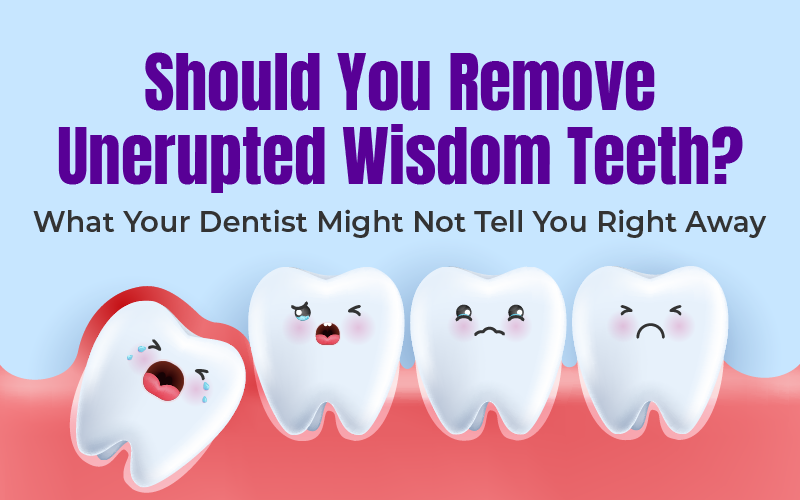
Let’s imagine you’re in the dentist’s chair, expecting normal routine dental work, and he or she looks at your X-ray, looks at an X-ray shadow at the back of your jaw, and says something similar to:
“Your Wisdom Teeth aren’t coming down yet, but we should keep an eye on that.”
Or they may say,
“You may want to think about having your wisdom teeth taken out.”
And now you’re wondering why you are talking about teeth that are still underneath your gums, and how those teeth are now having all the attention.
If you have asked yourself a question similar to, “Should I have my wisdom teeth taken out?”, “Do I need to have my wisdom teeth removed?”, and “Are there any reasons to get rid of my wisdom teeth?”, you aren’t the only person asking this question.
Interestingly enough, wisdom teeth have your family members’ and friends’ tales of terrible experiences with their wisdom teeth, with swollen cheeks, ice cream cones, and all their TV shows stacked up waiting to be captured on video for a Saturday, while not recovering from the surgery.
Now, let me explain what is underneath your gums, and if there is a reason to have those bad boys removed from your mouth.
What Are Wisdom Teeth Anyway?
Wisdom teeth are our last set of molars, coming in from approximately (17) to (25) years old.
These molars were once very useful to our ancestors because they ate tougher, more difficult-to-chew foods made up of many types of raw plant material, root vegetables, and uncooked meat. The need for additional chewing power and the loss of teeth at an earlier age created the primary function for wisdom teeth.
As we have evolved we evolved, so have our diets; thus, our ability to chew food is very different than our ancestors’ ability. As a result, the majority of modern-day Individual mouths/cases lack sufficient room to allow for these newly-arrived teeth from the passage and development of our species.
This is where many individuals have questions about whether everyone has wisdom teeth!!! The answer is “probably not!”
Most people do not develop any (0%); however, there can be variations between one and four wisdom teeth. This is often dependent on genetic factors as well; for example, if your parents did not develop or have wisdom teeth, then there is a good chance that you too will not develop or have wisdom teeth at all.
What Does “Unerupted” Mean?
If your wisdom tooth has not yet come through your gums fully into your mouth, it could be considered “impacted.” An impacted tooth may remain totally under the surface of your gums, partially visible, or it may have tried to grow but become stuck in the gums due to inadequate space.
When a dentist views your X-ray, they are often looking for indications of the potential for future complications due to your wisdom teeth. An important word is “could” – NOT “will.” Herein lies the beginning of the controversy.
Why Dentists Recommend Wisdom Teeth Removal
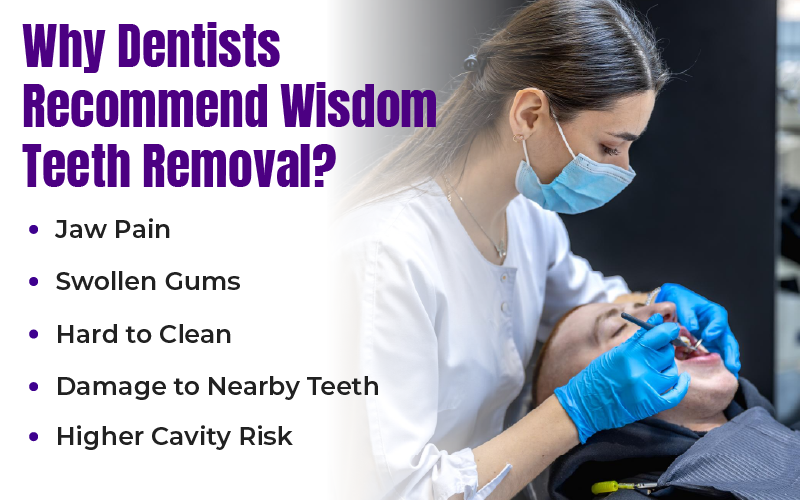
Think about how difficult it would be to add another chair to an already packed dining table – this is similar to the experience of having one’s wisdom teeth come through the gum line.
When wisdom teeth come in, they push against the backs of the molars, which can cause pressure, discomfort and crowding.
Examples of issues from this are as follows:
- Pain in the jaw
- Inflamed gums
- Inability to clean the area
- Damaged teeth adjacent to the wisdom teeth
- Increased chance of cavities
- For some people, this is a gradual progression; however, some people can go years with their wisdom teeth being quiet until they become symptomatic (create discomfort).
That is why dentists generally advise patients to have their wisdom teeth taken out prior to presenting with disease symptoms.
Impacted Wisdom Teeth Can Cause Bigger Problems
When a wisdom tooth is impacted, it does not have enough space to come in.
Impacted wisdom teeth might:
- Be horizontally positioned
- Be angled
- Push against adjacent teeth
- Be hidden under the gum tissue
This can lead to complications because impacted teeth can develop a space (or pocket) that collects bacteria. Eventually, an infection could develop in this area.
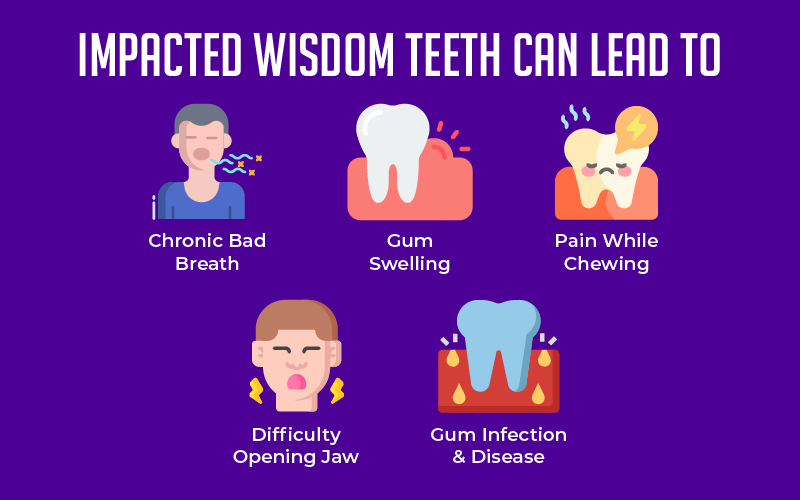
Some other symptoms of an infected area include:
- Chronic bad breath
- Swelling
- Pain during mastication
- Difficulty opening jaw
- Gum disease
When dentists see these signs on an x-ray, they commonly recommend the extraction of the wisdom teeth to prevent further complications.
This is like fixing a small leak in the roof before the leak floods your living room, causing more damage.
Do Wisdom Teeth Always Need Removal?
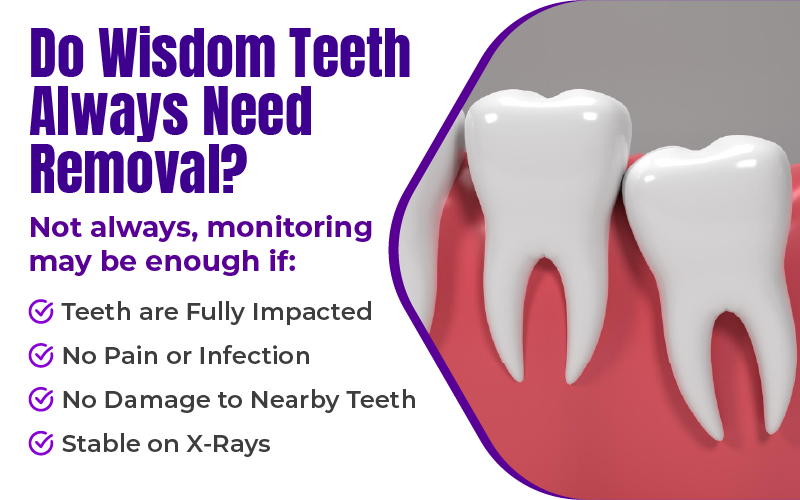
Not always.
This is the interesting part.
Most dental professionals believe that not all unerupted wisdom teeth should undergo surgical intervention.
Many wisdom teeth remain completely immersed in the bone under the gums for years and decades at a time without causing any issues.
That being said, questions such as
- Do I have to remove my wisdom teeth?
- Do I need to have my wisdom teeth removed?
- Does everyone with wisdom teeth need to have them removed?
It cannot be answered as a single answer for everyone.
Each person has a unique mouth. Each person has a different jaws or jaws of varying shapes and sizes. Each x-ray gives a different interpretation, so there is no simple or easy answer to these questions.
When Monitoring May Be Enough
If there are no signs of infection, wisdom teeth that are:
- Are completely impacted
- Do not damage adjacent teeth
- Present no pain
- Appear stable via radiographic examination
A dentist may recommend ‘watchful waiting’ to closely monitor wisdom teeth.
Although it may seem odd to monitor teeth you cannot see, in many cases, all that is necessary is for patients to be able to regularly observe their teeth.
Questions to Ask Before Removing Wisdom Teeth

How Old Are You?
Many are unaware of how much age affects those undergoing surgical extraction of wisdom teeth.
Wisdom teeth that are extracted from younger patients tend to have a quicker recovery period; this is due to the roots of the teeth being less defined (not fully formed) and the surrounding bone structure being more pliable.
As people age:
- Teeth develop longer roots.
- Bone has a greater density.
- Healing may take longer.
- The risk associated with surgery increases.
However, just because a person is older does not mean they are unable to undergo a surgical procedure. This means that age affects the length of time required to heal after surgery.
Are the Teeth Actually Causing Problems?
Although this may seem obvious, it is still a good idea to ask your dentist about the reasons for recommending the removal of your wisdom teeth. Here are some things to consider when doing so:
- Are my wisdom teeth being removed due to some current dental condition (e.g., crowding)?
- Are there any signs of bone loss or decay, or any other dental problems?
- Is it because my dentist anticipates that these problems will develop in the future?
Knowing the answers to these questions will enable you to make a more informed decision.
What Does the X-Ray Show?
Don’t hesitate to have your dentist show you the imaging.
In fact, they will usually do this without hesitation.
You can ask your dentist questions such as:
- ‘Do my teeth have an impaction?’
- ‘Do my teeth touch nearby roots?’
- ‘Is there sufficient space for the teeth to emerge?’
- ‘Is there any indication that damage is already occurring?’
When you see the image, you will understand the entire picture.
What Happens During Wisdom Teeth Removal?
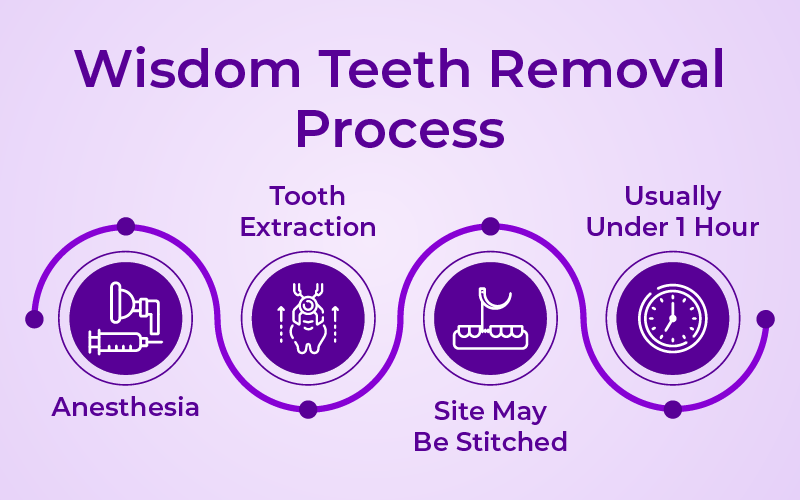
The Procedure Is Usually Faster
It sounds like wisdom tooth extraction can be an intense experience. However, it is generally a straightforward procedure.
- You will likely receive one of the following options for anaesthesia: local, sedation, or general.
- The tooth will be extracted, and the site may or may not need closure.
- The duration of your procedure will generally be less than an hour.
Anticipating the procedure can make it seem more intimidating than what you will actually go through. This isn’t true for everyone; we all have our own unique experiences. Many people create in their minds a much scarier picture of an extraction than what will take place.
Recovery: The Part Everyone Wants to Know About
To be honest, this is frequently the first question that individuals have after their procedure. The recovery time from having your wisdom teeth taken out will be as follows:
Days 1-3
- Swelling
- Minimal discomfort
- Soft food
- Lots of rest
Days 4-7
- Less swelling
- More comfort
- Back to doing normal activities
Weeks Following
- Healing continues
- Gradually returning to normal adult eating habits
The amount of time it takes for the full recovery process will vary based on how old you are/have been, where your wisdom teeth are located, and your general state of health. Yes, the mashed potato may just be the MVP during your recovery week.
Final Thoughts
Most people prefer to have certainty in their choices. We’d like to have a dentist say, “You certainly need to remove them” or “Leave them where they are for the rest of your life”. However, the real world is generally much more complicated than that.
For some, removing their wisdom teeth ahead of time may be able to spare them many years of pain, infection, and dental issues. Others can leave their impacted teeth undisturbed for many years with no issues.
So, to answer the question “Should I have my wisdom teeth removed?” you will always need to know the answer based on your own dental history, symptoms, x-rays and risk factors.
The smartest first step is not to automatically have your wisdom teeth removed surgically, but rather to go to your dentist for a thorough consultation regarding your wisdom teeth, to review the images taken of your teeth and to understand specifically why your dentist recommends something.
Frequently Asked Questions
Yes, some impacted wisdom teeth can remain completely buried under the gums and jawbone for many years with no pain, infection or damage – only needing routine dental evaluations.
The best time to have your wisdom teeth extracted is typically between 17 and 25 years of age because the roots are less developed, healing is usually quicker, and the chance of having complications is also lower.
Your dentist will consider the presence of any symptoms, X-rays, how the teeth are positioned, how much room there is for the teeth, any infection or signs of gum disease, decay of your tooth, and the likelihood of damaging surrounding teeth before recommending you for extraction.
Signs of impacted wisdom teeth may include: pain in the jaw, swollen gums, halitosis (bad breath), pain when chewing, chronic infections, limited ability to open your mouth, and tenderness near the back of your mouth.
It typically takes about 1 week to notice the majority of your swelling and pain decreasing. However, your total recovery time can be several weeks, depending on the age of the patient, position of the teeth, complexity of extraction, and overall health of the patient.