



Veneers can completely change a smile. But they also come with questions most people don’t think to ask until they’re already sitting in the dental chair.
Common questions are, how durable are veneers?, how to keep them healthy, etc.
Yes, veneers are durable. Especially porcelain veneers. But their longevity depends on far more than the material itself. Bite pressure, oral habits, gum health, dentist experience, and even stress-related grinding all play a role.
So instead of giving you vague promises or overly polished marketing language, let’s talk about veneers the way experienced cosmetic dentists actually discuss them with patients in real consultations.
How Long Do Veneers Last on Average?
In general, porcelain veneers will last anywhere from 10 to 20 years, while composite veneers typically last for 5 to 7 years, and temporary veneers are intended to last (on average) for only a few weeks.
This represents the average clinical range, supported by both research studies in cosmetic dentistry and long-term patient outcomes. However, averages may sometimes be somewhat misleading. A patient who grinds their teeth at night without a night guard may have their porcelain veneers fracture much sooner than the average. At the same time, someone with good oral hygiene and a stable bite can generally expect to maintain their porcelain veneers for 16-20 years.
Because of the many variables among individuals, most dentists will not provide an exact-year guarantee for how long a patient’s veneers will last. In addition, honesty and integrity are very important.
What Determines Veneers Lifespan?
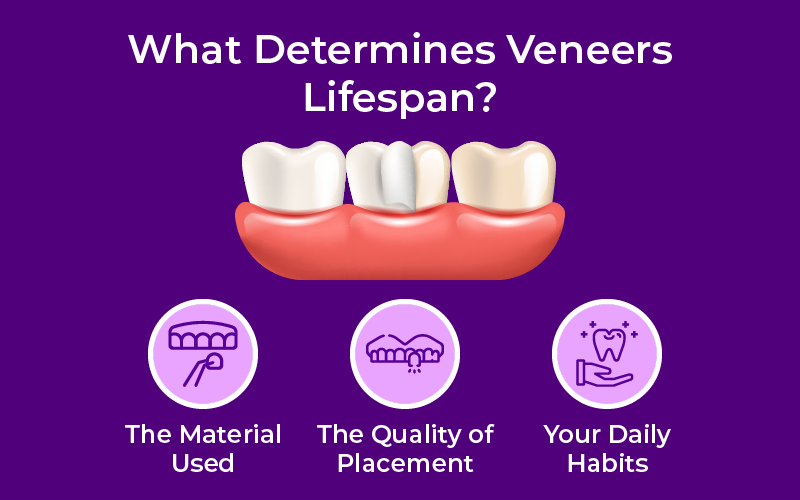
Another common misconception surrounding veneers is that once they have been placed, then essentially that will be final, for life; not true! While veneers are durable restorations, they still depend on the health of the tooth they cover (the underlying tooth) and the health of the surrounding gums.
Several major factors affect veneers lifespan of veneers:
The Material Used
Compared to composite veneers, porcelain veneers are far more durable, with higher resistance to staining, better long-term retention of the surface polish, and lower susceptibility to chipping under normal conditions.
Initially, composite veneers are more conservative and generally less expensive than porcelain veneers; however, over time, they tend to require more maintenance.
The Quality of Placement
The above portion of the text is very important, but the average patient does not consider it so.
The placement of veneers requires exceptional precision. Even the slightest imperfections in the preparation, bonding, or biting surfaces of the teeth can greatly reduce the longevity of a veneer.
A cosmetic dentist with extensive training will not only consider aesthetics during the consultation process, but they will also evaluate the following:
- Distribution of bite forces
- Symmetry of the gums
- Amount of tooth enamel preserved
- Patterns of jaw movements
- Long-term functional stability
While a good veneer should look very good in photographs, it should also perform well for many years.
Your Daily Habits
This is where the real world comes into play. Any veneer will wear down over time through continued use and exposure to the following behaviours:
- Grinding your teeth
- Biting your nails
- Chewing ice
- Smoking
- Not maintaining good oral hygiene
- Drinking too many acidic drinks
Surprisingly, ice chewers are fairly easy to diagnose by their dentist; many people do this without realizing it!
Porcelain Veneers vs Composite Veneers: Which Lasts Longer?
Price is commonly a factor for patients in comparing porcelain vs composite veneers; however, it is also important to compare the long‐term durability:
| Feature | Porcelain Veneers | Composite Veneers |
| Average lifespan | 10–20 years | 5–7 years |
| Stain resistance | Excellent | Moderate |
| Surface durability | High | Lower |
| Appearance over time | Stable | More prone to dullness |
| Maintenance needs | Lower | Higher |
If you are primarily concerned about the veneer’s longevity, porcelain veneers usually provide superior long-term value compared to composite veneers, even though they may require a higher initial financial outlay. However, composite veneers do offer several valid benefits.
How Long Should Veneers Last in Real-World Conditions?
Instead of seeking ideal numbers, it would serve you better to ask how long the veneers should realistically last based on how people live their lives day to day, because life isn’t always perfect. People get stressed, forget their night guards, drink coffee daily, and miss dental cleanings because work is hectic, their children have become ill, or life gets in the way.
So realistically, how long do veneers last for the average patient?
- With good maintenance (of porcelain veneers), they should last comfortably 10-15 years of use.
- Many go well past 20 years of usage.
- In many cases, composite veneers will require more frequent polishing, repair, or replacement than porcelain veneers.
It’s not about being perfect, but good maintenance.
Small habits done consistently will maintain your veneers much more effectively than infrequent “perfect” cleanings.
Dentists will typically say that patients with good health and longevity are not always the ones who are obsessive about their dental care. They are simply the ones who maintain consistency with their routines and habits.
How Long Do Temporary Veneers Last?
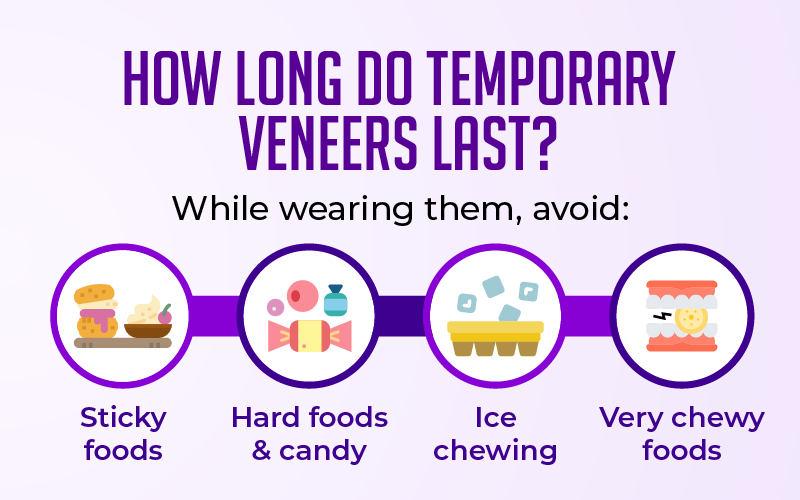
Temporary veneers last anywhere from a few days to a couple of weeks and differ from porcelain veneers in that they are composed of lighter-weight acrylic materials that cannot withstand chewing forces for extended periods. Things patients are often told to avoid while wearing temporary veneers include the following:
- Sticky foods
- Hard candy
- Crunchy ice
- Very chewy foods
While temporary veneers typically feel a little weird at first, that’s normal. Most people will also notice some of the following:
- Increased sensitivity
- Adjusting how they speak
- A feeling that the temporary veneers have bulk to them
However, after the final veneers are placed, many of these issues will dramatically decrease.
The Biggest Reasons Veneers Fail Early
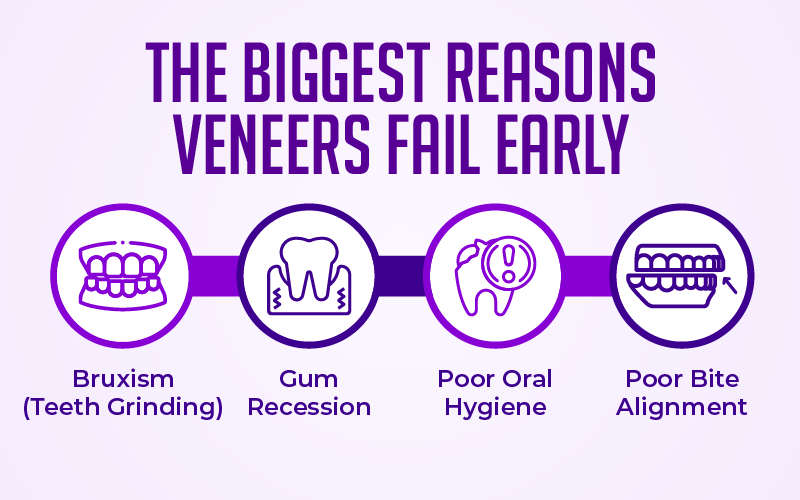
There are very few cases in which a veneer failure occurs without any evidence leading up to it. Most of the time, changes in a person’s bite develop over time and create complications for the veneers.
Bruxism (Teeth Grinding)
Bruxism is one of the leading causes of cracked veneers. Most people do not realise they grind their teeth until their dentist notices wear marks on their teeth or tension in their jaw. If patients have an oral appliance (nightguard) to protect their teeth during sleep, they can dramatically increase the lifespan of their porcelain veneers.
Gum Recession
As the gums naturally recede with age, the margins of the veneer that were previously hidden will become visible. However, just because you can see the veneer’s margin does not mean the veneer has failed. The look of the margin (aesthetically) can be affected by how long we have had the veneer.
Poor Oral Hygiene
Although veneers do not decay, the underlying natural teeth can. Cavities formed around the margins of a veneer are among the leading reasons a restoration such as a veneer will eventually need to be replaced.
Poor Bite Alignment
A person can also experience premature failure of an otherwise beautiful veneer if the bite pressures are misaligned. Therefore, as part of a complete cosmetic dental treatment, both aesthetic and functional considerations must be addressed, not just “making teeth white.”
Can Veneers Last a Lifetime?
Are veneers permanent? Technically, sometimes, but realistically, most will eventually need to be either replaced or maintained, and that’s not always a bad thing.
Just like any dental material, dental veneers experience wear and tear in the same ways as natural enamel. Additionally, the gum tissue can change over time, and patients’ bite patterns can change significantly over the course of years (decades). So the ultimate goal of a veneer is not permanent perfection, but rather long-term durability, function, and a natural appearance. Ultimately, patients who have a greater understanding of these goals at the outset and throughout treatment typically report higher long-term satisfaction with their results than those who do not; in fact, expectations often shape satisfaction as much as, if not more than, the veneers themselves.
How to Extend Veneers Longevity
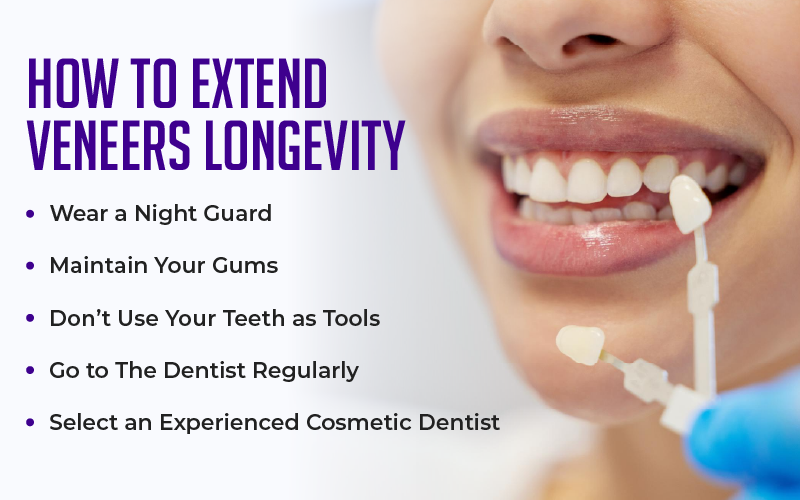
Fortunately, protecting your veneers often involves manageable habits rather than making extreme lifestyle changes!
Wear a Night Guard as Recommended
For anyone suffering from teeth grinding or clenching, wearing a night guard can be the most effective method of protection.
Maintain Your Gums
Healthy gums not only provide a natural frame around your teeth, but they also assist in protecting your tooth structure in the long term.
Do Not Use Your Teeth as Tools
Many patients know it’s a bad idea to use their teeth to open packages, but they do it anyway.
Go to The Dentist Regularly
Routine cleanings and evaluations provide an opportunity to address small problems before they become larger issues that require restorative dentistry.
Select an Experienced Cosmetic Dentist
Choosing an experienced cosmetic dentist is likely more important than the product or toothpaste you use.
Experience is essential when it comes to:
- Veneer fit
- Bite alignment
- Tooth enamel preservation
- Long-term success of veneers
Having veneers that will look natural even after a long time has passed.
Final Thoughts
You should be asking the following questions when looking into how long veneers last. Rather than ask yourself, “Will they always look perfect?” Try thinking of the following instead: “Will this addition to my life blend with who I am as well as enhance my experience of life for an extended period?
At this point, this conversation is what you should be discussing, rather than any other topic in cosmetic dentistry.
When it comes to having great cosmetic dental work done, it is about delivering results that offer naturalness, stability, function, and ease of emotional satisfaction for an extended period.
So, before you continue with your dental journey, find out from your dentist about the longevity, maintenance costs, bite stability, and the balance between realistic and aesthetic properties.
Frequently Asked Questions
Most porcelain veneers can last 10 to 20 years with proper maintenance and care, while composite veneers typically last 5 to 7 years. The lifespan of a set of veneers largely depends on your daily routines, oral hygiene, and regular dental visits.
As a rule of thumb, porcelain veneers tend to last longer than their composite counterparts because they are generally more durable and less likely to discolour. Although they are usually more expensive than composite veneers, porcelain restorations require fewer repairs or replacements than composites.
One thought on “How Long Do Veneers Last?”