


The world of dentistry has grown magically over the years!
The majority of dental procedures that used to take a long time, required extensive use of scalpels and stitches, and had long recovery periods are becoming faster and far less invasive due to the use of dental lasers.
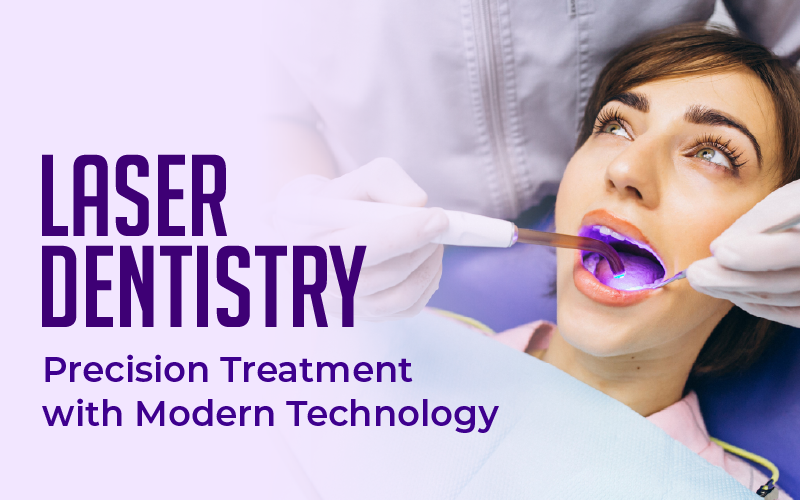
Laser dentistry uses highly concentrated light energy from lasers to perform various dental procedures more precisely and with greater comfort than traditional methods. The use of lasers to treat gum disease or perform tooth whitening has helped the dental fraternity perform procedures more quickly and, in many cases, with less discomfort for the patient.
Let’s explore the use of lasers in dentistry, the types of dental lasers available, common procedures that can be performed with laser assistance, and the many benefits they offer to both patients and the dental profession.
What Is Laser Dentistry?
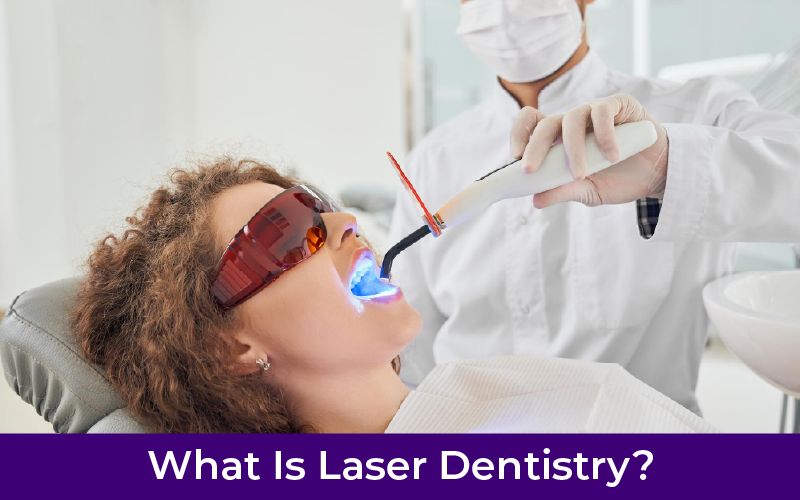
Laser dentistry uses focused beams of light to perform dental procedures on both hard and soft oral tissues. A laser is defined as “light amplification by stimulated emission of radiation”.
A concentrated beam of light generated by the dental laser can interact with oral tissues. When focused on a target area, laser energy can be used to remove, reshape, or treat oral tissue with precision.
Unlike conventional dental tools, such as scalers and drills, lasers can target very small areas without damaging surrounding oral tissues. As a result, the precision of a dental laser makes it ideal for many different types of fragile restorative procedures.
Although laser technology was introduced into dentistry in the early 1990s, its use has expanded rapidly across many oral hygiene procedures.
The Science Behind Dental Laser Technology
The fundamental principle behind dental laser technology is that it uses precise high-intensity light directed at a small area of the mouth. Depending on the dental procedure being performed, light energy affects the tissues differently.
For instance
- You can use lasers to detach decayed portions of the tooth
- Lasers are used to vaporize harmful bacteria in the gums that are infected
- Some lasers can be used to enhance the healing of surrounding tissue
Because the laser beam is so precise, the dentist can treat a small area without affecting adjacent tissue. This is one of the many reasons why many dentists love laser dental care. It allows for extremely precise treatment.
Types of Dental Lasers
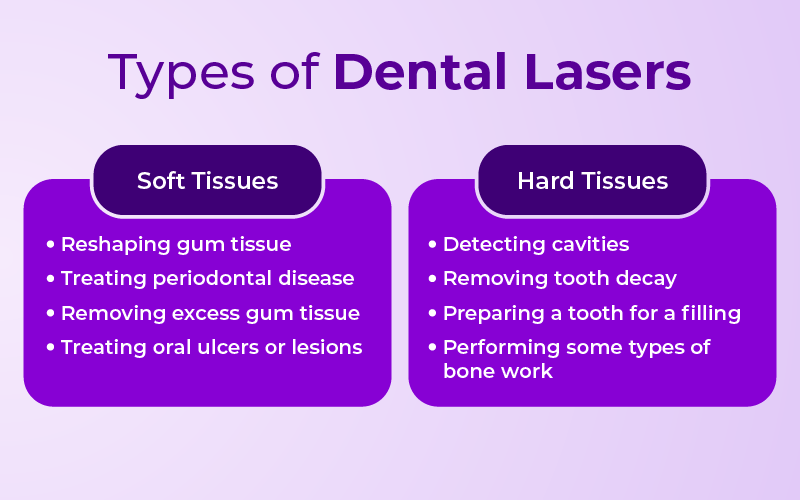
Not all dental lasers function in the same way; there is a variety of dental lasers designed to interact with various types of oral tissues. Generally speaking, dental lasers fall into two categories: soft tissue lasers and hard tissue lasers.
Soft Tissues
Soft-tissue lasers are designed specifically for use on the gums and other soft oral tissues.
Commonly performed procedures with soft-tissue lasers:
- Reshaping gum tissue
- Treating periodontal disease
- Removing excess gum tissue
- Treating oral ulcers or lesions
When used, soft tissue lasers cut through tissue while simultaneously sealing blood vessels, reducing blood loss during surgery or other procedures, and typically eliminating the need for sutures.
Hard Tissues
Hard-tissue lasers are designed for use on teeth and bone. Commonly performed procedures with hard tissue lasers:
- Detecting cavities
- Removing tooth decay
- Preparing a tooth for a filling
- Performing some types of bone work
Hard tissue lasers use a specific wavelength of light that interacts with dental enamel and dentin; therefore, they can effectively treat cavities and prepare teeth to receive a filling or surgical reconstruction.
What Is Laser Teeth Cleaning?
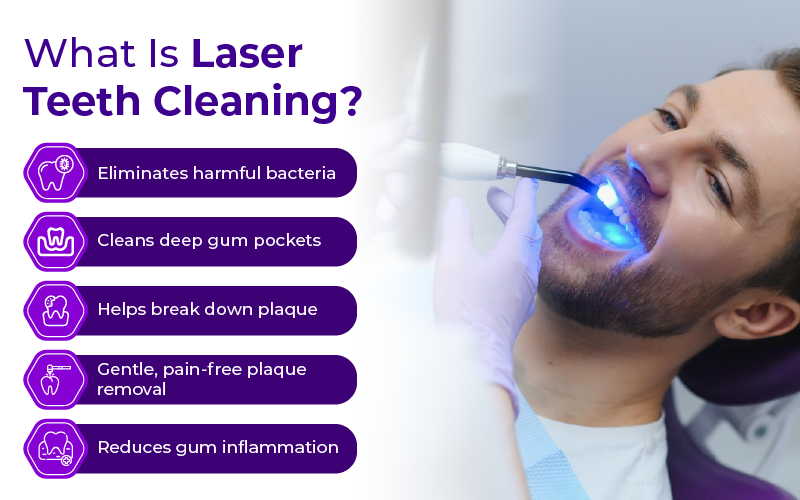
Everyone typically gets a “professional” cleaning at least twice a year. Traditional cleanings involve scraping plaque and tartar from teeth with a metal instrument to keep teeth healthy. While effective, most people don’t enjoy having their teeth professionally cleaned.
Laser teeth cleaning has become part of the cleaning techniques used by some dental offices worldwide. While in the past dentists would have relied solely upon the scraping method to achieve clean teeth, they can now also (in part) rely on a dentist-made dental laser to achieve clean teeth:
- Eliminate bad bacteria
- Kill bacteria/germs in gum pockets where plaque collects
- Aiding in the breakdown of plaque
- Pain-free removal of plaque from gums
- Reduction in inflammation
Although a dentist’s use of lasers for cleaning teeth does not eliminate the need for other tools or techniques, using lasers alongside other cleaning practices has helped make these procedures more enjoyable for patients.
Why People Like Laser Cleaning
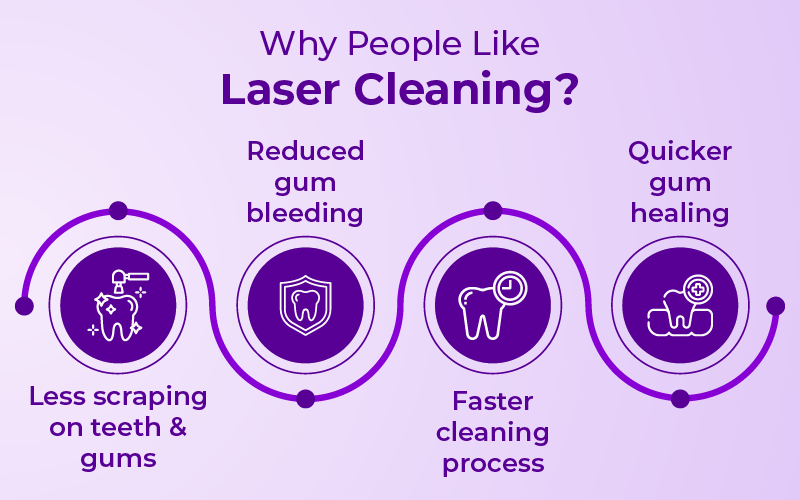
Patients typically describe their experiences using a dental laser compared to using traditional dental cleaning methods:
- Less scraping on the teeth and gums
- Less bleeding of the gums
- Much quicker cleaning process due to the lack of scraping of the teeth
- Faster healing of the gum tissue
For patients with gum disease, laser cleaning of the teeth is especially beneficial because the dental laser can reach areas below the gum line that traditional cleaning methods cannot.
Laser Treatment for Gum Disease
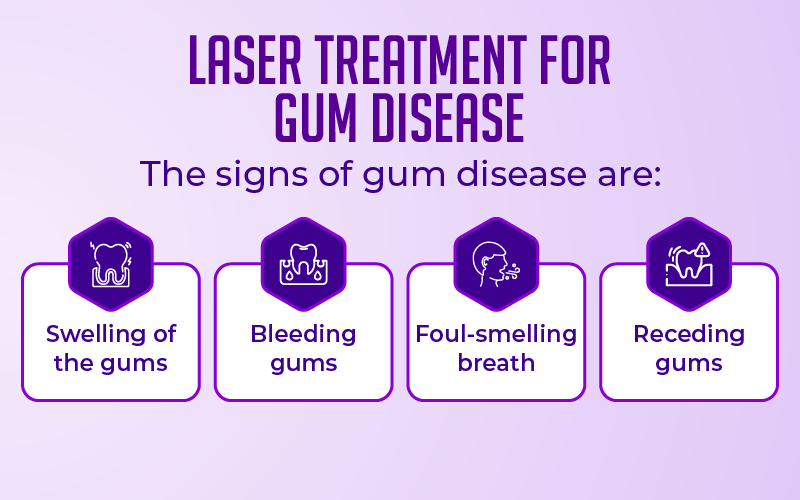
Surprisingly, gum disease is extremely common, and many adults have some form of it without even knowing it. The signs of gum disease are:
- Swelling of the gums
- Bleeding
- Foul-smelling breath
- Receding gums
If left untreated, it can lead to future tooth loss, which is why dentists are increasingly turning to laser treatment for gum infections.
What Does Laser Treatment Do?
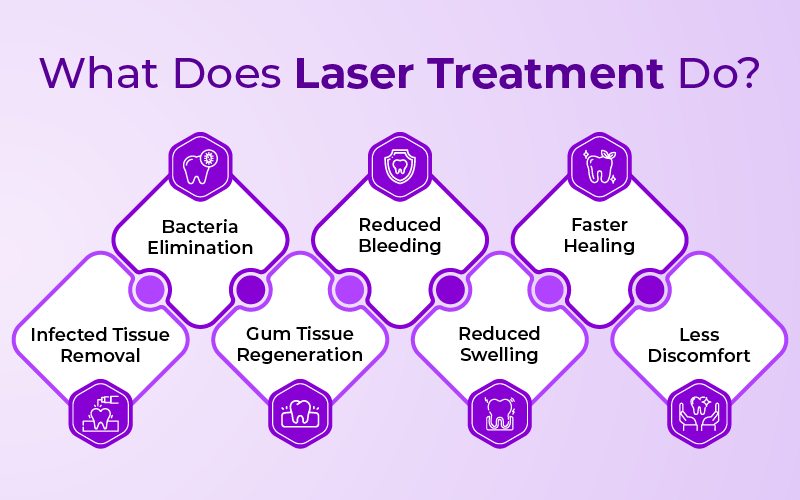
Through laser dental treatment for gum disease, the dentist will use a soft tissue laser to:
- Remove infected gum tissue
- Kill the bacteria that cause gum disease
- Encourage the growth of healthy gum tissue
- Sealing blood vessels while the laser is in use will reduce bleeding during treatment.
Most patients will see:
- A reduction of swelling
- Faster healing
- Less pain
And that can be significant to anyone who has anxiety about dental procedures.
When Is Laser Surgery Used in Dentistry?
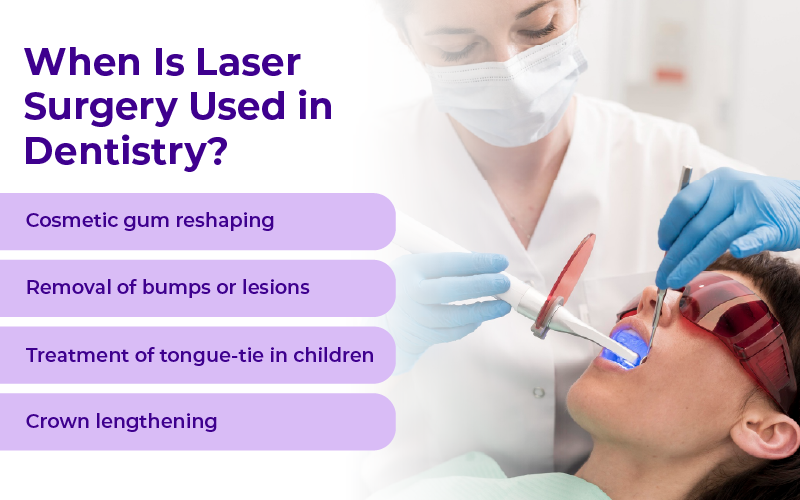
When you hear the term “dental laser surgery,” it may sound severe because we all think of traditional surgical procedures as being more invasive; however, in most cases, dental laser surgery is much less invasive than traditional surgical procedures.
Some examples of when dentists may use lasers include:
- Cosmetic gum reshaping
- Removal of bumps or lesions
- Treatment of tongue-tie in children
- Crown lengthening
When using lasers to perform these procedures, stitches are often unnecessary because the laser sterilizes and seals the tissues as it performs the surgery.
Why Dentists Choose Laser Surgery
Laser dentistry can offer many advantages over more traditional methods of treating tooth decay. These advantages include:
- More precise treatment
- Less bleeding
- Reduced risk of infection
- Faster healing time
Several dentists believe that lasers help improve their ability to control delicate procedures. Therefore, patients typically experience a more comfortable dental procedure than they otherwise would.
Laser Treatment for Cavities
Trying out laser dentistry brings a smile to your face, especially if the sound of the dental drill makes you cringe. Laser dentistry can remove decay from your teeth, in some cases using energy so powerful that it actually vaporizes the decayed portions of your tooth, leaving only healthy tooth structure.
After your cavity is removed, your dentist will place a filling using the same technique they would with more traditional methods. There are limitations on the number of cavities that can be treated using this method; however, many patients choose this option when it meets their needs.
The benefit of having your cavity treated using laser treatment can provide the following positive experiences:
- Minimum vibration
- Minimum noise
- No need for anesthesia in some cases
In fact, this very reason alone helps many individuals to take the step forward into laser dentistry!
Teeth Whitening with Dental Lasers
Cosmetic whitening is another common use of lasers in dental offices. Many people have heard about or have had the opportunity to experience laser whitening in a dental office.
How does it work?
Whitening gel is applied to the teeth, and then the dental laser is used to activate it. The laser also speeds up the bleaching process.
What’s the result?
Teeth can become significantly whiter after one visit.
There’s no doubt that not all whitening options use lasers, but because of how quickly they provide results, more and more people are using this option for whitening.
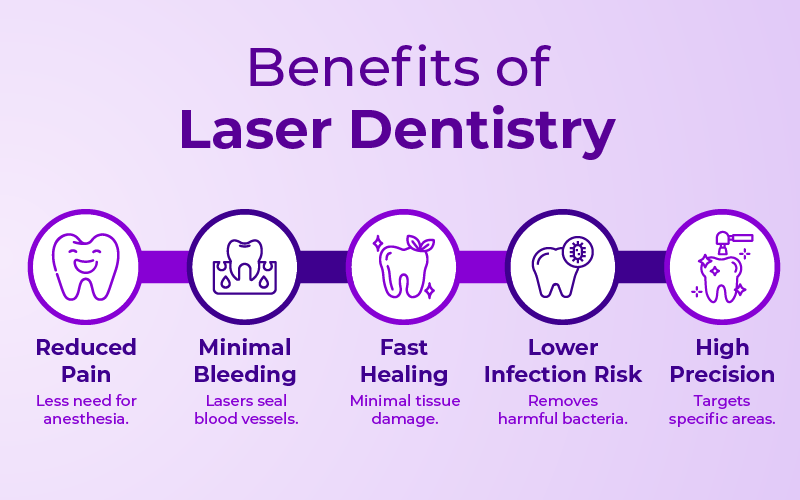
Benefits of Laser Dentistry
Now that we’ve reviewed the procedures, let’s take a step back and assess the overall impact of dental laser technology.
Why is there so much attention on dental lasers?
This is because of the dental laser’s benefits, which can make the dental experience easier for both patients and dentists.
- Reduced Pain: Many laser dental treatments reduce the need for anesthesia.
- Minimal Bleeding: Lasers seal off blood vessels during treatment.
- Fast Healing: The amount of tissue damage will be minimized.
- Decreased Chance of Infection: The use of lasers will remove all of the bacteria from the treated area.
- Increased Accuracy: Dentists can treat very specific areas with laser technology.
These benefits are especially helpful for patients who suffer from anxiety when going to the dentist. Therefore, anything that helps reduce your anxiety about dental care is a benefit.
Are Dental Lasers Safe?
To answer your question, the short answer is ‘yes.’ The regulatory body approves all dental lasers for use in dentistry and can only be used by trained dentists.
In addition to the use of lasers, dentists also take safety precautions for patients by:
- Providing protective eye gear to the patient
- Using a controlled setting for laser use
- Targeting the tissue to be treated accurately
As with any medical technology used in the dental office, the most important factor in ensuring a safe and effective treatment with the dental laser is the user’s training and experience.
Conclusion
The dentist’s office has always had its share of bad press. You hear the drills; you notice the strong odor of disinfectant; you get embarrassed while you talk to someone who is working on your teeth.
Lasers in dentistry have changed this negative experience for many patients.
They allow dentists to do their job more accurately, with less pain, and quicker recovery times.
If you are putting off your appointment out of fear, it is worth contacting your dentist to see whether they offer preferred procedures.
Frequently Asked Questions
Compared with traditional treatment modalities, most patients report feeling much more comfortable during laser-based dental treatment. Lasers are extremely precise and do not cause as much damage to adjacent (surrounding) tissue as traditional treatments do. This leads to less bleeding and swelling postoperatively and, in many instances, significantly less need for anesthetics than with traditional treatment.
Dentists use laser-based treatments for a wide variety of dental-related procedures. Some of the procedures for which dentists use lasers include treating periodontitis, removing tooth decay, reshaping the gums, teeth whitening, and conducting many minor oral surgical procedures, among other dental-related procedures. The lasers used in dentistry are designed to provide more accurate treatment and also expedite healing.
Laser cleaning of teeth can often be much more gentle on patients who have developed periodontitis; this is because the use of lasers will generally allow dental providers to access and remove bacteria that are growing deep beneath the gumline with much less bleeding and decreased inflammation, making the tooth cleaning process overall much more pleasant for the patient.