


You may be very familiar with the look of your teeth. Still, as far as your gums go, you may not give them much thought except when they start to bleed.
Maybe the pink color of the sink was one of your discoveries after brushing, and you just assumed, “it must be normal.
Perhaps, to your eyes, your gums are somewhat inflamed, or a specific section seems to be moving away from the tooth. You may have had bad breath for some time and blamed it on coffee or onions, or you may have realized it’s time for a stronger mouthwash.
That’s a fact: your gums can be a pretty good indicator of what is going on in your mouth. A peculiar feature of certain gum problems is that they don’t hurt in the early stages, making them easy to ignore.
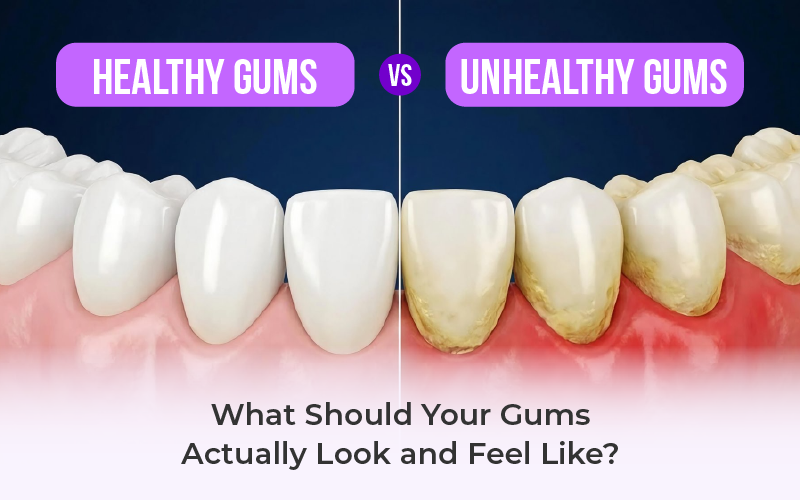
Because of this, what signs actually separate healthy gums from diseased ones?
What Do Healthy Gums Look and Feel Like?
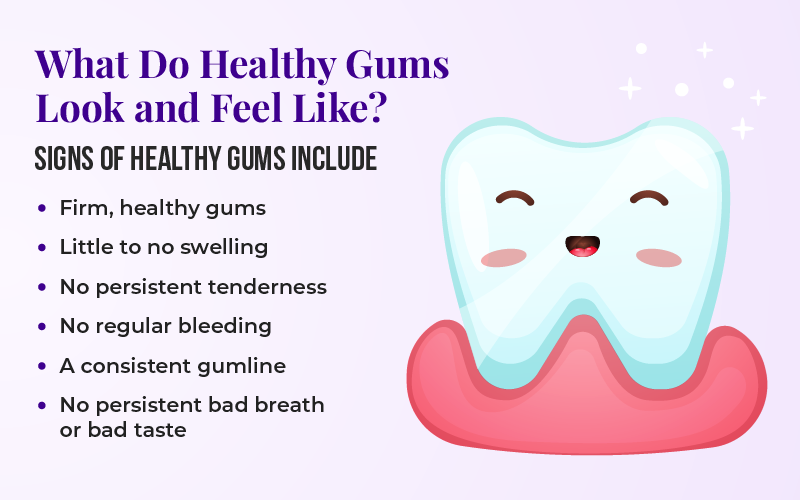
Normally, the signs of healthy gums are simple. Generally, your gums should be comfortable, a bit firm, and fit closely with your teeth. Healthy gum color can range from light pink to very dark, depending on each person’s natural pigmentation. There isn’t one “ideal” gum color.
Signs of Healthy Gums Include
- Firm tissue around your teeth
- Little or no swelling
- No persistent tenderness
- No regular bleeding when brushing or cleaning between your teeth
- A gumline that looks consistent with what’s normal for you
- No persistent bad taste or bad breath caused by gum problems
One useful habit is to learn what your gums normally look like. You don’t need to inspect them like a dental professional. Just occasionally notice them while brushing.
That way, changes are much easier to spot.
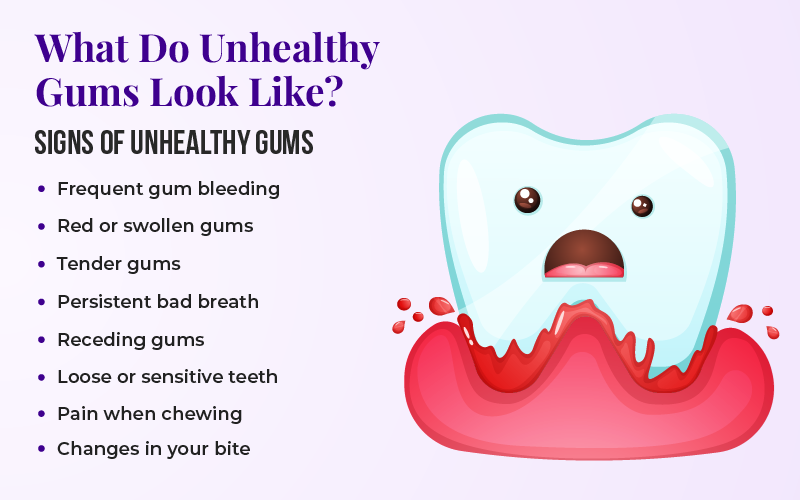
What Do Unhealthy Gums Look Like?
Now, let’s discuss unhealthy gums.
Common indicators include changes in color, such as redness, swelling, pain, and bleeding. In addition, the National Institute of Dental and Craniofacial Research (NIDCR) warns that gum disease might lead to gums pulling away from your teeth, tooth looseness or sensitivity, discomfort when eating, and constant bad odor in the mouth.
Signs of Unhealthy Gums to Watch For
Pay attention if you notice:
- Gums that bleed frequently
- Red or noticeably swollen gums
- Tenderness when brushing or eating
- Persistent bad breath
- Gums appearing to pull away from your teeth
- Teeth that feel loose or unusually sensitive
- Pain when chewing
- A change in how your teeth come together when you bite
Bleeding can signal a problem your body is trying to show you. Your gums, after all, should never bleed on their own.
So, persistent, repeated bleeding is a sign of danger, and it deserves your attention. With your dentist’s help, you can determine whether the cause is plaque-related inflammation, gum disease, brushing technique, medication, or something else entirely.
Gingivitis: The Warning Sign That’s Easy to Dismiss
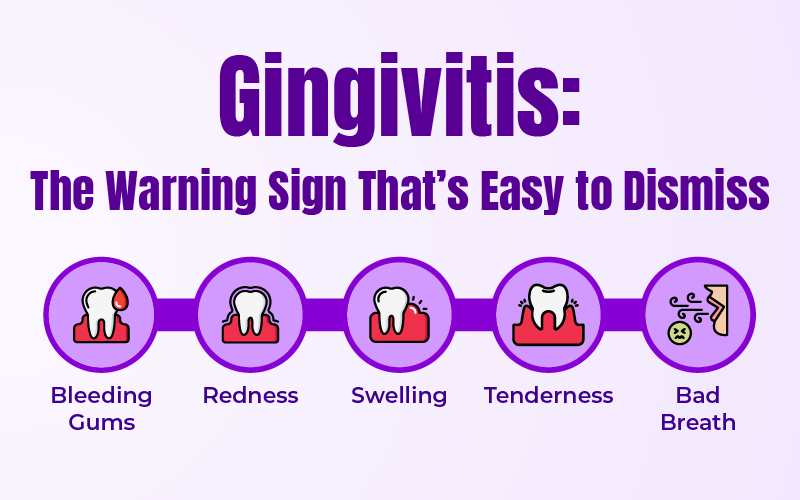
Gingivitis is inflammation of the gums and is mainly linked to plaque buildup near the gumline. The Centers for Disease Control and Prevention describes gingivitis as the least severe stage of gum disease, with symptoms like red, swollen, or bleeding gums.
The good news? With improved oral hygiene and a dentist’s help, you can often get rid of gingivitis.
What Are Unhealthy Gum Symptoms of Gingivitis?
Common unhealthy gum symptoms can include:
- Bleeding during brushing or interdental cleaning
- Redness
- Swelling
- Tenderness
- Bad breath
The tricky part is that gingivitis may not cause significant pain. So you can feel totally fine while your gums are already signaling that something needs to change. That’s why waiting for pain to monitor gum health may not be a very reliable method.
What Others Don’t Tell You About Gum Health
The easy part to overlook is this:
Your gums don’t need to be sore for you to have a problem.
Gum disease symptoms, such as bleeding, may not be the first sign that the problem is getting worse. Eventually, periodontitis can destroy the tissues and bone that hold the teeth in place. At this stage, you may even experience loose teeth and tooth loss.
Here’s another angle that’s often overlooked: brushing well isn’t the only factor in determining your risk.
Your gum disease risk is affected by smoking, diabetes, certain medications, genetic predisposition, hormonal changes, and many other health factors.
That matters because it means having gum problems isn’t simply a reflection of your “goodness” or “badness” in taking care of yourself.
Please don’t punish yourself if your gums aren’t doing well. Get to the bottom of it.
You can read more in our blog :
Healthy Gums vs Unhealthy Gums: A Simple Comparison
| Healthy gums | Unhealthy gums |
| Firm and comfortable | Swollen or tender |
| Little or no bleeding | Frequent bleeding |
| Generally consistent in appearance | Noticeable redness or changes |
| Snug around the teeth | May pull away from teeth |
| No persistent gum-related bad breath | Persistent bad breath may occur |
| Teeth feel stable | Teeth may become loose or sensitive |
These signs aren’t a diagnosis. Your dentist may need to examine your gums and measure the spaces around your teeth to determine whether gum disease is present.
How to Protect Your Gums Every Day
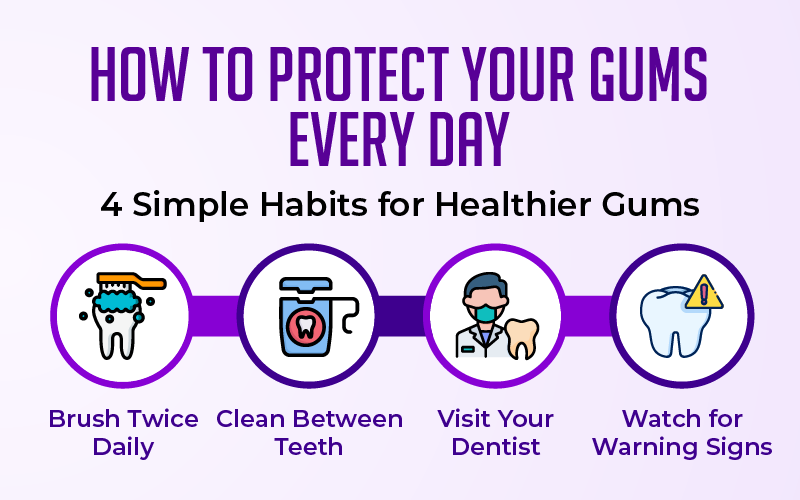
You don’t need a complicated routine or a bathroom cabinet full of products.
Try These Four Basics
- Brush your teeth twice a day using fluoride toothpaste. The American Dental Association suggests brushing for two minutes twice a day.
- Floss or use another method effective for you to clean between your teeth, which are plaque removal spots not reachable by a toothbrush.
- Schedule and attend your dentist appointments regularly. Dentists can spot changes that you might miss yourself through professional check-ups.
- Don’t overlook ongoing symptoms. Gum bleeding, swelling, exposed roots, persistent bad breath, and loose teeth are all good reasons to contact your dental team.
If you are a diabetic patient, are a smoker, have a gum disease history, or have other risk factors, the dentist might suggest a more specific preventive plan.
When Should You See a Dentist?
Don’t wait until your gums bleed, swell, hurt, recede, or feel tender all the time, since that’s a sign of a problem.
Also, if you have a loose tooth and chewing becomes painful, book a dental visit instead of trying to treat it yourself. These can signal more serious gum disease.
Not only can your dentist assess the state of your gums, but they can also measure the level of gum inflammation and presence of periodontal pockets, examine your teeth, and suggest the most appropriate treatment for you.
A Final Thought About Your Gums
Gums are not supposed to grab your attention every morning. Really, if they’re healthy, you might not notice them at all.
This is why even the tiniest changes count.
Instead of just inspecting your teeth while brushing, include a quick view at the gumline, too. If something has changed and keeps changing, don’t convince yourself it’s nothing.
Good gums don’t mean a flawless mouth. They mean identifying your usual state, consistently looking after it, and seeking help when something feels off.
Bleeding, swelling, or a change in the appearance of your gums might be the little signal you should have been waiting for. Schedule a dental exam and have a professional assess the situation.
You can learn more about bleeding gums in our blog :
Frequently Asked Question
1. What do healthy gums look like?
Generally, healthy gums are hard and don’t hurt. The color matches your natural skin tone, and the surface is even.
You shouldn’t bleed often when you brush or floss. If your gums suddenly look swollen and red, it’s time to have them checked.
2. Is bleeding while brushing a sign of unhealthy gums?
Regular bleeding can mean your gums are unhealthy. It can signal inflammation, such as **gingivitis**. At first, it might seem fine, but if brushing causes bleeding over time, it can indicate a health problem that needs treatment. Talk to your dentist if the situation worsens.
3. What are common symptoms of unhealthy gums?
Redness and swelling, tenderness, and bleeding are common symptoms of unhealthy gums, with persistent mouth odor and gum recession. Teeth may also feel loose or sensitive. One has to bear in mind, though, that even when it comes to a change in the appearance of the gums, one might not feel any pain. Because of this, any such change is worth having your dentist check, as otherwise it may go unnoticed.
4. Can gingivitis turn into gum disease?
Without treatment, gingivitis (the early stage of periodontal disease, which destroys the tooth’s supporting structures) can worsen into gum disease, also called periodontitis. One reason early treatment is advised is that gingivitis can be cured, whereas deep gum disease is much harder to treat because its damage to the tissue and bone may become irreversible.
5. How can I keep my gums healthy?
The key steps to safeguarding your gum health are to brush twice a day and use a fluoride toothpaste. Make sure you clean the space between your teeth as well. Also, keep regular dental appointments.
Besides, it is a good idea to stay away from tobacco. If your condition of bleeding, swelling, recession, or tenderness in the gums is not temporary, it would be better to go through a dental professional’s examination