

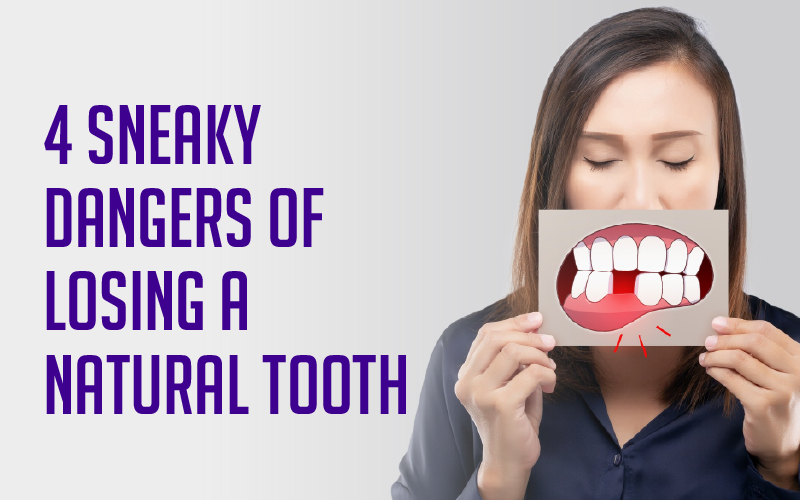
Losing a tooth is one of those unfortunate events, followed by an array of feelings. Many people have had this experience & make the same decision as you by deciding to replace their lost tooth later. When you look in the mirror, you may find yourself saying, “It’s just a tooth, I’ll get to it at some point,” or “I’ll find a way to replace my lost tooth when I have more time or energy, or once the random chaos in my life stops happening every 5 minutes.”
Then, when you catch yourself looking at your smile, or start to notice changes in your eating habits, or start noticing that your bite is different than it used to be, you can’t explain it other than to say that something isn’t right. That one little tooth that you were going to replace becomes the beginning of a snow-ball effect of many more problems down the road.
If you’ve never been told what happens when you have lost your tooth and do not replace it, this is your chance to find out. This is not intended to scare you; however, it will inform you about the common experiences of those who have experienced the same situation, and then, how those who have gone through this process, learned how to prevent the same thing from happening to them. You deserve to have an early warning about this.
Teeth May Move in Empty Space
It’s like in a group photo when all of your friends are paying attention, but as soon as they stop, no one is really watching anymore and everyone is kind of drifting apart. It’s the same situation with your teeth.
When you lose one or more teeth, the adjacent/nearby teeth will not remain in their normal positions and they will begin to shift toward one another . After they have started to move, it will be difficult for you to get them to stop without some type of intervention (eg: restoration, ortho etc).
Why This Matters More Than You Think
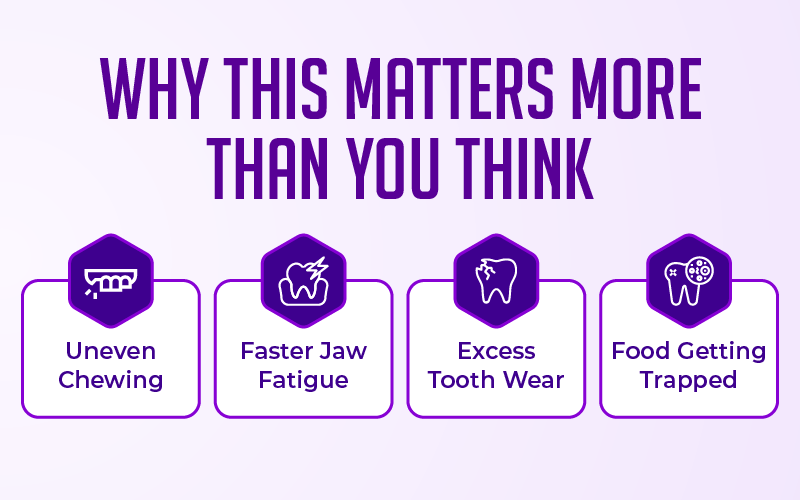
When your teeth shift position, this causes both an alteration of your bite and a domino effect with the gap. The following problems may occur with this change in your mouth:
- Your chewing will no longer feel balanced.
- Your jaw will tire more easily.
- Other teeth will wear down at an accelerated rate.
- Food particles will enter areas where they are not supposed to be.
It’s pretty amazing how just one missing tooth can completely alter the characteristics of your entire mouth.
The Real-World Example You’ll Probably Relate To
Imagine losing a molar, and the molar above has no contact so it starts drifting downward in an effort to regain contact. All of a sudden, you have a loose tooth that is on its way out of the party. This small issue is one of many that is often overlooked when it comes to the effects of missing teeth, and this could eventually lead to orthodontic issues, jaw/structural issues, or unexpected restorative work.
Missing Teeth Mess With Your Bone
Dentists might discuss this subject often, but when someone in reality hears ‘Future Me will have to worry about this.’ The bone underneath your tooth is no longer stimulated when you lose a tooth and therefore will no longer have an obligation to the bone. It will shrink as long as it feels there is no use for it. Regardless of how busy you are, the process of bone loss will continue over time.
Why Bone Loss Hits Harder Than You Expect
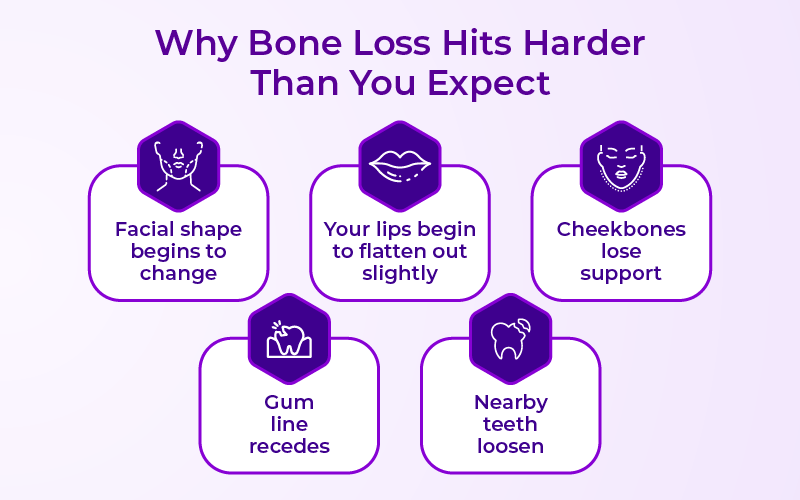
Bone loss doesn’t necessarily stay in the background – it starts showing up in ways you can actually feel.
- Your facial shape starts to change subtly
- Your lips begin to flatten out slightly
- The look of your cheekbone area (cheekbones), do not look as supported
- Your gum line (gums) recedes
- Other teeth become unsupported and loose, due to having lost the support of the surrounding bone
This is one of the greatest Effects of not replacing a lost tooth. Once there is no longer any bone present, it can take a long time, many dollars, and a great deal of patience to replace that bone.
The Facts No One Talks About
It is possible that your face may be showing signs of premature age; however, this could also be attributed to time elapsed since a loss of a tooth causing nearby bone deterioration. The issue isn’t due to anything you did wrong.
However, it hasn’t gone away and there’s nothing you can do to replace those lost bones.
Chewing Gets Weird, Then Annoying, Then Kind of Embarrassing
Most people don’t usually think about chewing as an issue. However, if one of your teeth falls out, it may not seem like much of a problem but if you are avoiding certain foods because you have lost teeth, it could develop into a bigger issue without even noticing it yourself. Because of this, people begin chewing their food more often on their ‘good side more’, and eventually that side may get fatigued and as a result, you may start avoiding your favorite foods.
Thus, losing one or more teeth is one of the most “sneakiest” ways of developing dental issues unexpectedly.
Your Diet Actually Changes
Even if you’re not conversing about it, you’ve likely figured out that this is all happening.
Hard food? Not happening.
Food that requires chewing? Not worth the spare effort.
Crispy/ crunchy foods? On a rare courage.
As you continue to modify your way of eating and hence your digestion will continue to suffer. Chewing is the very first step of the digestive system process, without it your body has to go into panic mode to catch up to the loss of chewing.
The Stress Nobody Talks About
Do you ever feel anxious about ordering specific types of meals at restaurants because you are afraid of making a mess of them during your dining experience? It’s amazing how many people do not express how much of an emotional toll having missing teeth can have on their life. It really affects your self esteem as you have more than just a loss of appearance to your mouth; it also affects how you chew your food, speak while eating, the way you smile, and overall, how comfortable you feel being around other people.
Your Smile Changes and Your Confidence Goes
It’s possible that you could initially accept the gap. In many cases, you would probably accept that for an amount of time. But there might come a point where you see a photograph of yourself from an unexpected viewpoint. You might catch yourself from an unintended angle, or perhaps a comment made by someone might provoke an emotional reaction to the loss of your teeth.
They will affect you emotionally not due to being vain or dramatic, but simply because you are human. And as humans, we have an interest in our smiles, even though we may not say it.
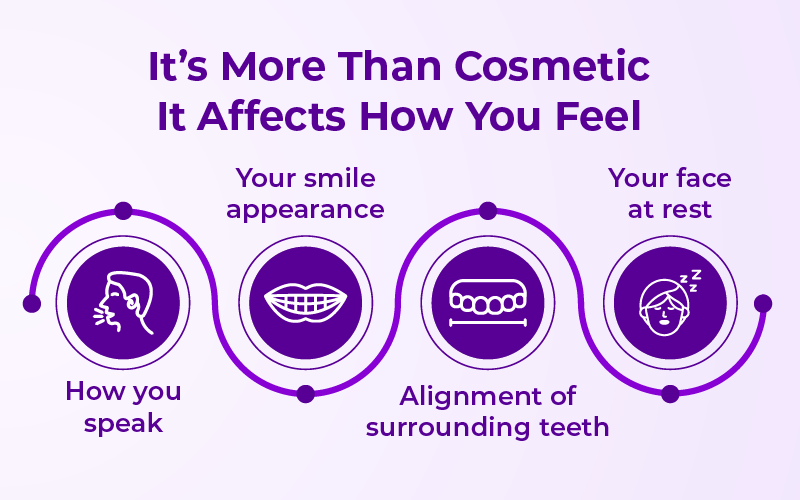
It’s Not “Just Cosmetic” When It Affects How You Feel
There are several effects from the loss of a single tooth, including:
- How you communicate
- Your smile
- The positioning of your oral structures
- The appearance of rest or your face when you are asleep
Over time, the loss of a tooth can cause changes to the position of other teeth, negatively impacting all of your teeth and making it impossible for you to perceive your smile as being the same as it was prior to the loss of a tooth.
Let’s Be Honest for a Second
When you are smiling differently because you’re hiding something, you are aware of it. You can feel it in your face. You can feel this when you are being self-conscious and also when you take a picture of yourself. This is not out of vanity; it’s because you want to protect yourself.
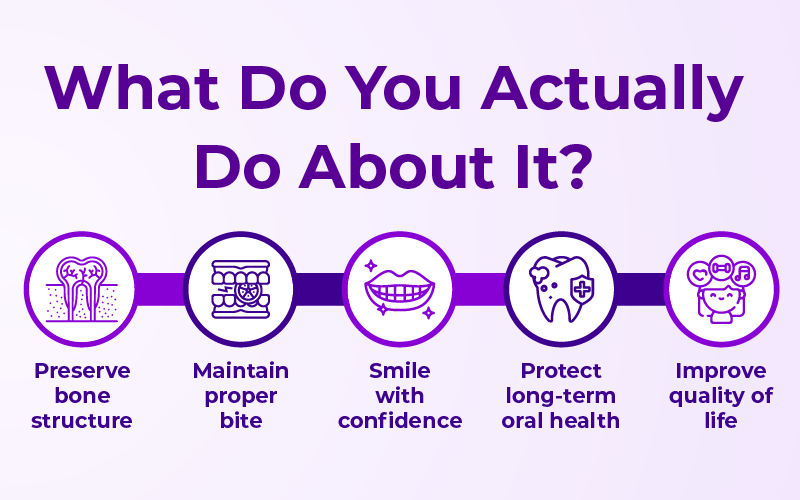
What Do You Actually Do About It?
Don’t rush. You don’t need to panic. But you do need a plan! Missing one tooth is usually not an isolated event.
If you have been putting off dealing with your gap in your smile for any number of reasons – you have a busy life, dental care feels overwhelming -, think of the consequences.
The reason you replace your missing teeth is because:
- To save your bone structure
- To maintain your bite
- To have confidence when smiling
- For your future oral health
- To improve the quality of your life
There are many options available for addressing your missing teeth; Bridges, Implants, Partial Dentures, Bone Preservation Procedures. You don’t have to decide right now; you should explore them.
The long term consequences of your missing tooth will be the most significant consequences, and they will take time to develop and you won’t necessarily see them developing over time.
A Final Thought to Sit With
If you keep telling yourself you will take care of that missing tooth later, here’s a gentle nudge: It happens quicker than you think and years can go by before you realize it! Also, there are consequences to leaving the gap that will follow you around no matter how well you hide them. You deserve a smile that functions properly, feels comfortable, and resembles “you.” Take some time to speak with someone about it (even if it is just an exploratory conversation).
Frequently Asked Questions
Yes, it can have major consequences on your dental health. One missing tooth can lead to drifting and shifting of your teeth, loss of bone in the jaw, and changes in the way your jaw closes, all of which can have a compound effect over time.
Drifting of your teeth may occur into the gap created by the missing tooth, as well as weakening of the jawbone and discomfort while chewing. All of these conditions are early signs of not replacing missed teeth, all of which will not spontaneously resolve.
Yes! Bone loss resulting from tooth loss may create the appearance of less contour to your cheeks and will change the shape of your jaw. This is gradual and can take years for most people to identify the change.
Yes! The remaining teeth will typically lean towards or move into an area where a tooth has been extracted. This can lead to alignment problems and uneven wear of existing teeth, problems with the function of your jaw, and orthodontic treatment may be necessary.