


You don’t spend a lot of time thinking about your dental crown when asked to be honest, but why would you? Your dental crown is designed to blend in, quietly do its job without you noticing, as an introvert would in your mouth; however, today you took a bite out of a now-mundane blueberry muffin and suddenly realized something was wrong with your crown.
That little pause in your thought process for that split second has just alerted you that there is something wrong with that dental crown you never have to use your imagination or logic for but as with most things, it can take time before they let you know there’s an issue, it’s very easy to confuse this type of issue as being just “a bit off.”
The problem is that your mouth is one of the few areas where seemingly small problems can eventually become major if they aren’t addressed soon enough. So let’s take you through some actual indicators (the ways you perceive them during your daily routine) that something could be happening with your dental crown, and what you may need to adjust.
1. Your Bite Feels Off
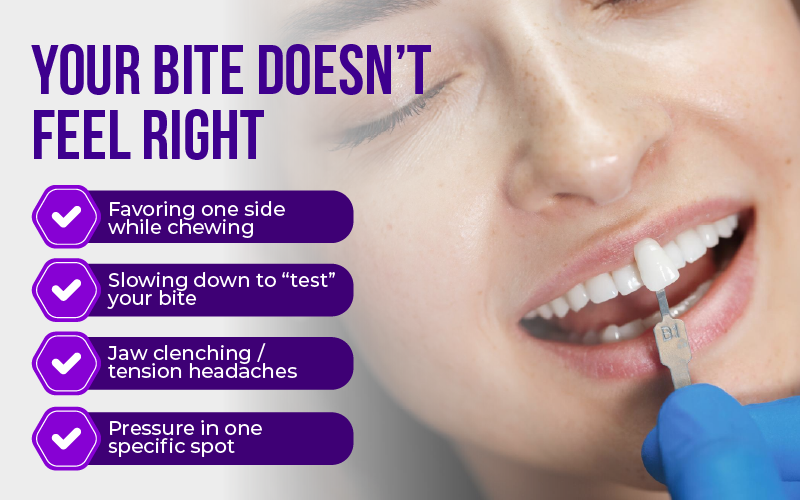
As someone who knows their mouth better than anyone else, you’ll be able to notice things about it, even if you don’t consciously notice them. This is why when there is a shift in your bite, this will be something you’ll notice very easily. The biggest sign of an ill-fitting crown is an ongoing, too-often-or-too-little sense/symptom that your tooth/teeth no longer feel aligned in their natural position. It does not hurt; it’s just a feeling that something is not quite right, like the tags itching at the back of your shirt.
Here’s what you might catch yourself doing:
- Chewing on the opposite side without meaning to
- Slowing down when you bite into something because you’re “checking.”
- Clenching your jaw more than usual (hello, tension headaches)
- Feeling pressure in one specific spot
You would be amazed at how a small variation in the height of your teeth can disrupt your entire jaw! The jaw is a perfectionist. Your jaw has a micromanager quality; if something feels “off” to it, it will continually try to adjust – and you feel those adjustments over time – typically in your cheeks, temples, or jaw hinge.
If you keep being out of alignment, you may also start to notice slight soreness, uneven wear, or click sounds that you can almost guarantee didn’t happen last week.
Ignoring the misalignment will only worsen it; getting the appropriate adjustment from your dentist now will save you considerable grief from asking “why does my face hurt?” in the future.
Pain or Sensitivity That Doesn’t Feel Like Your Normal Sensitivity
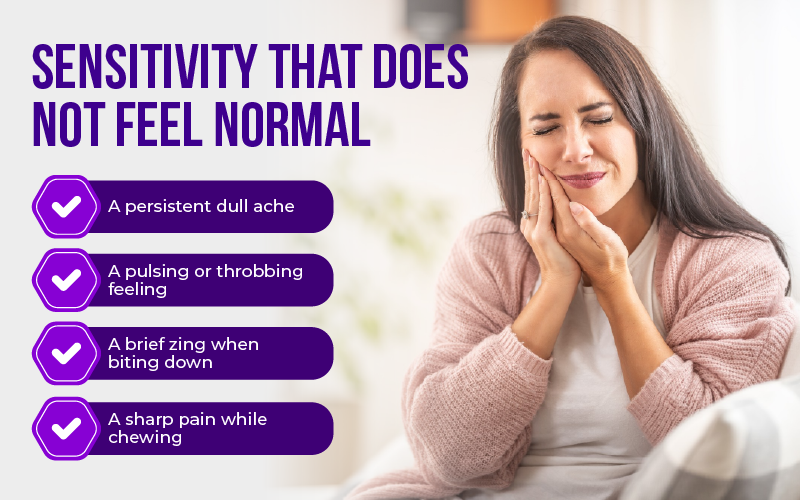
Crown pain is often discounted until it becomes unbearable. Biting ice cream too quickly is a common dental concern and isn’t likely the immediate issue you’re facing. However, if you’re experiencing:
- A dull ache
- A throbbing sensation
- An occasional zing when biting down
- A sharp jolt when chewing
All may be symptoms of a cracked dental crown, even if you don’t recall cracking your tooth. You can crack a dental crown by chewing something as simple as a popcorn kernel or an overly-cooked almond or attempting to rip some tape using your teeth. Don’t lie; you’ve done this. The bigger problem may be a dental root infection developing beneath your crown.
Bacteria will sneak in underneath the edge of the crown and throw a “party” with microscopic organisms that your tooth has not invited. When they find their way in, they can cause noticeable symptoms on the tooth and surrounding area, which may include
- Sensitivity to hot or cold that remains for an extended period of time,
- Tenderness in the gums near the crown,
- A tooth that feels warm (and yes, this is a real thing), and
- Intermittent discomfort that comes and goes like a quickly changing weather app.
When a tooth beneath your crown becomes irritated or infected, it puts the crown at risk of failure and can lead to complicated treatment. If the tooth is inflamed or compromised, you may need to make minor adjustments, or you may need to replace the crown, perform root canal therapy, or make other necessary repairs.
Pain is your indicator. Your mouth is not trying to bother you; it is telling you something!
Your Crown Looks Strange or Feels Rough
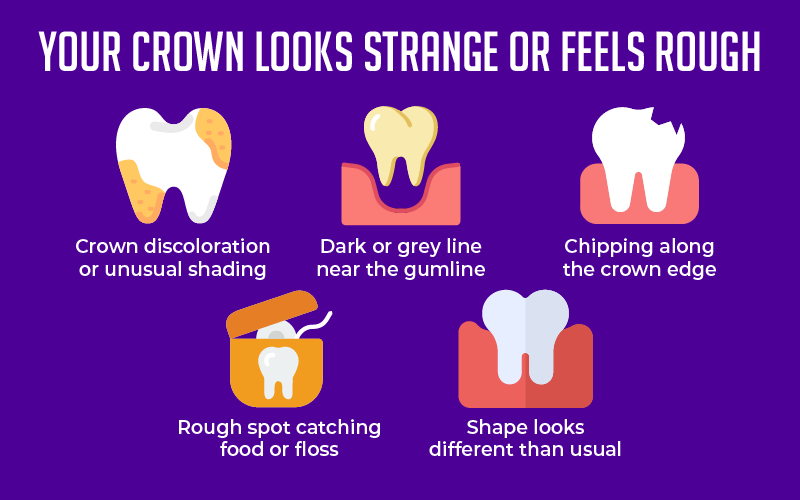
Crowns should blend in, and when they don’t, this can indicate a problem.
Some factors to look for include:
- Crown discoloration (spotting/dating or yellowing) or strange shading
- A dark line or grey appearing just below the gumline
- Chipping around the edge of the crown
- A rough place that catches food or floss
- A different-looking shape compared to what you normally see in the mirror
These cosmetic changes can also signal that you have deeper problems occurring, such as failure, wear & tear, and a potential loss of integrity (the seal around the tooth). The danger is that after losing the seal, bacteria will enter and establish colonies & cause damage.
Occasionally, discoloration is only apparent through staining, but sometimes it’s the material underneath the porcelain coming through. In other cases, it’s an indication that you may need to replace the crown soon.
While most people would think this is a cosmetic issue (being vain), in most cases, when a crown changes in appearance, it’s because something is happening beneath the surface of the tooth.
What You Should Do If Any of This Sounds Familiar
The next thing you may wonder is whether or not to panic. The answer? No. You should never panic. However, you also shouldn’t ignore them. Most crowns are simple to fix, so long as they are caught early enough. A small adjustment can relieve pressure on a tooth and prevent long-term damage.
When you go to the dentist with something that seems like a minor issue, they are not going to judge you; they would prefer you take the time to come in and get your crown adjusted. Adjustments are quick, painless, sanitary, and easy; just like taking your car in for a short service before it starts expelling smoke from beneath its hood.
Consider this preventative maintenance for your future self—one who does not want to be surprised by a root canal on Thursday at 3 PM.
Conclusion
The dental crown you obtained should make your life easier, not add to your already long list of strange sensations. If your dental crown is uncomfortable, feels strange, doesn’t look like it did before, or is causing a change in your bite compared to the past month, don’t ignore these problems!
Having a mouth that feels “normal” again is very important.
Call your dentist’s office and let them know you need some type of adjustment made to your dental crown, so that it will work properly right from the start.
Frequently Asked Questions
If you are experiencing pressure, piercing, biting pain, temperature sensitivity, or pain lasting longer than several seconds while chewing food or brushing your teeth, your crown could be misaligned and/or damaged and should likely be adjusted.
Yes. A crown that is too high or too low may cause your jaw to compensate, leading to tension headaches, soreness, or clenching habits. So if you have had a recent change of discomfort without a known reason, your dental crown could be the cause.
Intermittent sharp pains, sensitivity when biting down on certain items, or having a gritty sensation when gliding your tongue across the tooth could indicate that you have a cracked dental crown. A cracked crown can sometimes be hard to spot, but discomfort, especially when there is any type of pressure on the tooth, will usually tell you that the tooth has cracked.
Yes, it is possible. If there is a crack in the crown and bacteria get underneath it, the patient may experience symptoms such as throbbing pain, sensitivity to heat/warmth, gum tenderness, or persistent sensitivity. Early signs of an infected dental crown indicate that the seal has either deteriorated or the underlying tooth is inflamed.
Typically, a dentist will recommend replacing the crown rather than modifying it if the crown is cracked, loose, heavily worn, or discolored, and there is associated sensitivity. If there are only minor issues, modification may be appropriate; however, if there are significant structural issues, a crown replacement would be a better, longer-lasting solution.