


Let’s discuss the issue you’re likely repressing in your mind, that bad tooth of yours.
One that you chew on gingerly. One that, when you sip something cold, you do your best not to feel uncomfortable about. That tooth; you promise you’ll get checked out “soon.”
You might even have googled what a basic restorative dental procedure is at two in the morning and then closed the page because you feel overwhelmed.
It’s common; dental issues can be very emotional. They can cause more than just physical discomfort. They can create shame. They may notice you avoiding photos with friends. They may make it difficult to feel comfortable laughing because you’re covering your mouth with your hand. They may also create an inner dialogue of, “It isn’t that bad.”
For the record? Living with continuous dental issues slowly eats away at your confidence, your ability to be at ease, and sometimes even the stability of your overall health and well-being.
This is where a Comprehensive Restorative Dentistry practice comes into play! This is more than just a ‘quick fix’ or a filling; it is a comprehensive plan designed to help you restore your smile and quality of life to what you deserve by reconstructing from the bottom up.
And it will impact your life beyond the appearance of your dental work.
Let me show you how.
You Stop Living Around Your Teeth
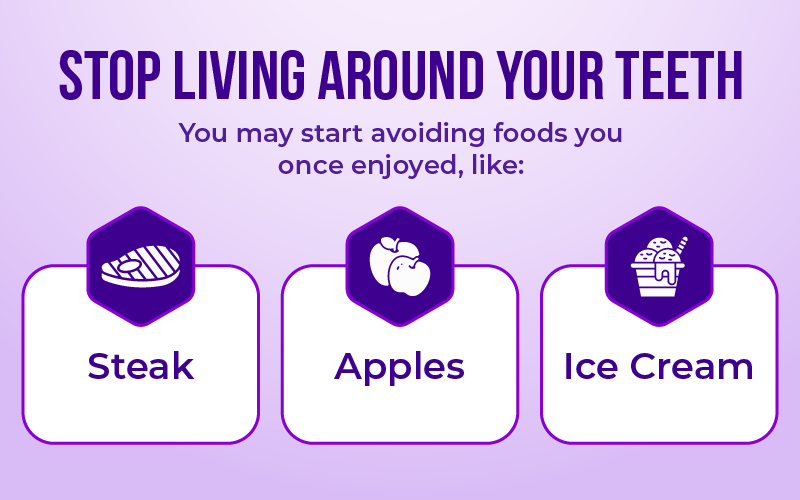
If you’ve been unable to eat normally because of a broken or missing tooth on one or both sides of your mouth, then you know what it means.
You are forced to eat with only 1 side of your jaw.
You also may have to cut certain foods out of your diet completely, such as:
- steak
- apples
- ice cream
This is not living; it is only adapting.
What is Restorative Dental Work?
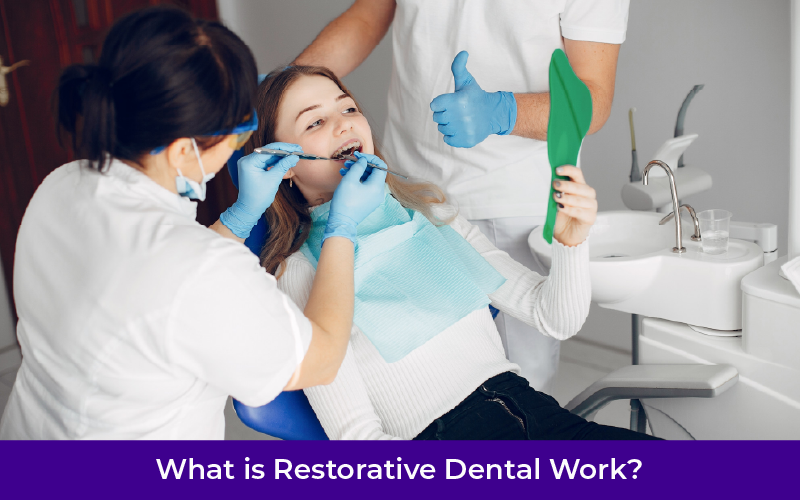
Restorative dental work repairs a damaged, decayed, or missing tooth (or teeth) and allows you to resume normal function.
Fillings, crowns, bridge work, or implant procedures are examples of restorative procedures that help restore the balance of your bite.
What many people don’t talk about enough is how other teeth in your mouth will compensate for a tooth that isn’t functioning properly. This can lead to additional problems, such as headaches, neck pain from muscle imbalances, or even digestive issues if you are not chewing food properly.
Untreated cavities are still one of the more prevalent chronic illnesses among adults, according to the CDC. This fact does not justify you living with that issue. With proper dental restoration, you will stop experiencing pain and feel relief.
Imagine not having to spend time worrying about your teeth; that is what freedom means.
Your Confidence Quietly Comes Back
Do you hide your smile when you take a picture?
Do you put your hand near your mouth when you are talking?
Are you someone whose smile has been affected by discolored/chipped/missing teeth, so you only smile with your lips closed?
The answer is “There are a lot of us.”
The emotional effects of poor dental health can often be greater than the physical effects. It is not vanity; it is part of our nature. Most likely, when you meet someone, the first thing they notice is your smile.
When you undergo a restorative process in your mouth, you are not only repairing it but also rebuilding a part of yourself.
Restoration could include a dental implant for someone missing teeth; someone else may need crowns to restore shape or structure; and, in other cases, tooth-colored fillings to address visible issues that may have been bothering them previously.
But the result is not over-the-top freakish. In most cases, it is very modest.
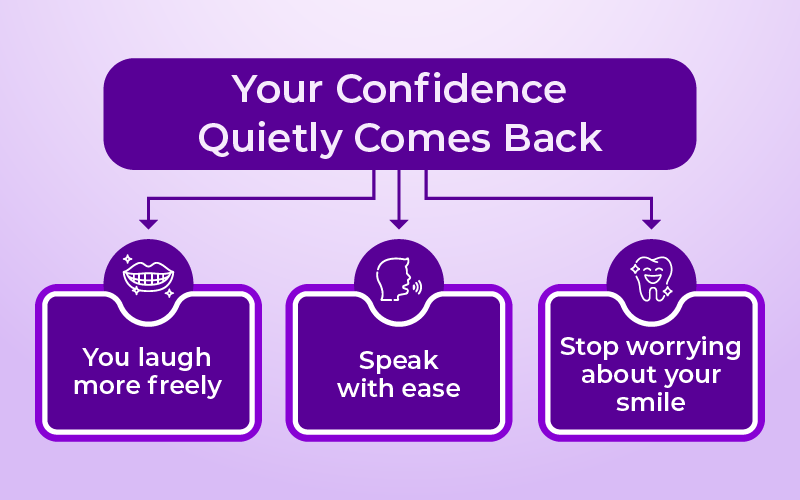
- You begin to laugh more
- You begin to have more confidence in your speech
- You don’t worry about how your teeth look during a conversation anymore.
We have seen people come into a consultation very guarded, only to leave with a smile because they now have a plan, regardless of how long it will take to address their dental issues.
You Invest in Long-Term Health (Not Just Quick Fixes)
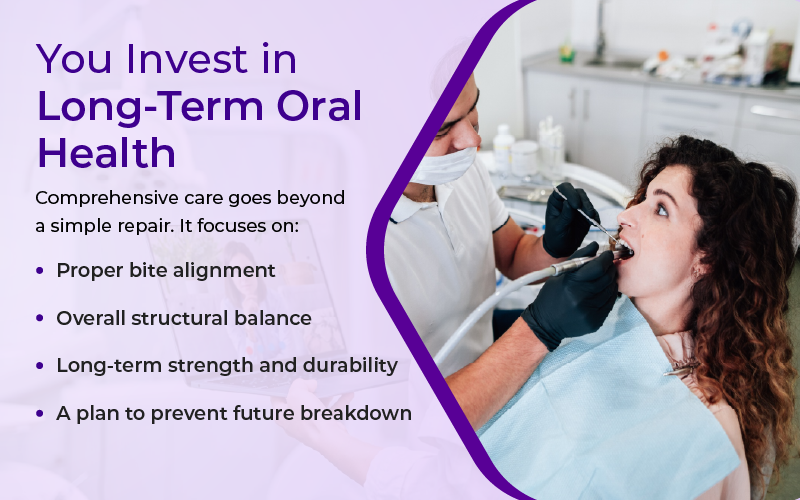
Evidence suggests that heart disease is linked to gum disease. One way chronic infections can affect the immune system is by causing persistent dental pain, which increases an individual’s stress levels (and we know how stress can impact an individual).
Select restorative dental care, more specifically a comprehensive restorative approach, is much more than just filling in cavities; it stabilizes your dental environment.
But what is a basic restorative dental treatment? It typically includes the following dental procedures: fillings, crowns, root canal treatment, and bridges. These are primary procedures that repair damage to the tooth structure.
The concept of comprehensive restorative dentistry extends beyond that concept and includes:
- Bite alignment
- The overall balance of the structure
- Long-term durability
- Creating a plan to prevent further breakdown of the area
Cost is a major factor when considering restorative dental treatment. There is no question that it plays a major role. Still, many clinics offer affordable restorative treatment plans, payment options, and phased treatment options that allow patients to spread their restorative treatment over time.
Restorative treatment is often delayed, leading to higher costs later.
Ex: a small cavity may now require a root canal; a cracked tooth may now require extraction; missing teeth will lead to bone loss.
Oral restoration, when done thoughtfully, protects your future self.
Addressing Your Fears
Fear of going to the dentist is a common and valid concern that affects most people. However, recent advances in dental technology, sedation methods, and pain relief options make visiting the dentist easier. The actual procedure tends to be an experience most people do not remember as having been as comforting as they previously feared before coming to see the dentist; therefore, a lot of the time, these types of patients find the anticipation (aka “stress”) of going to the dentist worse than actually going to see the dentist.
What Next?
Let’s gently flip the question.
What happens if you keep adjusting your life around dental pain?
What happens if you keep postponing treatment?
What happens if that “minor” issue grows?
I’m not here to pressure you. I’m here to be honest.
Teeth don’t heal themselves. They don’t regenerate enamel. They don’t fix cracks magically.
But they can be restored.
And when you choose comprehensive care instead of patchwork fixes, something shifts. You stop reacting to problems and start preventing them.
Conclusion
Comprehensive Restorative Dentistry isn’t about perfection. It’s about restoration, physically and emotionally.
Maybe the next step isn’t committing to a full treatment plan tomorrow. Maybe it’s just booking a consultation, asking questions, and understanding your options.
Because the life-changing part isn’t the procedure.
It’s the moment you decide you’re done settling for discomfort.
And honestly? That moment might be closer than you think.
Frequently Asked Questions
Comprehensive restorative dentistry addresses the repair of damaged, decayed, or missing teeth and improves the overall balance of the functional bite. Instead of creating short-term restorations, the dentist will create a long-term treatment plan that enables complete restoration of oral health, comfort, and confidence.
If your teeth are painful, sensitive, cracked, or missing, or if you’re having difficulty chewing, you will likely qualify for restorative treatment. If you have the opportunity to see a dentist or dental specialist in a timely manner and have a consultation, you will be provided with the information needed for early identification of any problems and an appropriate course of treatment.
The following procedures are considered restorative by dentists: dental fillings (tooth-coloured), crowns, bridges, dental implants, and root canal treatment. Each of these procedures will help repair tooth damage, improve chewing function, and support the long-term health and stability of your smile.
With the use of sedation, advanced technology/techniques, and local anaesthetic provided during all procedures, patients experience considerably fewer pain problems than in previous years. Most of our patients anticipate that the pain or discomfort they will experience from completing a procedure will be much greater than they actually experience. Early identification and treatment of dental issues typically lead to lesser time frames for treatment times.