


The beginning of dental pain can often be small. It can be a dull ache while chewing, tooth sensitivity to cold, or a filling that does not look right. While it is not an emergency, there are no signs of any issue. Most patients stall out in that middle area between an emergency and nothing.
Patients often avoid the dentist for several reasons: taking time off work, rearranging schedules, arranging child care, dealing with the dentist’s office, questions about insurance, and anxiety while waiting in the office. For many homeowners or patients, these reasons alone can deter them from seeking treatment.
This is why there is greater acceptance of virtual dental consultation. Virtual dental consultations are not intended to replace in-person dental visits; instead, they are the first step in treatment. Virtual dental consultations allow patients to ask questions, gain knowledge about their condition, and determine what the next step(s) should be, without feeling pressured.
Benefits of Virtual Dental Consultations
There are many reasons for the growing popularity of online virtual dental consultation services and how they are changing how consultations are initiated between patients and practitioners.
1. Faster Clarity Without the Waiting Room Stress
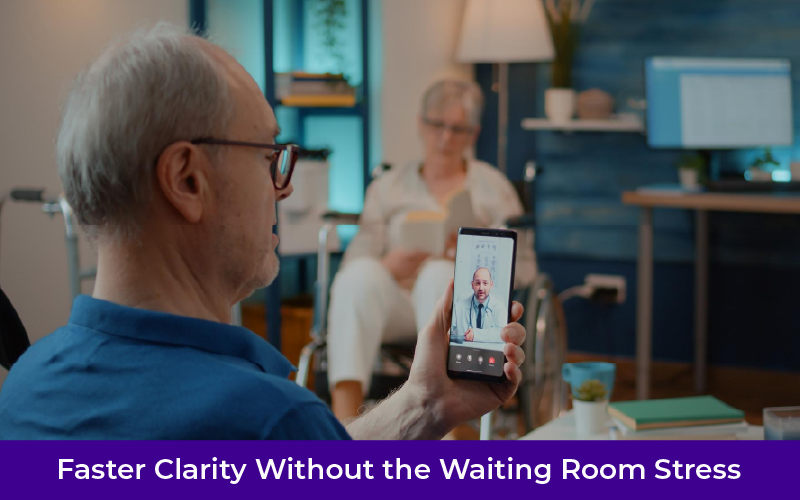
When we talk about uncertainty, one of the most uncomfortable areas is Health. One of the most significant benefits of having a virtual dental consultation is speed, not a rushed speed, but quick clarity. Patients can now schedule an online dentist consultation instead of waiting multiple days or weeks for an in-office appointment to determine whether their dental issue is serious.
With an online dentist consultation, patients can:
- Give a thorough description of their symptoms without feeling rushed.
- Provide photographs and/ or videos securely.
- Ask questions they might have forgotten or felt awkward about if they had asked the dental practice in person.
The ability to do these things makes a huge difference. Most dental issues do not require immediate care, but they do need guidance. Is the pain they are experiencing normal? Can it wait a month or so? Should I avoid eating anything until my next appointment?
Virtual dental consultations help address these early on, providing reassurance that reduces anxiety and helps prevent the need for a patient to go to an emergency dentist.
As it helps patients reduce anxiety, the dentist also finds this “early triage” valuable. By allowing the dentist to see a patient’s issue visually, rather than only being able to determine the urgency of the patient’s issue by the fact that the patient called requesting to schedule an appointment, the dentist can now visually determine how urgent the patient’s dental problem is and allow the dentist to determine if they need to prioritize that issue when they are scheduling their patients. The dentist can now be assured that they can use their chair time for cases requiring hands-on care.
The waiting room is still present, but it is no longer the first step to seeing a dentist.
2. Easier Access Encourages Earlier Care
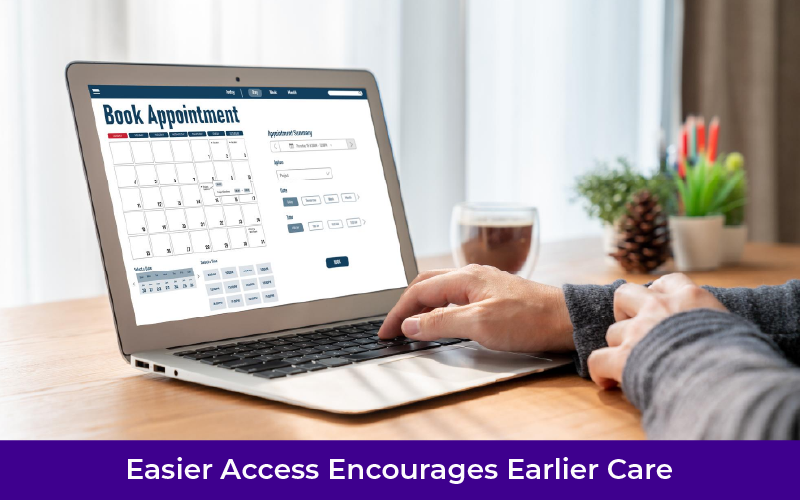
Many people may not go to the dentist as often as they should due to cost, fear, scheduling conflicts, or past negative experiences; others may simply not know whether their situation warrants an appointment.
Because of the virtual environment, many feel more comfortable and at ease when they can have that conversation without being seated in a dentist’s chair or looking at dental tools; there is no immediate obligation of treatment, so patients are more likely to have that conversation and start their dental journey sooner than they would have otherwise, especially for those who have not seen a dentist in quite some time.
For many US homeowners managing their budgets, knowing the potential financial implications of their treatment is an advantage of a virtual dental consultation. While you still need an examination, having an idea of the treatment options will allow you to plan rather than react to the outcome.
From the perspective of the treatment provider, having patients seek treatment earlier often leads to a patient who:
- They are better educated about their options before they begin treatment with you.
- They have a greater degree of trust in you before you provide treatment.
- Is more willing to accept treatment with you.
- Will have fewer emergency visits to your office.
Additionally, keeping your patients out of the office will help to reduce your overall overhead.
Early intervention through online consulting does not involve any services or tools; it is strictly a communication process and a way to provide comfortable access for your patient.
3. Better Use of In-Person Dental Time
A lot of effort is expended preparing for and carrying out an in-person dental appointment; there is staff to meet, equipment to gather, and significant time spent collecting the patient’s history and presenting problems.
In many cases, patients have completed most of the necessary background work through a virtual dental consultation before arriving at the office for their appointment. This allows the dental office staff to focus on diagnosing and treating the patient rather than gathering information about them during the appointment.
For dental practices, this often results in:
- More efficient scheduling
- Reduced chair-time pressure
- Clearer appointment objectives
- Improved patient flow
For the patient, they will experience fewer unexpected “oh, we now need to schedule another appointment” situations, and fewer appointments will feel as though they could have been addressed over the phone before coming to the office.
Overall, virtual dental consultations create a more efficient workflow for everyone involved, allowing dentists to treat more patients, reducing patient wait times, and enabling the practice to achieve greater predictability than before.
How Virtual Dental Consultations Fit Into Modern Care
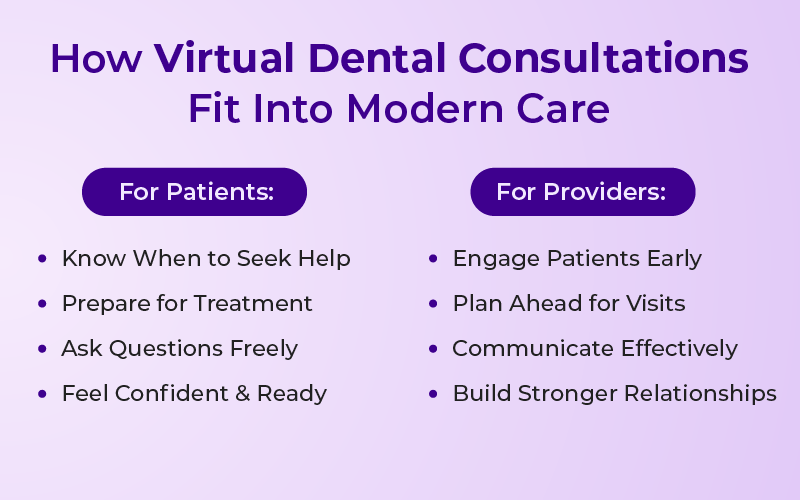
Defining the limits of online dental consultations is key; they do not do any of the following:
- Replace cleanings, x-rays, or treatments
- Diagnose everything remotely
- Provide an alternative to seeing a professional
Online dental consultations serve as a bridge. Patients benefit by:
- Determining whether they require immediate attention
- Understanding their next steps before starting treatment
- Being able to ask questions without feeling pressured
- Feeling confident when going for their upcoming appointment
For dental providers, online consultations provide:
- Earlier patient engagement
- Better preparation for appointments
- Improved communication with patients
- Increased relationship-building with patients
The real breakthrough with online dental consultation is not the technology itself, but its availability.
Why US Homeowners Choose Virtual Dental Consults
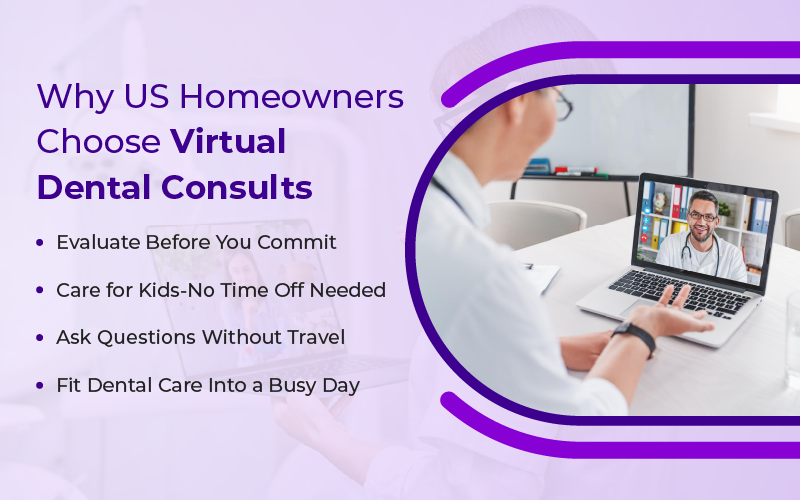
Owning a home means taking on responsibilities, managing finances, and maintaining a busy schedule. Many times, dental appointments have to fit into all of these things:
- Virtual dental consultations allow patients to proactively manage their oral health without committing before they have had a chance to evaluate the situation.
- For families, this can mean having a child evaluated for their concern and providing other children with non-dental treatment without taking time off work.
- For older adults, this may mean they can ask questions about their treatment without transportation issues.
- For busy professionals, it allows them to address their treatment concerns without disrupting their day.
The benefits of this flexibility are not necessarily convenience, but rather the ability to minimize unnecessary friction when making health care decisions.
A Shift in How Dental Care Begins
Typically, dental care begins with a chair and an overhead light. However, in some cases, a conversation alone is sufficient to initiate dental care.
Virtual dental consultations allow you to have the necessary conversations without pressure or confusion about how you feel about your dental concerns. Patients can be reassured and feel confident in their decision after speaking with a dentist online. In addition, dentists also benefit from virtual consultations by providing their patients with faster service and earlier professional contact.
In general, virtual consultations can increase access to health care and, by underestimating the impact of treatment on one’s well-being, make it more challenging to postpone treatment.
The trend toward initiating conversations and planning before treatment is one of the most significant changes in dentistry today.
Frequently Asked Question
1. What is a virtual dental consultation, and how does it work?
A virtual dental consultation is simply a dental appointment held over the internet. You will interact with a dentist via video chat and will be able to present your symptoms and also show images/video of your dental problem. This will give the dentist enough information to determine what your problems may be and if you should come to their office for a full examination.
2. Are virtual dental consultations a replacement for in-person dental visits?
Virtual dental consultations don’t replace seeing the dentist for an actual examination, but they are the first step of the care process. They give you the opportunity to receive guidance from a professional and explore treatment options before deciding on an actual appointment.
3. Who benefits the most from online dental consultations?
Busy working men & women, parents with young children, seniors, and those who have mild dental discomfort get the greatest benefit from virtual consultations. They can provide you with immediate access to a dentist, eliminate uncertainty about your problem, and help you decide whether you need to be seen by one.
4. How can virtual dental consultations improve patient experience?
Virtual dental consultations can enhance your experience as a dental patient by reducing stress, eliminating unnecessary wait times for appointments, and providing greater access to dental advice. It allows you to ask questions and evaluate the procedures that you may be required to receive. You will feel more comfortable and confident when you arrive at your in-office appointment.