


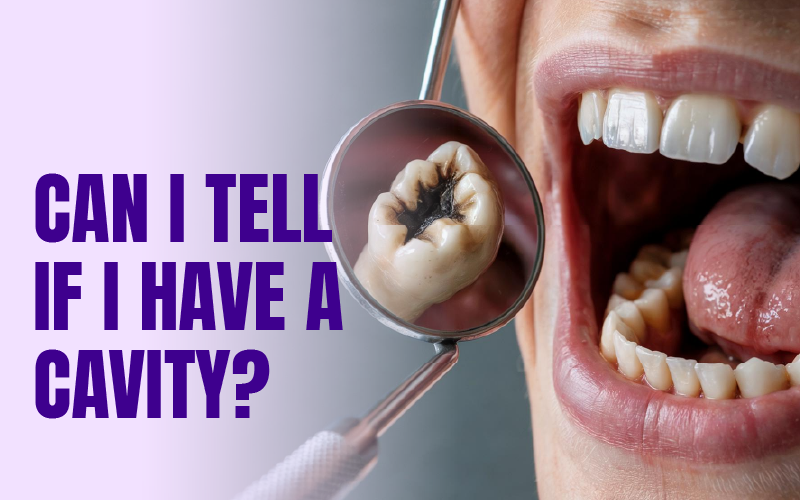
There’s a particular kind of dread that sneaks in quietly. It may first appear as a slight sensation when you drink something cool, or as an unusual sensitivity in the area where you chew from. You think about stopping for a moment to figure out if that’s a possible cavity and ultimately ask yourself, “Could this be a possible cavity?”
If you find yourself relating to this, you may also have experienced uncertainty about whether to visit a dentist or if you’re just trying to learn about your own body more effectively. Regardless of your current situation, let’s discuss what you need to do in order to reach your goal calmly and without jumping to any conclusions or dismissing anything that could be serious enough to get medical help.
What Exactly Is a Cavity?
Cavities are referred to simply, as being holes in the teeth that have resulted from decay, however, that simplified description doesn’t cover how the cavity was created in the first place.
Your mouth is constantly busy with bacteria that are constantly consuming sugars and starches that you eat. When those bacteria consume the sugars and starches, they also release acids into the mouth. Those acids will slowly but surely erode away the outer layer of your tooth’s enamel, if left untreated, this breakdown can eventually create a cavity in your tooth.
The cavities will not always be immediate or dramatic. Many times they develop slowly and almost imperceptibly. So, it is often difficult to detect.
Can You Really Tell If You Have One?
Are there always clear signs of a cavity? Sometimes yes, and sometimes no.
When a cavity first begins to form, you probably won’t feel any pain or hear anything; they often appear without warning – simply developing with time.
As a cavity continues to develop in your mouth, however, your body will provide some warning signs, usually starting as something very small and then becoming more prominent.
Early Signs You Might Be Overlooking
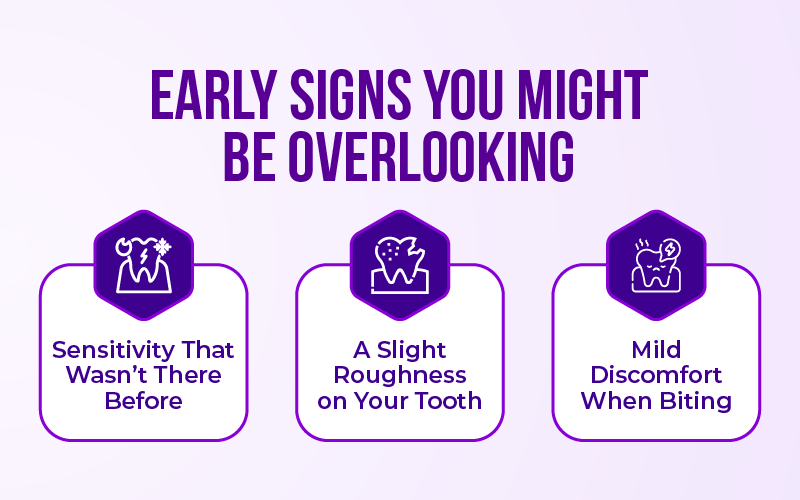
1. Sensitivity That Wasn’t There Before
Suppose you swig down a cold glass of water and have that instant, stinging sensation—that was just a fleeting moment; however, you will not stop thinking about it.
This type of sensitivity could be one of the earliest indications that your enamel is beginning to wear down. If you experience sensitivities, this does not guarantee that you will develop a cavity, but it is also not something to disregard either.
2. A Slight Roughness on Your Tooth
When you slide your tongue across your teeth slowly—can you feel any difference with your tongue? Perhaps it does not feel painful, but it feels more “rough” than the other areas.
The texture difference could indicate the beginnings of ruin on that specific tooth. This slight difference could easily be missed if not paying attention or concentrating on the specific area.
3. Mild Discomfort When Biting
Not enough to cause you to stop eating; however, just a slight amount of discomfort when trying to bite down on something hard.
You can easily ‘write off’ these types of discomforts as nothing since they are “maybe” due to not chewing properly. If you continue to feel this discomfort each time you chew or bite on that specific area, you might want to pay closer attention to what this tooth might be telling you!
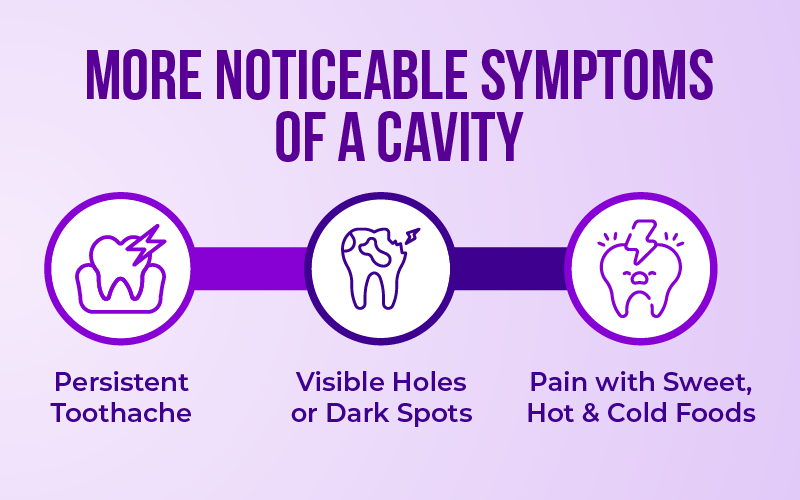
More Noticeable Symptoms of a Cavity
The deeper a cavity becomes, the more clear the signs that it is there become, and it is increasingly difficult to ignore it.
1. Persistent Toothache
This is the most readily apparent sign of a cavity. A dull ache that does not go away, or a sharp pain that occurs without warning or prior notice.
The experience of continuing discomfort can lead to confusion; some days you have pain but other days you do not. A decrease in pain does not indicate a progressive healing process, but simply indicates that the decay may still be getting worse.
2. Visible Holes or Dark Spots
On occasion, you can see a cavity. There can be a minute black or brown mark on your tooth, or a tiny indentation in your tooth that did not exist before.
Not all stains, however, are cavities. Teeth can stain for many reasons aside from decay. However, if the area is discolored and sensitive or painful when you touch it, it is important to seek treatment.
3. Pain When Eating Sweet, Hot, or Cold Foods
Suddenly, eating ice cream is a major endeavor. Drinking hot tea is much more painful than it once was, and eating sweets can also cause you to wince with pain.
The reason for this discomfort may be that the enamel (outer tooth surface) has become damaged, leaving the inner dentin layer of your tooth exposed and unprotected.
When It’s Not a Cavity (But Feels Like One)
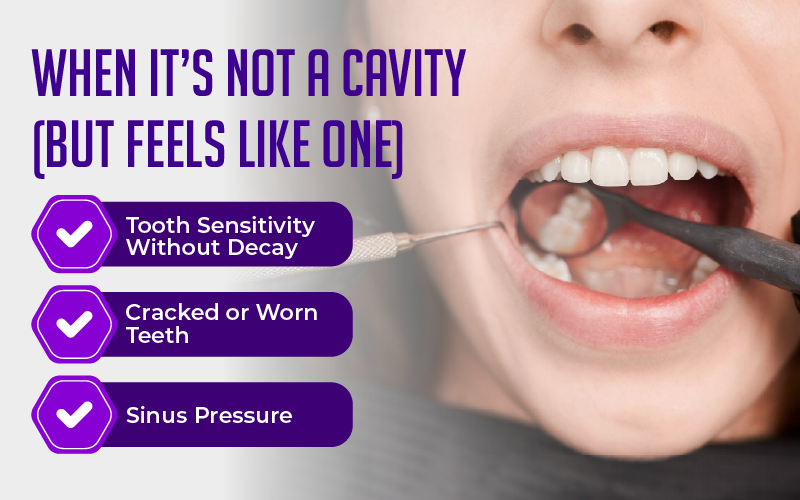
It might seem like you have a cavity every time something strange happens to your tooth but that is not true.
Tooth Sensitivity Without Decay
Someday, your gums will recede and reveal the roots of your teeth, resulting in heightened sensitivity. This heightened sensitivity will be especially noticeable when consuming cold beverages due to the shock of the cold temperature.
Cracked or Worn Teeth
A tiny crack in your tooth, especially one that you cannot see, may cause symptoms of a cavity. The same goes for the wear and tear associated with grinding your teeth.
Sinus Pressure
Many individuals are surprised to learn that sinus congestion can cause pain or pressure to occur in their upper teeth. Although it feels like this pain is coming from your teeth, the pain is actually a result of sinus congestion and is coming from elsewhere.
So yes, your body gives signals. But interpreting them isn’t always straightforward.
Why You Might Not Feel Anything at All
The most surprising thing for many people is that they can have a cavity without feeling anything.
You won’t feel any pain or sensitivity and there won’t be any visible signs of there being a cavity. You could have deep cavities without any symptoms as many of these cavities will develop in between your teeth where you cannot see them, and by the time you see or feel them, they usually have already developed to be much deeper.
That is why it is so important to have a dentist check up on you. Dentists do more than just clean your teeth; they also look for unique types of cavities that you will never feel or see.
Quick Self-Check You Can Try
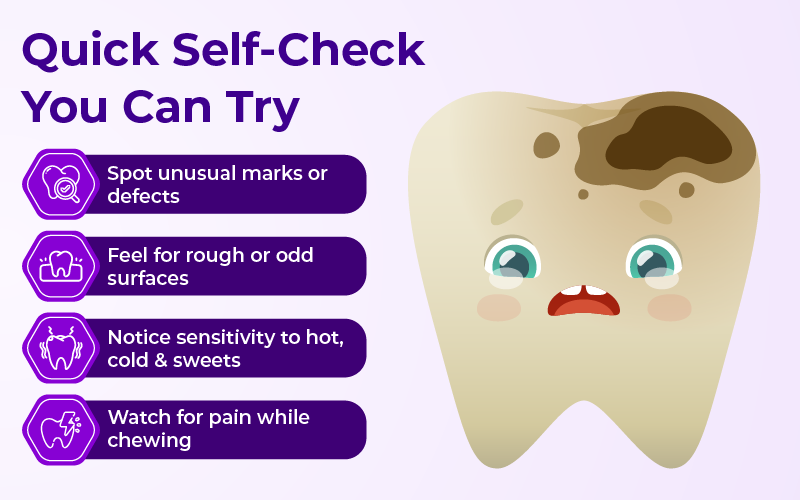
It is not a diagnosis; it is more of a way to become aware!
- Observe your teeth in bright lighting to see if you notice any unusual marks or defects
- Slide your tongue over your teeth to see if there is any abnormality
- Check how your teeth react to hot or cold substances and sweet items
- Be aware of any continual discomfort while chewing
If you notice any of these issues even slightly, pay attention to them. It is not an emergency but it does require attention!
What Happens If You Ignore a Cavity?
Cavities never heal without treatment. If left unchecked, cavities can expand and penetrate deeper into the tooth. This can lead to:
- Pain
- Infection
- Abscesses
- Root canal therapy or other treatments.
The fear of getting a cavity is not the issue; it is the way things happen. It is always easier to treat a small problem than a large one.
What Should You Do If You Suspect a Cavity?
You already know what you should do but perhaps there are doubts in your mind. Seek the care of a dentist!
The best thing to do is not wait for something bad to happen but instead find out what is wrong, and this can be done through seeing a dental professional for an exam (sometimes with radiographs).
In the event that the result of the exam or radiographs determines that there are caries present, they can usually be treated effectively and quickly, especially if detected early.
How to Reduce Your Risk Moving Forward
Maintaining good oral health requires consistency; however, it is easy for certain habits to drop off when things get busy.
Brush Properly (Not Just Quickly)
Two minutes twice daily doesn’t sound all that difficult, but brushing your teeth for 20 seconds because you are in too much of a hurry does little for your oral health.
Floss, Even If You Don’t Love It
A lot of cavities develop in between teeth, which cannot be reached by your toothbrush. Flossing helps fill that space up.
Be Mindful of Sugary Snacks
It is not only the amount of sugar you are eating, but how often you are eating it. The more frequently you snack, the more fuel you provide to bacteria in your mouth to produce acid.
Stay Hydrated
Water is necessary to rinse away food particles and create saliva, which plays a major role in protecting your teeth naturally.
So… Can You Tell If You Have a Cavity?
Yes, your body can provide you with hints/stirs towards a diagnosis; as such, they will begin very subtle and eventually become a very loud source of information. However, not all symptoms will manifest to give an indication you may have a cavity developing.
Your body will not always provide you with these indications and as you progress through your normal activity and feel fine, you may also have a cavity developing that is not yet cause for concern.
So instead of seeking closure on your own findings, use your own level of awareness and use that as your first step to get to the correct conclusion for you.
Final Thoughts
If there are any odd feelings in your body, however small they may seem, do keep them on your radar. This doesn’t mean you should fixate on every little thing or Google your symptoms until you freak out, just notice what’s happening with your body.
Your body usually selects to give you signals because there’s a reason.
And if you eventually learn that there was nothing wrong at all, that will give you a sense of relief that will be more valuable than any guesswork would have been.
If it is something, you have caught it in the very early stages of that disease and that changes everything!
Frequently Asked Questions
1. How can I tell if I have a cavity?
Cavities often occur without any outward signs, making them difficult to detect initially. As a cavity grows, you might experience sensitivity to temperature and pain while eating certain foods. If you notice changes in your tooth that do not feel right, go see your dentist right away for an examination.
2. Can you have a cavity without having any pain?
Yes, and this is one reason cavities can be easily ignored. Early dental decay might not produce any pain or harmful symptoms. You may feel totally fine while having cavities formed. Regular visits to a dentist will help to discover these hidden problems before they become painful.
3. Does tooth sensitivity always mean I have a cavity?
Not in every case. The cause of sensitivity may be due to several factors including eroded teeth enamel, gums that have receded, tooth clenching, or a tooth having been fractured. However, a cavity might also be the cause for sensitivity, especially after eating or drinking hot, cold, or sweet food items. If sensitivity is recurrent, visiting a dentist for a proper diagnosis may be advisable.
4. What should I do if I think I have a cavity?
If you think you may have a cavity, it’s best to get it checked out even if you’re not in any pain. Cavities do not go away on their own and get to be more involved the longer you leave them. Be sure to go to the dentist for an evaluation so that your dentist can examine the tooth and find the right treatment.
5. Can a cavity go away on its own?
A cavity that has progressed fully will not simply vanish on its own. Minor changes in enamel can be treated with fluoride and better oral hygiene at times, but established decay needs to be treated by a dentist. If there is sensitivity, a dark spot on the tooth, food getting stuck in between teeth, or toothaches, a dentist must be consulted.