


On most days, you don’t really think about your teeth much because they just do what they are supposed to do. Until that one visit to the dentist, and you are suddenly seated in a chair with the drill doing its thing, and your dentist nonchalantly tells you that, “We will put in a temporary solution.” Temporary.
It is a one-word statement, but it lingers longer than you might think.
When you leave the office, you now have a heightened awareness of this one tooth, and your tongue continues to check in on it, as it explores the new, bulky object. While you don’t have any discomfort in it, you may also be inundated with questions that you hadn’t anticipated. Can you eat as usual? Will there be foods you can’t eat? What happens if it cracks in the middle of a bite?
You feel like you could manage to carry something fragile through a crowded area, but with more attention than would normally be required. This is the weird area that temporary crowns occupy; they are not meant to last long-term, and they will still require attention and thought from you while they are in place, but you may also be wondering how durable they are, meaning: Will they hold together until you can have the new crown put in?
What Is the Purpose of a Temporary Crown
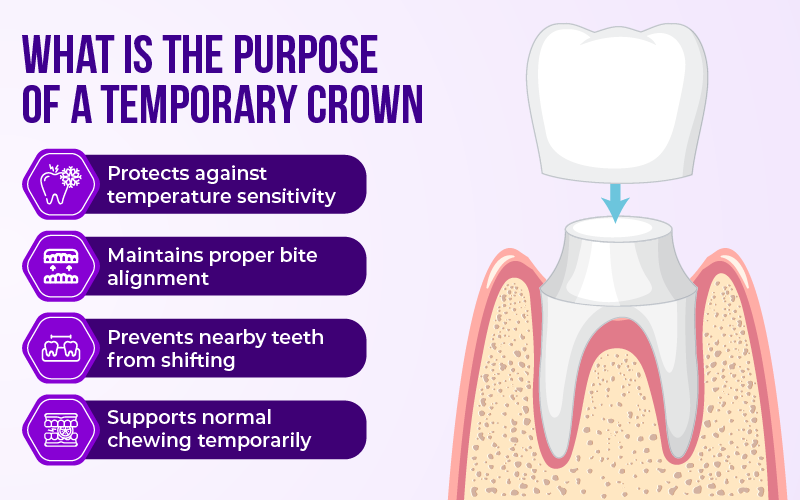
Temporary crowns serve more than just as placeholders; they essentially function as a bodyguard.
Once your dentist prepares the area where the permanent crown will be placed, much of the tooth’s structure has been stripped away to fit the crown. This leaves the area exposed, sensitive, and extremely vulnerable.
The temporary crown serves to:
- Protect the tooth from temperature sensitivity
- Keep the bite in correct alignment
- Prevent adjacent teeth from moving into that position
- Allow normal function of chewing until the lab completes and delivers your permanent crown
If you think about it, the temporary crown should be viewed like a cast. It is not your final product; however, without the temporary crown on the tooth, you could have some significant problems very quickly.
How Strong Are Temporary Crowns
Graphic
Is it strong enough to do its job? It will be strong enough to last only a short time.
Most temporary crowns are made of:
- Acrylic resin
- Composite resin
- Various (no reason for an option)
These materials can withstand a limited amount of wear and tear.
If your permanent crown is like a ceramic mug, your temporary crown would be like a paper cup. The paper cup holds and does the same thing as the ceramic mug; however, it wouldn’t withstand being thrown across the room.
Real-life Strength
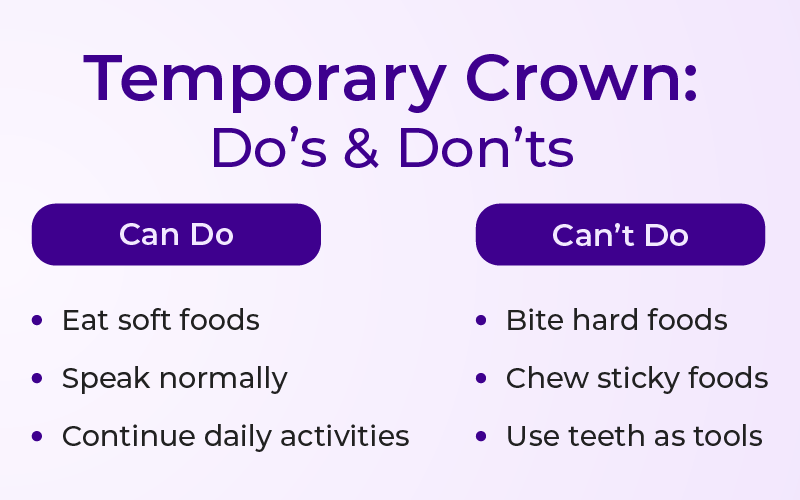
What can you do? You can:
- Eat soft to moderately firm foods.
- Speak normally.
- Go about doing whatever else you do in your daily life.
What can’t you do?
- Bite into hard foods.
- Chew sticky foods
- Use your temporary tooth like a tool (you would be amazed how many people do this.
So when someone asks, “How strong is a temporary crown?” the real answer is, “strong enough to get you through the day, but not strong enough to forget it.”
Temporary vs Permanent Crown
Since a temporary crown is intended to be removed, the dentist uses softer cement. This allows convenient removal without harming the prepared tooth.
| Feature | Temporary Crown | Permanent Crown |
| Material | Acrylic/composite | Porcelain, ceramic, metal, zirconia |
| Strength | Moderate | High |
| Fit | Good (but not perfect) | Precise, custom-fit |
| Longevity | Weeks | 10–15+ years |
| Cement | Weak (removable) | Strong (long-term bond) |
Types of Temporary Crowns and Why Material Matters
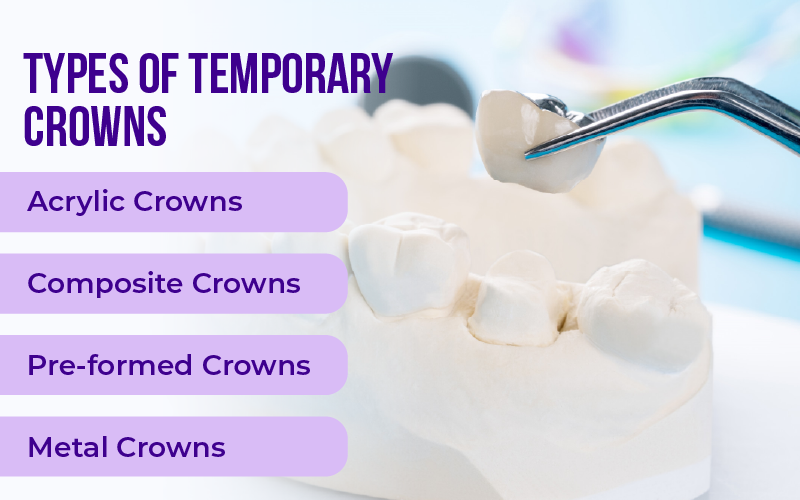
Temporary crown material choices:
Acrylic
✓ The most common type of temporary crown is made from acrylic; they are less expensive and faster to create than other materials.
✓ Acrylic crowns may wear down a little faster than composite crowns.
Composite
✓ Composite temporary crowns are a bit stronger than acrylic, offer better cosmetic results, and last longer than most acrylic crowns.
Pre-formed
✓ In specific situations, such as pediatric dentistry, pre-formed temporary crowns can be used to provide quick and easy options for patients.
Metal
✓ Metal temporary crowns can be used rarely; however, they are very durable compared to resin-based temporary crowns, but they are not very subtle in appearance.
Does Material Affect Strength
Certainly.
Metal-based temporary crowns are more durable than resin-based ones. Still, because of their appearance, they aren’t usually chosen for cosmetic reasons (and quite often people do not wish to have their tooth protected with a shiny metal crown unless required).
Most of the time, a resin crown will fulfil your needs, but only if you treat it with respect.
What Can Go Wrong and How to Avoid It
Let’s be frank, temporary crowns can fail. Generally not frequently, but often enough that your dentist has likely given you a little pep talk before heading home.
Common Problems with Temporary Crowns
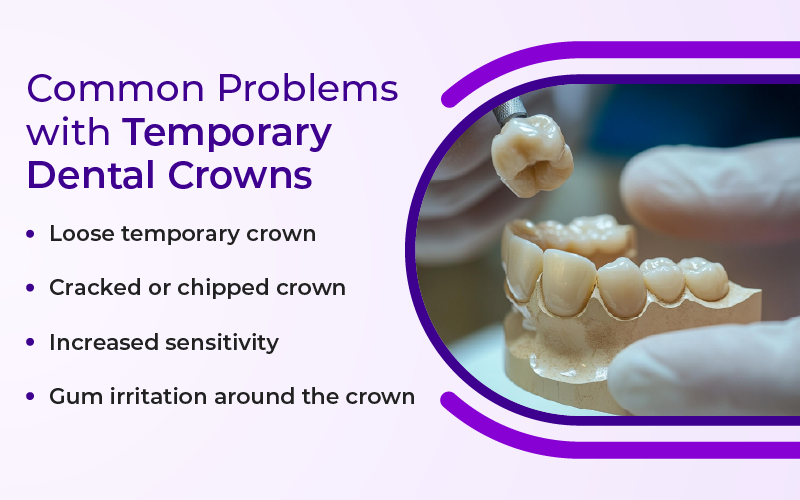
- The crown becomes loose
- Crown breaks (or chips)
- New sensitivity to temp crown
- Irritated gums (around the temporary crown)
Usually, these issues aren’t random happenings; they typically relate to your current lifestyle.
The Common Culprits
- Brushing too hard when brushing on the crowned side
- Eating sticky foods
- Grinding teeth while sleeping
- Having an unintentional understanding that it is a temporary crown
How to Maintain Your Temporary Crown’s Integrity
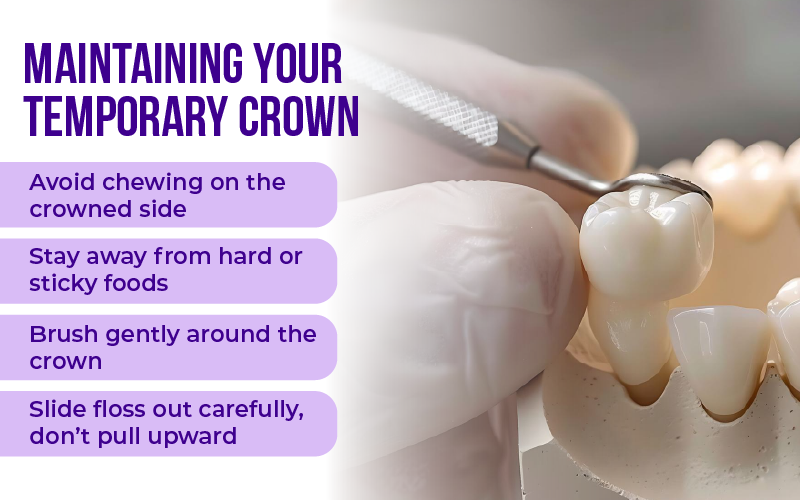
Follow these guidelines:
- Most importantly, avoid chewing on the crowned side of the mouth.
- Stay away from eating hard and/or sticky foods.
- Brush the crowned area gently, as well as the rest of the mouth.
- Take care when flossing around the crowned area; slide the floss out rather than pulling it up.
Overall, it isn’t a matter of paranoia; it’s just about being careful.
How Long Should a Temporary Crown Last?
When placing a temporary crown on your tooth, the typical duration of a temporary crown is:
- 1-2 weeks (simple cases)
- Up to a few months (complicated cases)
However, saying a temporary crown can be used for extended periods of time and saying it should be used for extended periods of time are not necessarily the same thing.
Reality
The longer a person wears a temporary crown, the greater the chances of the following occurring:
- Wear
- Loosening
- Breakage
That is why dentists do not usually like delays between the placement of a temporary and the placement of a permanent crown.
If you are going to extend this time between temporization and final restoration, you should be even more careful than usual.
When to Contact a Dentist?
When you feel something is wrong or you’re experiencing discomfort, don’t overthink it. Getting it checked is the best solution!
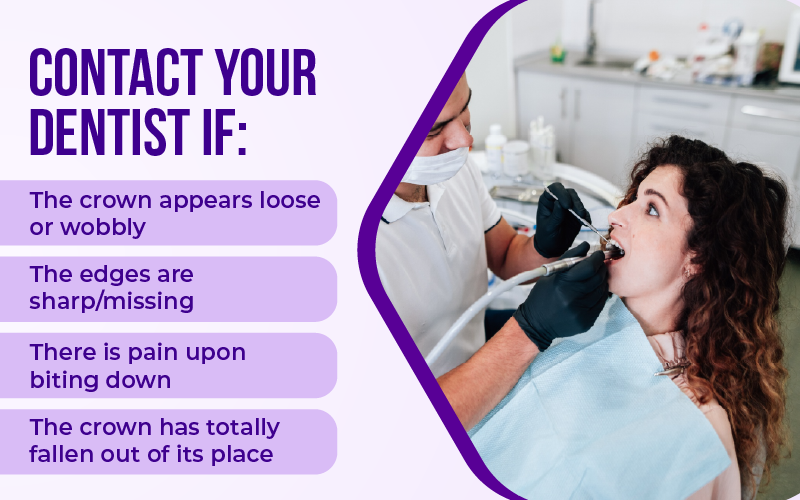
Contact your dentist if:
- The crown appears loose or wobbly
- The edges are sharp/missing
- There is pain upon biting down
- The crown has totally fallen out of its place
Do something about it NOW to avoid further issues down the road.
If you ignore it & the problem gets worse, it could lead to an overwhelming cost + a long wait before someone can help fix your concern!
Final Thoughts!
Now it’s time to get back to our original question: Just how durable are temporary crowns?
Temporary crowns aren’t necessarily as delicate as our teeth, but they aren’t designed to take risks either. They are somewhere in the middle; helpful if you are capable of making at least some compromise with your temporary crown.
You need extreme caution, as you would with a full porcelain or gold crown. Most of us want minimal effort and relatively minor adjustments from how you normally would to make sure they hold up.
Keep in mind that while you are in transition with a temporary crown, this period is helping establish a base for the final permanent crown.
How you treat your temporary phase can help make the transition to your final restoration seamless.
The next time you feel compelled to chew ice or eat sticky toffee, just remember to pause and reflect before you do so.
Frequently Asked Questions
Temporary crowns are quite robust for everyday tasks such as consuming soft foods and communicating normally. They are not suitable for heavy forces applied to them, biting hard or sticky foods may damage them by cracking or loosening them, and/or they may even remove them from their position.
The temporary crown protects your prepared tooth while the permanent crown is being fabricated. It protects against sensitivity, maintains your bite relationship, prevents adjacent teeth from moving out of position, and helps maintain the integrity of your oral cavity until the crown is available.
Most individuals can eat soft to moderate foods but are advised to avoid anything hard, crunchy, or sticky. Babying/holding the warranty on the opposite side will help reduce the stress on your temporary and decrease the risk of damaging your temporary crown.
If your temporary crown becomes dislodged and/or does not remain seated, do NOT panic. Be careful to save the temporary and take it to the dentist as soon as you can. Avoid chewing from that side as much as possible, as the underlying tooth may become sensitive or be damaged after prolonged exposure.
Yes, there are various kinds of temporary crowns available: acrylic, composite, or even metal. The types of temporary crowns differ in strength and appearance, but they are all designed to protect until the permanent crown arrives.