Losing a front tooth hits differently.
It’s not like a molar you can hide. This one shows up every time you laugh, talk, or smile at someone across the table. You notice it in photos first. Then in conversations. Eventually, you notice it in how you carry yourself.
If you’re here, chances are you’re looking into front dental implants, or at least trying to figure out if a front tooth dental implant is worth it. Short answer? For most people, yes. Long answer? Let’s slow down and walk through it properly.
What Exactly Are Front Dental Implants?
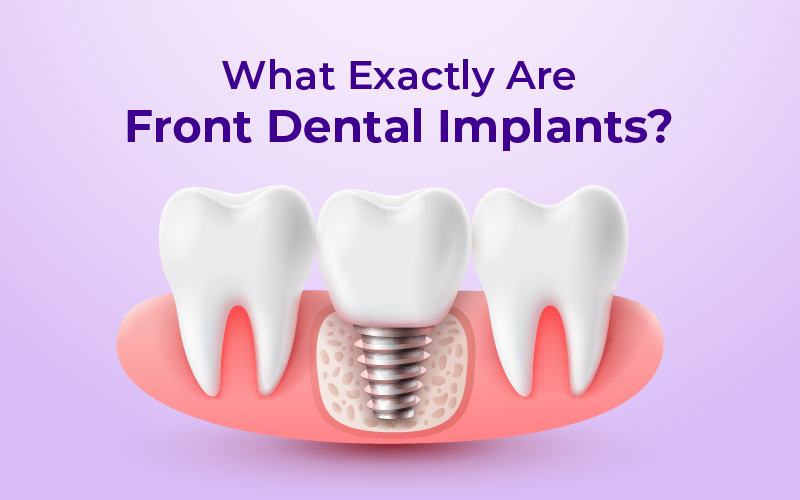
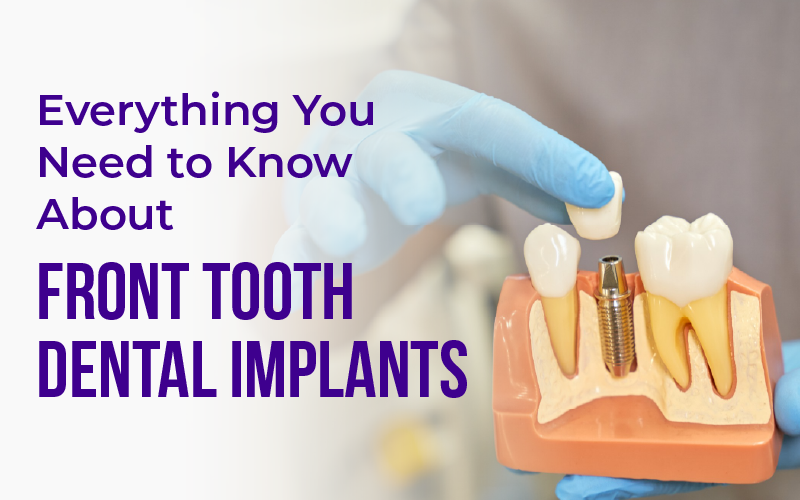
A front dental implant is a small titanium post that replaces the root of a missing front tooth. That post is placed directly into your jawbone, where it heals and fuses over time. Once it’s stable, a custom-made crown is attached on top. That crown becomes the visible part of your new tooth.
What you end up with isn’t just a replacement tooth sitting on the surface. It’s anchored. Fixed. Solid. It behaves like a natural tooth because, in many ways, your body starts treating it like one.
That’s why front teeth implant solutions feel so different from dentures or bridges. They’re not resting on your gums. They’re part of the structure again.
Why Front Teeth Are a Bigger Deal Than You Think
Back teeth do the heavy lifting, sure. But front teeth do the talking. Literally.
They shape your speech. They guide airflow. They define your smile line. Lose one, and you might notice subtle changes, maybe a whistle when you talk, or a slight lisp. You may catch yourself covering your mouth when you laugh. That’s normal.
Choosing a dental implant front tooth replacement isn’t just about filling a gap. It’s about restoring balance. Symmetry. Confidence. And yes, aesthetics matter more here than anywhere else in your mouth.
Why Many People Choose Front Dental Implants Over Other Options
You’ll probably hear about bridges and partial dentures during consultations. They work. They’re quicker. Sometimes they’re cheaper upfront.
But here’s where front dental implants pull ahead.
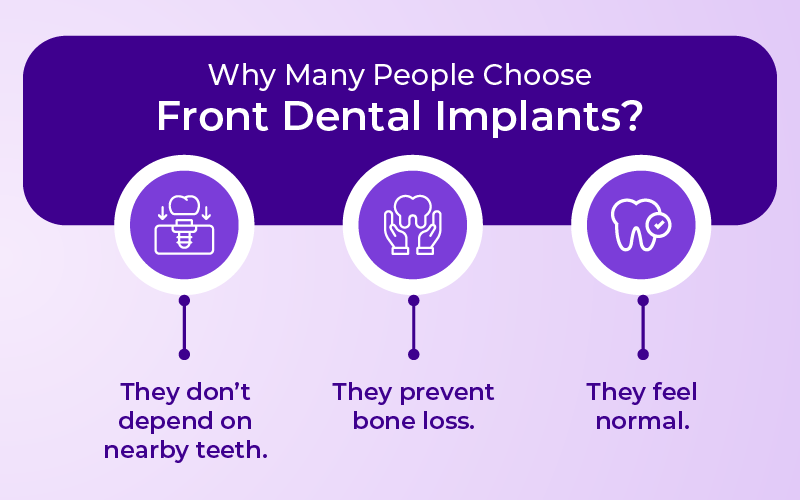
They don’t rely on neighboring teeth for support. That means your healthy teeth stay untouched. No shaving. No extra stress.
They also help prevent bone loss. When a tooth root disappears, the jawbone beneath it slowly shrinks. A front tooth dental implant stimulates that bone again, helping it stay strong and full.
And maybe most importantly, implants feel… normal. You’re not taking them out at night. You’re not worried about movement. You forget they’re even there, which is kind of the point.
Are You a Good Candidate for a Front Tooth Implant?
Most people are, honestly.
If you’re missing one or more front teeth, have generally healthy gums, and enough jawbone to support an implant, you’re likely a candidate for implants front teeth.
If bone loss has already happened, that doesn’t automatically rule you out. Bone grafting is common and often straightforward. Smoking, unmanaged diabetes, or poor oral hygiene can complicate things, but those are conversations, not automatic disqualifiers.
The key thing? Willingness to commit to the process. This isn’t a one-day fix.
The Front Tooth Implant Process (Without the Sugarcoating)
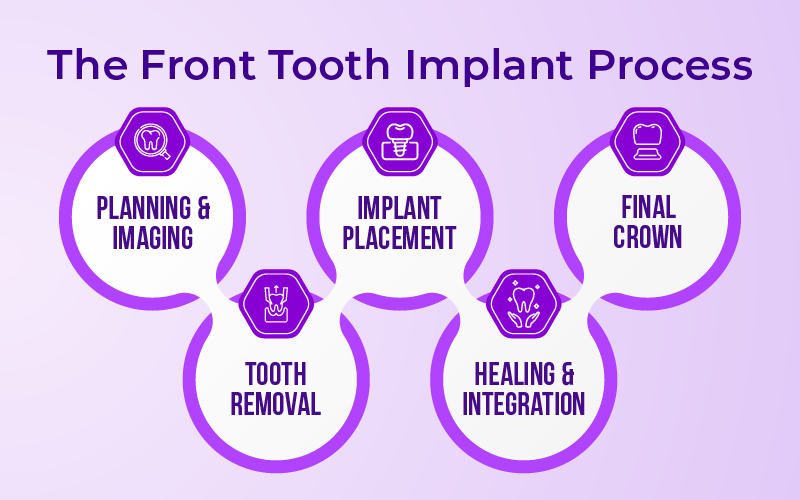
The front tooth implant process happens in stages. That’s intentional. Rushing implants, especially in the aesthetic zone, can backfire.
Step 1: Planning and Imaging
This is where everything starts. Scans, X-rays, measurements. Your dentist maps out bone density, gum line, bite alignment, and how your smile naturally sits.
Front teeth don’t forgive shortcuts. Planning matters.
Step 2: Tooth Removal (If Needed)
If the damaged tooth is still present, it’s removed carefully. In some cases, an implant can be placed immediately. In others, the site needs time to heal first. Both approaches can work. Timing depends on bone health and infection risk.
Step 3: Implant Placement
The implant itself is placed into the jawbone. Local anesthesia keeps you comfortable. The procedure is usually faster than people expect. Less dramatic than it sounds.
Then you heal.
Step 4: Healing and Integration
This is the waiting part. Over the next few months, your bone grows around the implant, locking it in place. This is why implants last so long. They become part of you.
You may wear a temporary tooth during this phase, so you’re not walking around with a visible gap.
Step 5: Final Crown Placement
Once healing is complete, the abutment and crown are attached. This is where the artistry comes in. Color matching. Shape. Proportion. A good crown blends in so well that even you forget which tooth was replaced.
That’s a successful front dental implant.
Recovery: What It’s Really Like
Most people describe recovery as manageable.
Some swelling. Mild soreness. A few days of soft foods. You’re not out of commission for weeks. Over-the-counter pain medication is usually enough.
The bigger responsibility comes later. Keeping the area clean. Showing up for follow-ups. Brushing and flossing like it matters, because it does.
Implants don’t decay, but the gums around them still need care.
About That “Longer Front Tooth” Question
You might hear your dentist mention adjusting length. Or you may worry your new tooth will look too long.
A longer front tooth isn’t about exaggeration. It’s about proportion. When bone or gum tissue has receded, a crown may need to be shaped slightly longer to maintain a natural smile line.
Done well, no one notices. Done poorly, everyone does. This is why experience matters, especially for front dental implant work.
How Long Do Front Dental Implants Last?
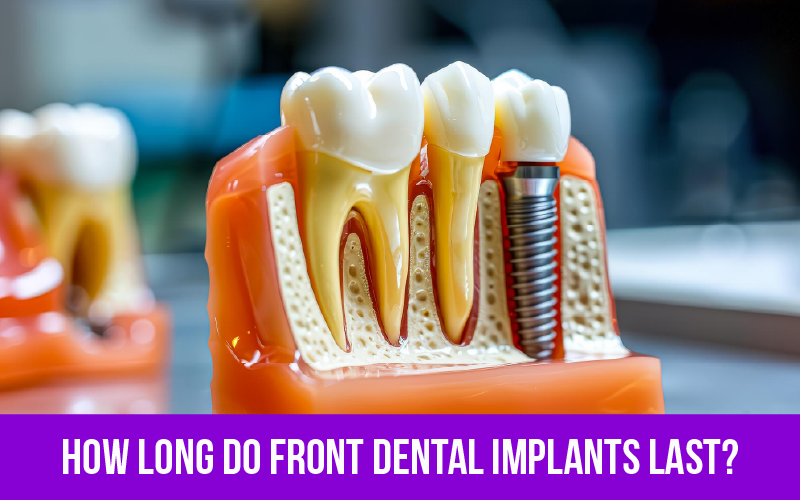
With proper care, decades. Sometimes longer.
That means brushing twice a day. Flossing. Regular dental visits. Avoiding habits like chewing ice or using your teeth as tools. Same rules as natural teeth, really.
Compared to bridges or dentures, front teeth implant options often end up being more cost-effective over time because they don’t need frequent replacement.
Risks to Be Aware Of (Because Nothing Is Perfect)
Implants are highly successful, but they’re still surgery.
There’s a small risk of infection. Rare nerve irritation. Occasional implant failure if bone doesn’t integrate properly. Most complications are preventable with good planning and aftercare.
Choosing an experienced provider reduces risk significantly. This isn’t the place to bargain hunt.
Front Dental Implants vs Other Tooth Replacement Options
Here’s the honest comparison:
- Front dental implants offer the most natural look and feel.
- Bridges require altering nearby teeth.
- Dentures are removable and less stable.
| Feature | Dental Implant | Bridges | Dentures |
| Natural Look & Feel | ✔️ | ➖ | ❌ |
| Preserves Bone | ✔️ | ❌ | ❌ |
| No Impact on Adjacent Teeth | ✔️ | ❌ | ✔️ |
| Longevity | 20+ years | 10-15 years | 5-10 years |
| Daily Removal Required | ❌ | ❌ | ✔️ |
| Stability | ✔️ | ➖ | ❌ |
If aesthetics, longevity, and confidence matter to you, implants usually win.
Final Thoughts
A missing front tooth has a way of quietly changing how you show up in the world. You don’t always notice it at first. Then one day, you do.
A front tooth dental implant isn’t just a dental procedure. It’s a reset. A return to normalcy. Sometimes even better than what was there before.
If you’re considering implants front teeth, take your time. Ask questions. Look at experience, not just pricing. When done right, this is a solution you stop thinking about, because it just works.
And that’s kind of the goal, isn’t it?